
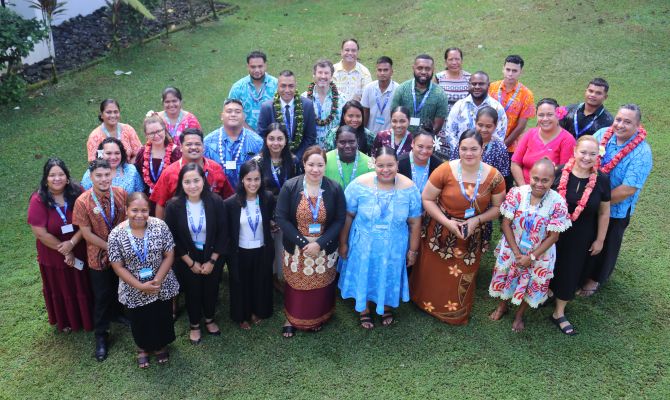
Young Pacific leaders are instrumental in advancing climate justice, their capacity to reshape climate ambition and translate it into meaningful action is significant.
They are the legacy of Pacific leaders and negotiators that came before them, and it is essential that they are empowered and given a strong and visible platform to engage in discussions on issues that directly affect their futures.
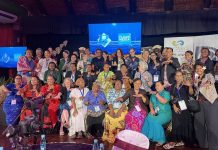
The Young Pacific Negotiators United Nations Framework Convention on Climate Change (UNFCCC) Training was a critical step toward realising this objective. The training programme brought together emerging Pacific leaders to build a foundational understanding of the Convention and develop negotiation skills to enhance engagement in the negotiations process.
Held in Apia, Samoa, 12 – 14 May 2026, the training was organised by the Secretariat of the Pacific Regional Environment Programme (SPREP) with the Youth Negotiators Academy and was made possible by funding support from the United Kingdom International Development for the UK Government.
SPREP Climate Change Resilience (CCR) Director, Tagaloa Cooper said it was important to have a safe and an inclusive platform for young professionals from the Pacific region to share their views and experiences pertaining to the climate crisis.
“Through this training it was important to provide an enabling environment for participants to build relationships, networks, and potential professional coalition to support collaboration in the negotiations process”.
“Supporting young Pacific Island participation in the UNFCCC and related meetings and enabling them to contribute actively to key deliberations, is a critical step toward effective regional engagement at the Conference of the Parties (COP),” Cooper said.
The training was delivered in a practical and hands-on format that enabled participants to gain fundamental knowledge of the Convention, the key Pacific thematic areas of priority, as well as an updated state of play since the COP30 negotiations.
Scenario simulations of COP proceedings gave participants insight into the negotiations process and enabled them to develop and test their practical negotiations skills. The simulations were facilitated by former and current Pacific negotiators, employing a ‘Pacific empowering Pacific’ approach and drawing upon years of Pacific expertise in the negotiations space, built upon lessons learned from previous negotiations training developed by SPREP.
The training also provided a unique opportunity for young Pacific negotiators to take part in the Pacific Small Islands Developing States (PSIDS) Preparatory Meeting for the Subsidiary Bodies (SB).
Hearing from the region’s lead coordinators on each of the priorities and updates on preparations heading into the SB sessions and COP31 later this year.
Engagement with former and current Pacific negotiators through the training and the PSIDS Preparatory SB meetings is an important aspect in building networks and exploring further mentoring opportunities for the participants.
Jolisa Viliamu from Tuvalu said a highlight of the training was meeting other young Pacific people from across the region working in the climate change space.
“I enjoyed meeting and getting to know participants from across the Pacific. The networks that we built at this training can certainly be carried through to COP later this year and will help strengthen our engagement as young Pacific people in the negotiations space”, she said.
The participants are the second cohort of young Pacific negotiators to undertake the negotiations training by SPREP and the Young Negotiators Academy (YNA), with the first training undertaken in partnership with the Government of Palau and the Pacific Community in August 2025.
Engagement with the YNA enables training participants to join the Climate Youth Negotiator Programme (CYNP), a network of young negotiators from over 100 countries aimed at bridging divides and redressing systemic inequalities for climate justice.
YNA Co-Founder and Director of Programmes Marie-Claire Graf said, “the YNA transforms multi-lateral decision making by enabling the next generation of young negotiators especially from marginalised communities.”
“We are delighted to co-convene the second climate negotiations training for 28 young Pacific negotiators, who will further strengthen their capabilities as part of the CYNP”.
SPREP, through its CCR Programme leads on regional support to Pacific Island countries for climate action at the national level to supplement capacity constraints and enhance capacity development, provide expertise, and assist with countries responding to the impacts of climate change.
The Young Pacific Negotiators UNFCCC Training focused on developing the capacity of Pacific Islands government officials, using the UN defined target audience from the age of 18 – 35 years of age.
The training allowed for genuine interactive engagement and respect in recognising the experiences from the young participants playing lead roles themselves within their countries.