


The Nature Conservancy has launched a three-year initiative to strengthen the resilience of Yap’s coral reefs amid growing pressures on the region’s marine ecosystems.
The Yap Resilience Hub project, initiated in partnership with the Great Barrier Reef Foundation (GBRF) and unveiled this week at the Yap Small Business Development Centre, involves a locally led collaborative action that fuses traditional knowledge and science to tackle threats from ridge to reef.
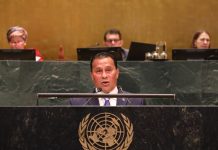
“The Yap Resilience Hub is not just a project; it is a promise to safeguard the coral reefs that are the lifeblood of Yap,” said Dr Yimnang Golbuu, TNC’s conservation director in Micronesia and Polynesia.
“Protecting our reefs is not only a conservation endeavor, but a moral responsibility to our communities and to generations yet to come.”
The Yap Resilience Hub is part of the GBRF-funded Resilient Reefs Pasifika initiative to assist island states in implementing a collective strategy to restore and protect the region’s coral reef systems from significant threats posed by climate change.
For Pacific islands, coral reefs are not only a source of sustenance, but also a foundation of its traditions and identity.
Experts warn that reefs in the Pacific are expected to experience severe coral bleaching conditions at least twice per decade by the 2030s, with severe bleaching expected annually by the 2040s.
Pacific island countries and territories, however, remain the most underfunded and least equipped to respond and adapt to climate impacts.
“We know the challenges before us. Yet, we also know the enduring strength of the people of Yap, their traditions and the power of partnership,” Golbuu said.
The Yap Resilience Hub will combine scientific knowledge, traditional practices and community leadership to chart a course to a more sustainable, resilient and biodiverse future, TNC said in a statement.
Golbuu said the Yap hub “demonstrates how innovation and heritage can walk hand in hand to protect what we cherish most.”
TNC said the Yap Resilience Hub emphasises community ownership and culturally appropriate approaches, ensuring that local knowledge and priorities guide project design and implementation.
The project, which will continue through 2028, focuses on capacity building for communities and delivery partners will be central to achieving long-term, sustainable outcomes, TNC said.
With approximately AUD$1.5 million (US$1.08 million) in implementation funding per hub, each will coordinate and fund local reef resilience projects, support regional capacity building, and foster collaboration across sectors.