


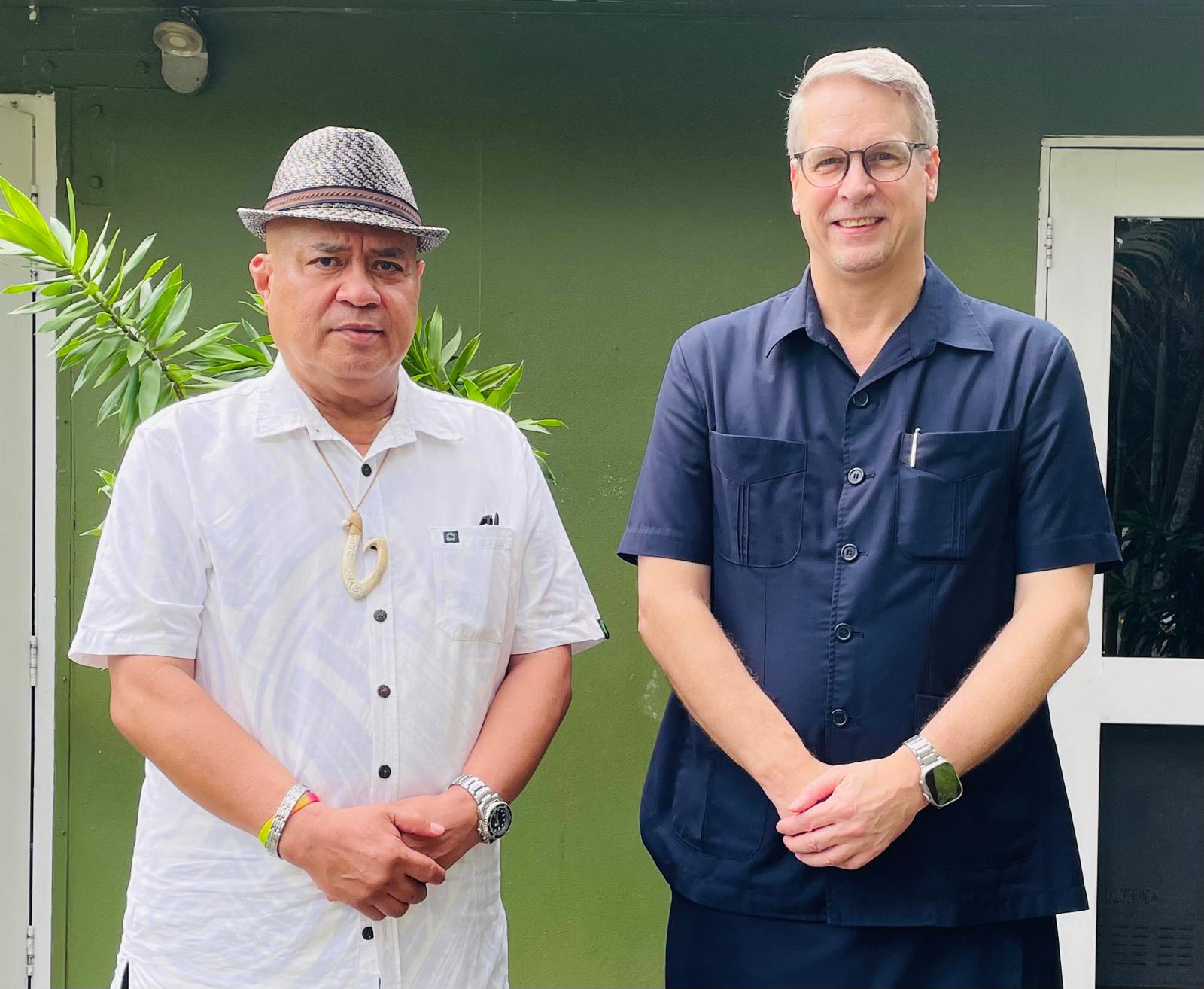
The United Nations has reaffirmed its support for Tuvalu’s climate leadership, with United Nations Resident Coordinator in Fiji Dirk Wagener holding talks with Tuvalu Prime Minister Feleti Teo on upcoming climate negotiations, energy transition plans and regional priorities.
Wagener said discussions focused on Tuvalu’s preparations for major international climate engagements and the country’s push toward a fossil fuel-free future.
“I met with the Prime Minister of Tuvalu Feleti Penitala Teo to exchange views on upcoming climate engagements and key coordination priorities.”
Wagener said the talks covered a range of strategic issues, including preparations for Pre-COP activities and future global climate events.
“Our discussion covered preparations for Tuvalu’s Pre-COP engagement, green transformation efforts, development partner coordination, and advancing a fossil fuel–free future, including the 2027 Conference on Transitioning Away from Fossil Fuels, which Tuvalu will co-host.”
The meeting also examined how the United Nations system can strengthen support for Tuvalu as it confronts mounting climate and development pressures.
“We also explored how the United Nations system can provide strategic and practical support through technical expertise, stronger coordination, and targeted development assistance to respond to Tuvalu’s immediate priorities and challenges.”
Wagener acknowledged Tuvalu’s growing role in global climate diplomacy, particularly on issues affecting Small Island Developing States.
“Tuvalu’s leadership continues to be instrumental in advancing Pacific priorities on climate action, SIDS advocacy, climate finance, adaptation, and climate mobility.”
He said the United Nations remains committed to ensuring Pacific countries are represented in international climate discussions and decision-making processes.
“The United Nations remains committed to ensuring Pacific voices and leadership are reflected in global climate processes.”
Tuvalu has become one of the Pacific’s most outspoken voices on climate change, consistently pushing for stronger global action on emissions, climate finance and fossil fuel transition efforts as low-lying island nations face increasing threats from sea-level rise and extreme weather events.