



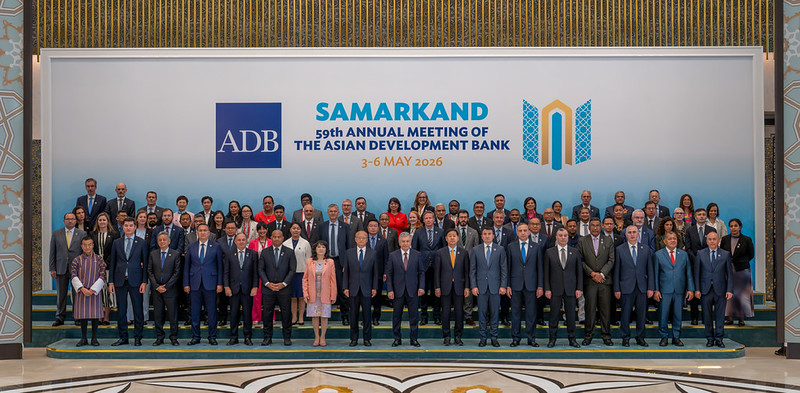
By Makereta Komai, PACNEWS Editor in Samarkand, Uzbekistan
The Asian Development Bank (ADB) says its new Pacific Approach of 2026-2030 will focus heavily on building long-term resilience in small island economies as they face increasing exposure to global shocks, from pandemics to geopolitical crises and climate-related disasters.
ADB Director General for the Pacific Department, Emma Veve said lessons from COVID-19 and the current instability linked to the Middle East crisis have reinforced the need for stronger regional systems capable of absorbing and responding to external disruptions.
“The Pacific economies are volatile. As very small, open, narrowly based economies, they are more susceptible to every single shock—economic, natural disasters, or health crises like COVID,” Veve told PACNEWS in Samarkand, Uzbekistan where the ADB Annual meeting is underway.
She said the new Pacific Approach will guide ADB engagement over the next five years across its 12 smallest Pacific developing member countries as well as Fiji, with resilience at its core.
Veve said resilience-building will extend beyond financial systems to include government institutions, private sector capacity, and community preparedness.
At the national level, she said countries are increasingly adopting fiscal tools such as sovereign wealth funds—described as long-term savings mechanisms—to help cushion economies during periods of external stress.
ADB is also expanding support for disaster risk financing mechanisms, including contingent financing instruments that allow governments to quickly access emergency funds following natural disasters such as cyclones and earthquakes.
“These facilities provide governments with funding they can draw down quickly in the event of emergencies,” Veve said.
She said such instruments are already in use across several Pacific countries, helping governments respond more rapidly when disasters strike.
Beyond financial tools, ADB is also supporting preparedness initiatives at community level, including evacuation training and resilience planning in schools and local communities to improve readiness before disasters occur.
Veve also confirmed the launch of a new Pacific-focused financing facility, known as PREPARE, which will expand disaster preparedness and risk financing support in the region.
She said the facility, backed by contributions including from the Government of Japan, will enhance the region’s ability to prepare for and manage disaster risks more effectively.
Under the initiative, ADB will also work with regional partners including the Pacific Catastrophe Risk Insurance facility to strengthen disaster insurance and risk transfer mechanisms.
Veve said the combined approach—linking financial resilience, institutional strengthening, and community preparedness—is designed to ensure Pacific countries are better able to withstand increasingly frequent and complex external shocks.