

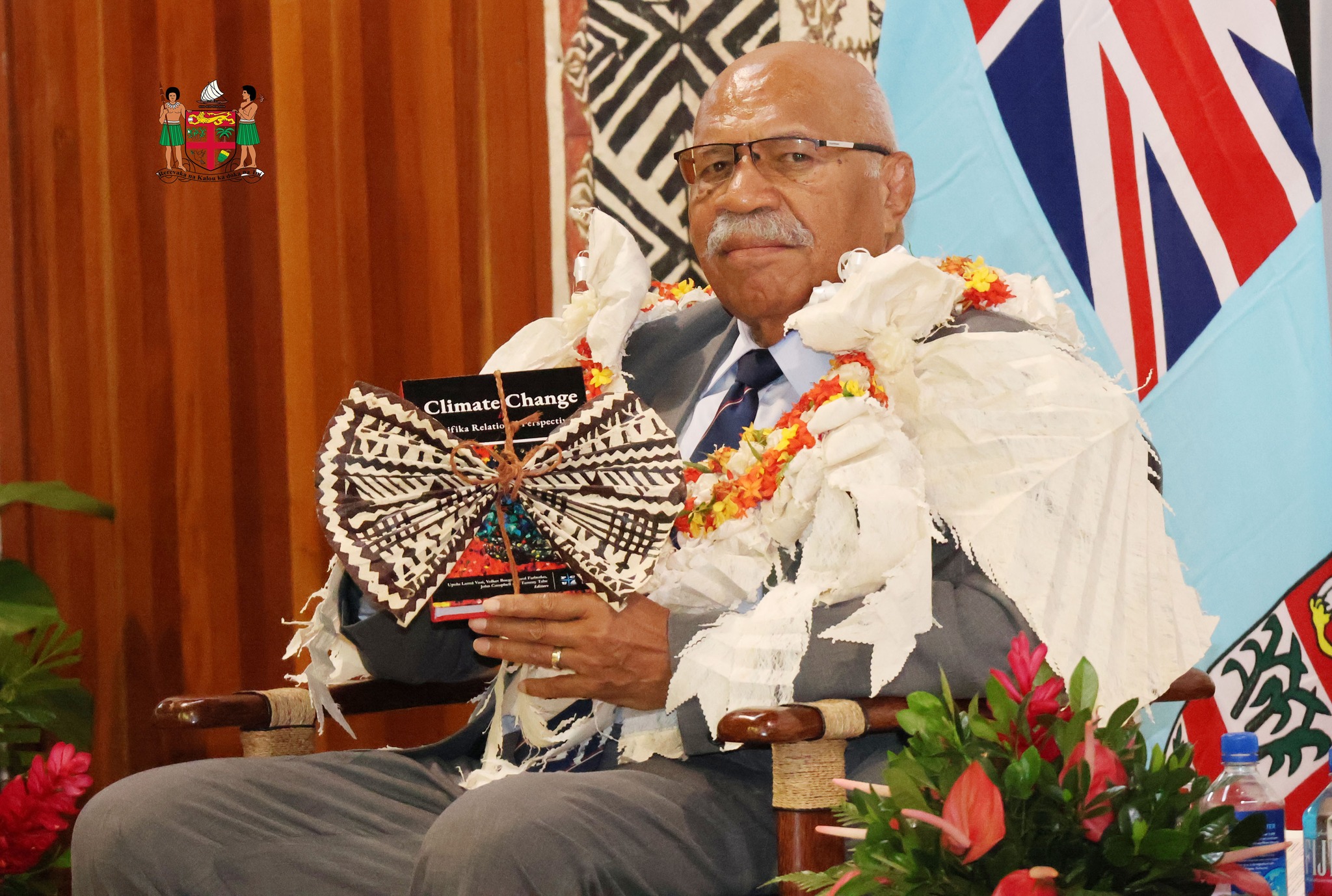
‘For Fiji, climate change is encountered through our relationship with the Vanua, ocean, communities, and in our faiths.’
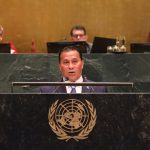
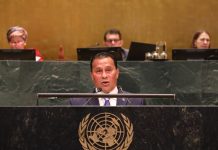
These were the sentiments shared by the Prime Minister Sitiveni Rabuka at the launch of the book “Climate Change in Pasifika Relational Perspectives” in Suva Tuesday.
The book “Climate Change in Pasifika Relational Perspectives” is published by the Pasifika Communities University Press under the Toda Peace Institute, led by Rev Dr Upolu Lumā Vaai, and edited by Dr Volker Boege, Dr Carol Fartbotko, Professor John Campbell, and Dr Tammy Tabe.
The Prime Minister said Pacific societies have never viewed life only through technical or rational lenses, noting that responses to crises are guided by spiritual responsibility, political relationships, and moral obligation.
“While science, technology, and evidence-based policy remain natural, they cannot stand alone,” Rabuka stated.
Recognising that climate change issue is more a global multifaceted threat, Hon. Prime Minister said there was a need to develop multifaceted responses through quality research, one that also recognises the wisdom of our communities and forebears.
“As climate change increasingly reshapes global concessions on security and stability, the Pacific offers an important perspective. It holds approaches that are effective rather than reactive, relational rather than transactional and grounded in long-term responsibility.”
“This volume stands as a compelling testament to Pacific thoughts, Pacific leadership, and Pacific collective goals. It brings together rigorous insight, cultural wisdom, and forward-looking perspective to frame a distinctly Pacific response to climate change, one that is answered in stewardship, shared responsibility, and enduring regional best.
“Beyond articulating the scale of our challenges, it advances a strategic vision that connects climate action with peace, with security, and sustainable development. In doing so, it reinforces the Pacific’s role, not only as a region of vulnerability, but a region of solutions, leadership, and innovation.”
Rabuka said the book addresses a significant gap in climate change discourse and aims to introduce alternative marginalised approaches to the climate discourse, particularly highlighting the relationship between climate science and the relational wisdom of forebears and Pacific communities.
“As the editors have declared, the two, climate science and the communities-based knowledge and faith, must be held together in a ‘whole of life’ fashion for an effective approach to climate change, security, and peace.”
The Prime Minister said the volume is a timely reminder of the power of spirituality in addressing global challenges like climate change.
The book transcends the confines of the Western philosophical view that forms the basis of the conventional climate discourse. It is grounded in the all-encompassing interconnectedness of tensions and contradictions and relationality of ways of being and knowing.