

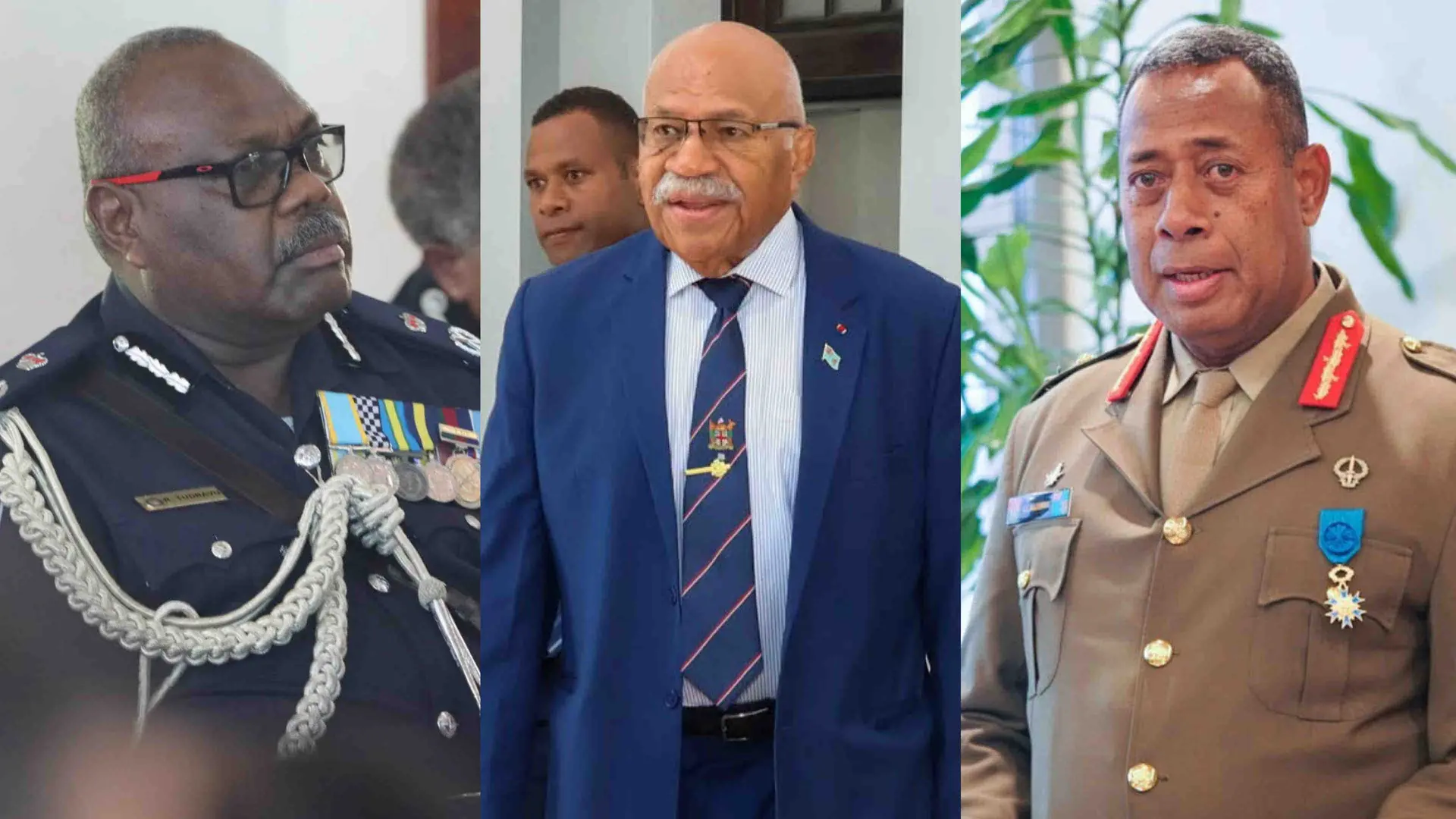
Fiji Prime Minister Sitiveni Rabuka has hinted on a possible national state of emergency amid escalated joint operations between the military and Police to tackle the growing illicit drug problem in Fiji.
Rabuka confirmed this to the Fiji Sun, following discussions with the National Security Council last week.
On Monday, Rabuka met Police Commissioner Rusiate Tudravu, and Republic of Fiji Military Forces (RFMF) Commander, Major-General Ro Jone Kalouniwai, for a briefing on the general security of the nation.
“If there is to be any escalation, they will make the recommendation,” he said referring to the heads of the two institutions.
At the national talanoa session on Responding to Illicit Drugs in Fiji in February this year, the RFMF highlighted that it has already assessed its role in the war against illicit drugs based on external threats, and the problem that internal institutions were compromised.
Traditionally, Police dealt with drug issues until recent events, which indicated that drug cartels are emboldened to challenge national security.
Opposition Member of Parliament Jone Usamate said declaring a state of emergency would mean certain rights of people would be given up.
“To go to that step is quite serious because it means that there’s something that we really need to address as a nation,” he said.
Usamate said Fiji the link between drug use and increasing rate of HIV/AIDS infections does not look good for Fiji. However, he emphasised that there are criteria boxes that needed to be checked before a state of emergency is declared.
Fiji Council of Social Services (FCOSS) president Sepesa Rasili maintains that any discussions regarding a state of emergency must be based on a sound and thorough analysis of the actual threats posed.
“Crucially, this analysis must be informed by direct community feedback and reporting to ensure that decisions are grounded in the lived realities of our citizens and not based solely on top-down security assessments,” he said.
Constitutional lawyer Shaista Shameem indicated that decisions relating to a state of emergency must be guided by constitutional provisions.
Chapter 9 on emergency powers said :154.—(1) The Prime Minister may, on the recommendation of the Commissioner of Police and the Commander of the Republic of Fiji Military Forces, declare a state of Emergency in Fiji, or in part of Fiji, and may make regulations relating to a state of emergency, if there are reasonable grounds to believe that— The security and safety of all or part of Fiji is threatened; and it is necessary to declare a state of emergency to deal effectively with the threatening circumstances.
Under such declaration, certain rights under the Bill of Rights can be limited, but only to the extend strictly neccessary to deal with the emergency.