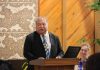


A Pacific leader has criticised Prime Minister Anthony Albanese as the region stares down the climate crisis, while signalling his country will “definitely” seek assistance from China amid global energy turmoil.
Vanuatu’s climate change adaptation minister Ralph Regenvanu’s comments come against a backdrop of Australia failing to secure a $500 million (US$358 million) security pact with Vanuatu in September last year, while China eyes regional influence in the Indo-Pacific.
An outspoken climate advocate, Regenvanu told SBS News that Australia “needs to think hard about where its future lies” in relying on fossil fuels, as a chokehold on oil shipments the Strait of Hormuz continues to threaten the country’s energy security.
Albanese landed in Malaysia on Wednesday, after travelling to Brunei and Singapore over the past week, to secure assurances Australia will continue to receive petrol and diesel from the countries the government is dependent on for supply.
“Australia has a great opportunity to transition to renewable energy, as it is already doing in the domestic market. And any resources spent on additional fossil fuels is resources taken away from the transition,” Regenvanu told SBS News.
“To go looking for even more fossil fuels from outside — I don’t think it’s the right approach.”
Regenvanu also threw his support behind Australia introducing a 25 per cent gas export tax, an idea which has gained traction from the crossbench and Greens during the war in the Middle East.
“We are concerned about Australia continuing to supply LNG [liquefied natural gas] to the Asian economies,” he said.
“There’s a need to rein this in, in alignment with international law. There’s a need to phase out these exports as well.”
When asked about whether it was time for a gas export tax to be introduced, Albanese said any changes would be found in the upcoming federal budget, to be handed down in three weeks.
Energy Minister Chris Bowen stressed Australia’s first priority was supply, but recognised the importance of diversifying energy — including with renewables — during times of global conflict.
“There isn’t one country in the world that said: ‘You know what this fuel crisis reminds us, is we need more fossil fuels’,” he told reporters on Monday.
“No war can impede the flow of sun to Australia. No sanctions can be applied to wind.”
The Pacific Islands are some of the most vulnerable to the effects of climate change as rising sea levels have threatened their long-term existence.
They are also among the most vulnerable to fuel shortage shocks, with the United Nations warning this week that, with Pacific nations at the end of the global supply chain, they could be pushed into deeper economic insecurity.
The Marshall Islands have declared a state of economic emergency, while one Papua New Guinean fuel supplier has started rationing. Tuvalu has ordered its government staff to work from home.
Regenvanu said Vanuatu has enough fuel reserves until the end of June, but residents will likely start seeing fuel and food price hikes by May.
Vanuatu has not asked for help with energy security from Australia yet, but Regenvanu did not rule it out.
“We are definitely going to reach out to China as well,” he said.
“I don’t think anyone has anything to be concerned about Vanuatu doing what it does as a sovereign state.
“We are not going to be a militarised state in any way. We will never host any foreign military bases. We will never abide any foreign interference in our infrastructure,” he said.
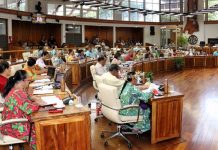
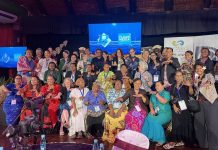
Regenvanu’s criticism come as Pasifika leaders wrap up three-day talks in Port Vila to manage a transition away from fossil fuels, ahead of a major international summit in Colombia later this month.
But Regenvanu said that the delayed and unsigned agreement between Australia and Vanuatu is “on the cusp” of being finalised.
The proposed 10-year, $500 million (US$358 million) Nakamal agreement was aimed at funding Vanuatu’s key economic and climate priorities, while locking in Australia as Vanuatu’s security partner of choice.
But last-minute sticking points emerged while Albanese travelled to Port Vila last September to sign the pact, due to concerns from Vanuatu officials it could hurt the country’s economic ties with China.
Pacific Affairs Minister Pat Conroy told the ABC on Monday the federal government was open to helping Pasifika communities where possible.
“We’re continuing to talk to our Pacific neighbours — we’re proud to be a part of the Pacific family and to understand what the challenges there are,” he said.