
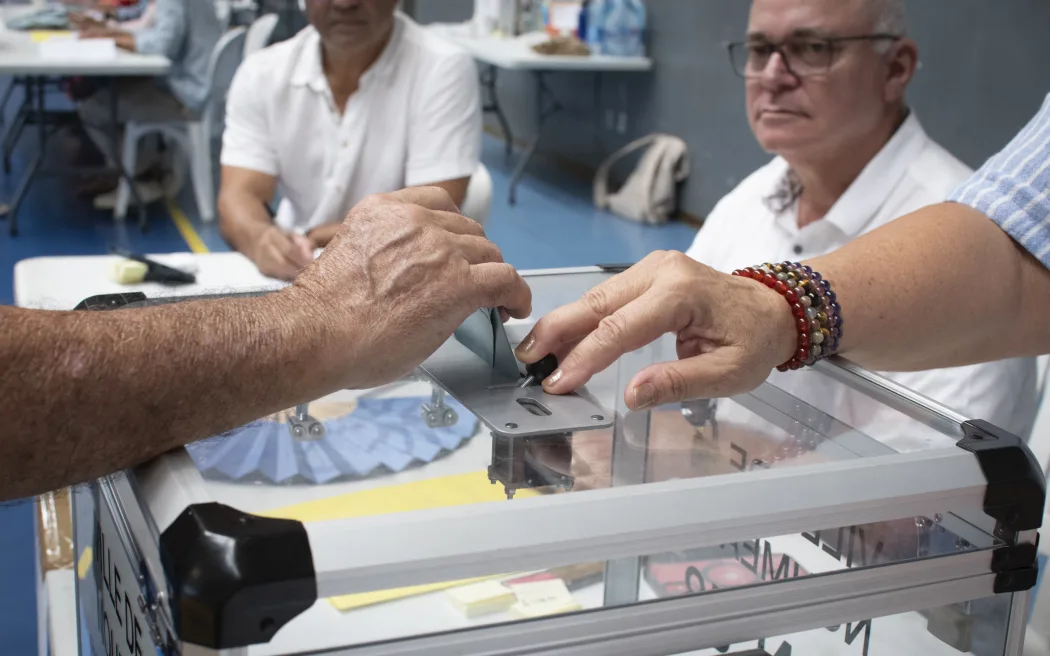
Concerns over voter access and representation have emerged following municipal elections in New Caledonia, as second-round results confirmed a widening political divide between urban and rural communities.
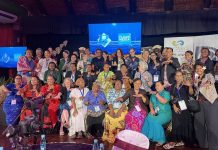
Roselyne Makalu, President of Women Weaving Peace KNC, said the elections exposed structural barriers that may have limited participation among vulnerable groups, particularly Indigenous Kanak and working-class communities.
“The official results confirm a deeply fractured New Caledonia,” she said, citing stark contrasts in turnout between urban centres and rural areas.
The two-round elections, held on 15 March and 22 March, saw pro-France parties consolidate their dominance in the capital, Nouméa, where incumbent mayor Sonia Lagarde secured re-election with 62 percent of the vote. However, Makalu said disparities in participation observed in the first round appeared to carry through to the final outcome.
She pointed to the centralisation of polling stations in Nouméa, reduced from 56 to eight, as a key factor.
“This sent a signal of complexity and exclusion,” Makalu said.
The changes, she said, disproportionately affected voters without access to private transport.
“Those who own a vehicle can vote easily; those who rely on public transport, non-existent on Sundays, are discouraged,” she said.
Makalu said the increased distances to polling stations effectively excluded some voters, particularly the elderly and those in precarious situations.
“The increased distances constituted a de facto exclusion for elders and the most precarious citizens,” she said.
In contrast, she noted that rural and island communities recorded higher turnout, where polling access remained localised.
“This proves that citizens wish to participate actively in civic life, provided that logistical barriers are not erected between the citizen and the ballot box,” she said.
Makalu warned that such barriers risk undermining confidence in democratic processes, particularly in the aftermath of the 2024 unrest triggered by proposed electoral reforms.
“Organising an election while restricting physical access for the most marginalised, the very people who expressed their suffering during the 2024 insurrection, is a form of democratic obstruction,” she said.
She added that no corrective measures were introduced between the two rounds of voting.
“To date, no measures have been put in place… We will unfortunately have to rely on citizen solidarity to overcome logistical and financial obstacles,” she said.
Makalu also raised concerns about representation following the loss of pro-independence seats in Nouméa.
“The fact that Unité Pays… lost its two seats in Nouméa means that a significant portion of the population will no longer be represented,” she said.
She warned that young people and residents of working-class neighbourhoods risk being left out of decision-making.
“Young people were at the heart of the events; they expect concrete perspectives for integration and consideration,” she said.
Despite this, she said support for pro-independence movements remained strong outside urban centres.
“That said, in the rest of the territory… the pro-independence grassroots remain solid,” she said.
The final results largely mirrored the disparities Makalu highlighted, with lower turnout in Nouméa and continued pro-independence support in rural areas, while pro-France parties retained control of the capital and surrounding municipalities.
Makalu also pointed to a rise in female political participation.
“I want to believe that we are progressively moving from a ‘forced’ parity to a parity of power,” she said.
The elections come amid ongoing debates over New Caledonia’s political status and proposed constitutional reforms by France.
“We are traversing a profound political, economic and social crisis,” Makalu said.
While the results confirmed the strength of pro-France parties in the capital, Makalu said the broader issue remains whether all citizens had equal access to participate in the democratic process.