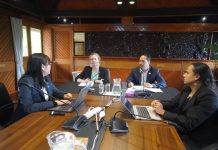
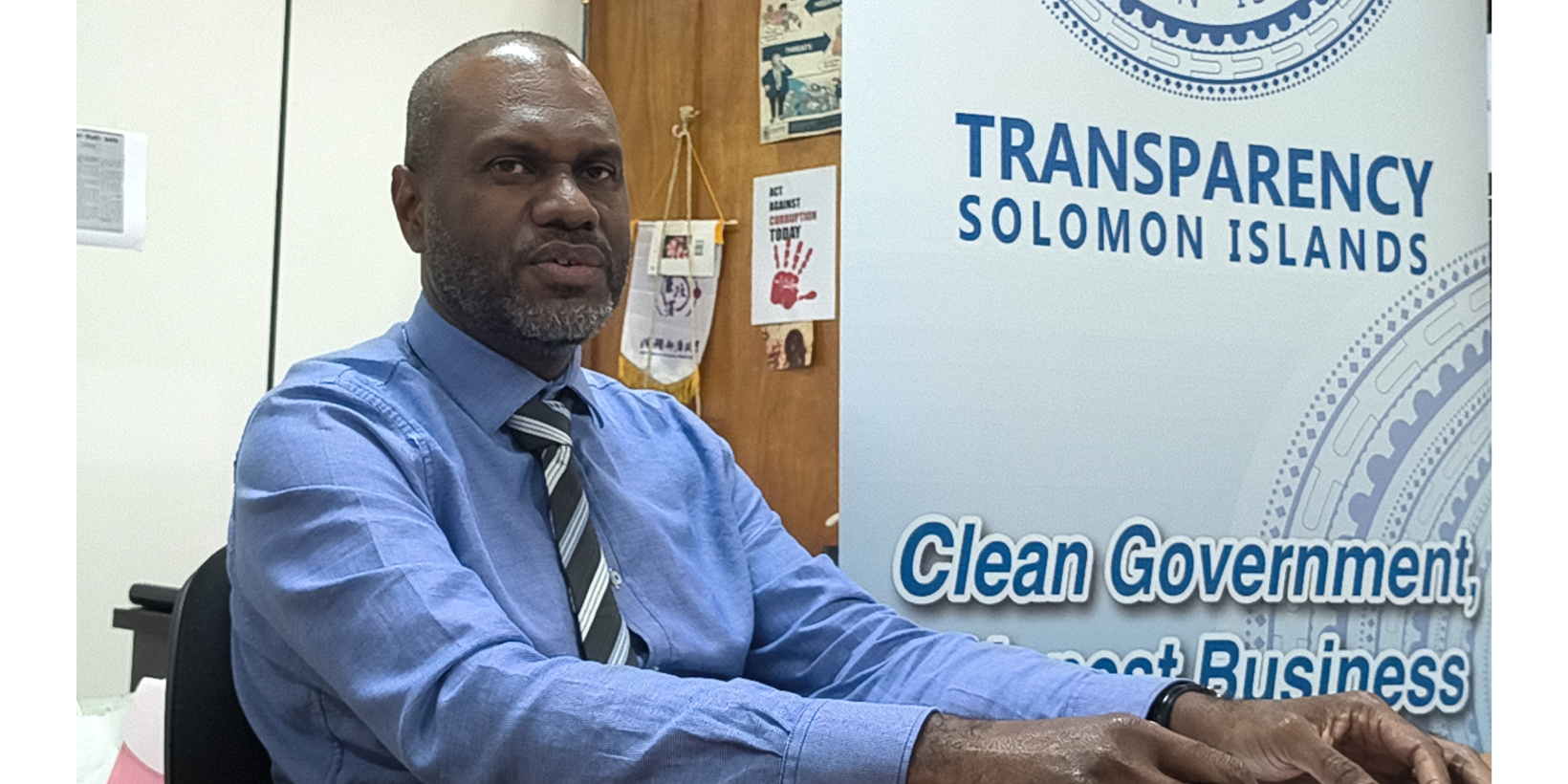
Solomon Islands remains mired in “significant corruption challenges”, Transparency Solomon Islands (TSI) warned today at the launch of the 2025 Corruption Perceptions Index (CPI).
This is despite the country recording a modest improvement in its global standing.
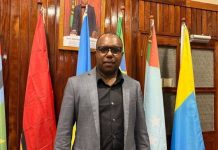
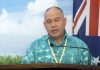
TSI chair Rodney Kingmele said Solomon Islands scored 44 out of 100, up one point from last year, and climbed three places to 73rd out of 180 countries — but cautioned that the result should not be mistaken for meaningful progress.
“A score of 44 means we are still perceived as having serious corruption problems that undermine our nation’s development,” Kingmele said.
The 2025 CPI carries the theme “The Integrity of Electoral Processes and Their Importance to the Integrity of Political Leadership,” which Kingmele described as a timely warning with national elections just two years away.
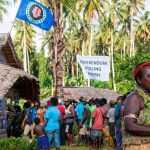
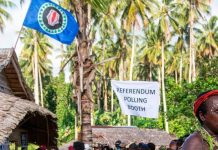
He said corruption has seeped into the electoral process, with voters trading ballots for constituency funds and candidates contesting elections primarily to access public resources.
“Votes are sold and bought with cash,” Kingmele said.
“Politicians monetise elections using public funds and foreign money, creating an uneven playing field,” he added.
“When there is no integrity in our electoral processes, there can be no integrity in political leadership — and therefore no genuine commitment to fighting corruption.”
Kingmele stressed that responsibility does not lie solely with politicians.
“We cannot continue to blame only our representatives — we are equally responsible for where our country is today,” he said, urging citizens to reject vote-buying and demand accountability.
While acknowledging the slight improvement in the CPI score, Kingmele pointed to a string of scandals that continue to damage public trust.
Among them are the multi-million-dollar health procurement scandal, allegations of police bribery in criminal investigations, the misuse of the Economic Stimulus Package, and persistent corruption risks in the logging and mining sectors.
He also warned that weak oversight of the controversial constituency development funds (CDF) continues to enable the misuse of public resources.
Particularly concerning, he said, is the “paralysis” of the Solomon Islands Independent Commission Against Corruption (SIICAC), which has long been seen as central to strengthening enforcement.
“The CPI is a call for action,” Kingmele said, urging the Government for National Unity and Transformation (GNUT) to resource the Electoral Commission and demonstrate stronger political commitment to integrity.
Within the Pacific, Solomon Islands sits in the middle of the pack.
Fiji scored 55, Vanuatu 47, while Papua New Guinea lagged at 26, highlighting both the country’s relative stability and the distance still to travel.
“A higher score signals stronger institutions and reduced corruption risks, making Solomon Islands more attractive to genuine investors,” Kingmele said, calling on businesses to refuse corrupt practices.
The CPI – widely regarded as the world’s leading gauge of perceived public sector corruption – ranks countries from 0 (highly corrupt) to 100 (very clean) using assessments from international institutions and risk analysts.
For years, Solomon Islands has hovered in the low-to-mid 40s, reflecting persistent governance concerns despite repeated reform pledges.
Analysts say structural issues – including heavy reliance on constituency funds, limited investigative capacity, political patronage, and resource-sector governance – continue to expose the country to corruption risks.
The delayed operational strengthening of SIICAC has also drawn criticism from civil society groups, who argue that without visible prosecutions and enforcement, deterrence remains weak.
Kingmele framed the latest index not as a verdict, but as a moment of choice.
“The question is not whether we can improve — our one-point gain proves we can,” he said.
“The question is: do we have the courage and commitment to do what is necessary?”
He added that integrity in elections is fundamental to restoring public confidence and ensuring leaders are genuinely committed to combating corruption.
“Today’s launch is about our collective commitment to build a Solomon Islands where integrity matters, where elections are free from corruption, and where our votes truly count,” said Kingmele.