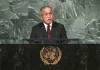
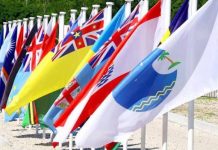

Solomon Islands’ UN envoy Jane Waetara addressed the General Assembly review of the Global Plan of Action on human trafficking on behalf of Pacific Islands Forum members.
In her statement, Ambassador Waetara reaffirmed the Forum members’ commitment to the principles of the Global Plan of Action to combat trafficking.
She emphasised that trafficking in persons in the Pacific is a growing threat that undermines security, hinders development, and violates human dignity.
Ambassador Waetara noted that trafficking encompasses not only the movement of persons but also exploitation, including forced labour, abuse of migrants, and sexual exploitation, particularly of women and children.
She further highlighted that trafficking in persons intersects with other transnational crimes, including illicit drug trafficking, cybercrime, and financial fraud.
Ambassador Waetara stressed that the Pacific is increasingly being targeted not only as a transit point but also as a destination for these crimes.
She highlighted the region’s collective response, as reflected in the Boe Declaration, the Pacific Regional Strategy for Combating Transnational Organised Crime, and the 2050 Strategy for the Blue Pacific Continent.
The Forum called for stronger partnerships with the United Nations system, including the United Nations Office on Drugs and Crime (UNODC), the International Organisation for Migration (IOM), and the Office of the United Nations High Commissioner for Human Rights (OHCHR), to support Pacific regional efforts in addressing these challenges.
She also urged UN Member States to recognise the unique vulnerabilities of Small Island Developing States (SIDS) and ensure that global frameworks respond effectively to their realities.
Meanwhile, the Permanent Representatives of the Pacific Islands Forum (PIF) to the United Nations held a meeting with the three United Nations Resident Coordinators (RCs) for the Pacific at the United Nations Headquarters in New York.
The meeting brought together the three UN Resident Coordinators responsible for the Pacific region:
• Dirk Wagener, UN Resident Coordinator for Fiji, Solomon Islands, Tonga, Tuvalu and Vanuatu;
• Karla Robin Hershey, UN Resident Coordinator for Samoa, Cook Islands, Niue and Tokelau; and
• Mamadou Kane, UN Resident Coordinator for the Federated States of Micronesia, Marshall Islands, Palau, Kiribati and Nauru.
Solomon Islands Permanent Representative to the UN, Jane Waetara, chaired the meeting in her capacity as Chair of the Pacific Islands Forum membership based in New York.
The meeting provided an opportunity for the Resident Coordinators to brief Permanent Representatives on their work across the Pacific, promote information sharing, and further strengthen cooperation between the Pacific Islands Forum group and the UN Resident Coordinator system.
During the discussions, the Ministry of Foreign Affairs and External Trade reiterated its call for an elevated United Nations presence in Solomon Islands, including the establishment of a dedicated Resident Coordinator for the country.
Ambassador Waetara acknowledged the United Nations’ continued commitment to the Pacific and underscored the vital role of Resident Coordinators in ensuring sustained UN engagement in the region.
She emphasised their importance in advancing national and regional development priorities and in supporting the achievement of the Sustainable Development Goals (SDGs) across Pacific Island countries.
She also noted that the PIF group looks forward to tabling the biennial Resolution on Cooperation between the United Nations and the Pacific Islands Forum.
The meeting further discussed the UN80 reform initiative and its potential implications for the Pacific region.
Permanent Representatives highlighted the importance of active engagement by the PIF group throughout the UN80 reform process.
A recurring theme in the discussions was the need to ensure that any reforms do not compromise support for Small Island Developing States (SIDS), including the preservation of UN programmes tailored to SIDS and strengthened coordination through the UN Resident Coordinator system in the Pacific.