

By Pita Ligaiula in Manila, Philippines
The 17 members of the Forum Fisheries Agency (FFA) have put the Western and Central Pacific Fisheries Commission (WCPFC) on notice at this week’s annual meeting in Manila, delivering a firm letter to the Tuna Commission Chair outlining the Pacific’s united priorities and warning that Small Island Developing States (SIDS) cannot continue carrying disproportionate burdens in managing the world’s largest tuna fishery.
In their detailed submission, FFA Members’ Positions on Key Priorities for WCPFC22, Pacific countries set out clear expectations for decisions on South Pacific albacore, high-seas transshipment, SIDS special requirements, and climate-resilient fisheries management.
FFA officials highlighted that their positions are rooted in sustainability, fairness, and the interests of Pacific people who depend on tuna resources. The bloc stresses that the Commission must reinforce accountability, strengthen conservation rules, and uphold equity for SIDS across all WCPFC processes.
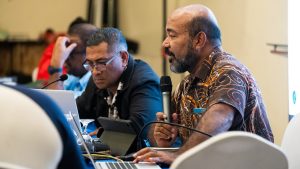 A central demand is a fully independent review of Article 30, the cornerstone of the WCPF Convention that requires the Commission to recognise and support the special requirements of developing States.
The letter states that while progress has been made, the growing complexity of WCPFC obligations is outpacing current support systems.
FFA members said that the review is essential to “highlight the Commission’s progress in implementing Article 30 and identify areas for improvement,” calling for every newly adopted or revised conservation measure to include a mandatory SIDS special requirement review clause.
The FFA’s message on transshipment is equally blunt.
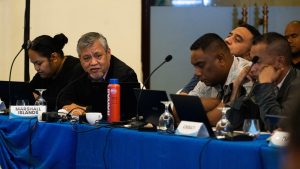 The bloc reiterates its long-held position that high-seas transshipment is banned unless stringent “impracticability” tests are met — standards that many flag States have ignored for years.
The submission reminds the Chair that Conservation and Management Measure (CMM) 2009-06 clearly prohibits high-seas transshipment unless a vessel predates 2010 and meets strict hardship criteria. The FFA proposes new decision language to finally enforce those rules, including:
“No vessel built in 2010 or later shall be permitted to engage in high-seas transshipment without written authorisation from the Commission; a public list of all vessels actually transshipping on the high seas; and a firm reminder that Cooperating Non-Members cannot claim rights to provide high-seas carrier vessels,” the FFA states.
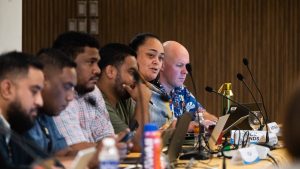 FFA Members also reiterate support for the rule change adopted last year requiring non-SIDS to share costs for developing-state participation at WCPFC meetings.
They ask that this arrangement be maintained beyond 2025 to ensure Pacific countries can remain active and engaged in decision-making.
With albacore management, climate pressures, data gaps and compliance failures all looming large, the FFA tells the Chair that the Pacific is arriving in Manila united, prepared and with clear expectations for outcomes that strengthen sustainability and protect the interests of SIDS.
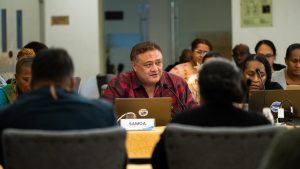 The Pacific wants decisions in Manila, not delays and a WCPFC that is fair, accountable and ready for a changing ocean.
The WCPFC meeting is being held this week from 01–-5 December.