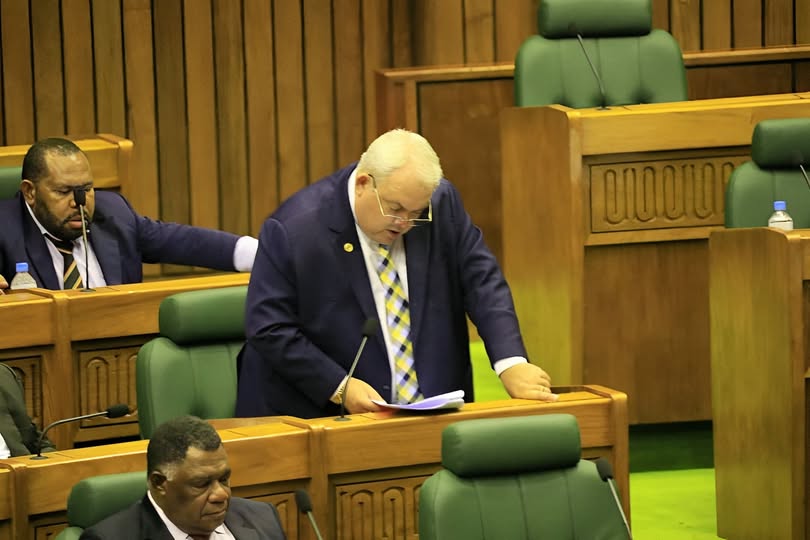
Papua New Guinea has launched its most significant foreign policy overhaul in more than 40 years, with Foreign Minister Justin Tkatchenko warning Parliament that the country must adapt to a “complex and dynamic international landscape” or risk being left behind.
Presenting the 2025 Papua New Guinea Foreign Policy White Paper on Thursday, Tkatchenko said the new blueprint marks a decisive shift from the country’s outdated 1981 framework and places security, economic resilience and
global partnerships at the centre of PNG’s external engagement.
“This Foreign Policy White Paper is a roadmap in articulating Papua New Guinea’s evolving foreign policy direction in an increasingly complex and dynamic international landscape,” he told MPs.
“It reinforces the foundational doctrine of Friends to All, Enemies to None; while adapting to contemporary realities.”
Tkatchenko said the government initiated the review because “Foreign Policy should be seen as an extension of domestic policy, with a core aim to improve citizens lives through global engagement.”
“At its heart, this foreign policy aims to promote national security, economic prosperity, social well-being and a sense
of national unity, through dynamic partnerships and purposeful diplomacy.” he added.
The White Paper outlines eight strategic pillars that will guide the country’s foreign policy machinery:
*1. Bilateral relationships:
PNG will deepen ties with Australia, Indonesia, China, Japan, ASEAN members, Pacific neighbours, the U.S and
Europe. “Reciprocity and mutual benefit will be driving principles for us,” Tkatchenko said.
*2. Effective multilateralism:
He emphasised the importance of bodies such as the UN, WTO, APEC, PIF and MSG, noting PNG’s ambition to join
ASEAN and support UN Security Council reform.
*3. Robust institutions for sovereignty and security:
PNG will boost defence and policing capabilities, strengthen borders and improve resilience to cyberattacks and
climate threats, working closely with partners including Australia and the U.S.
*4. Economic and commercial diplomacy:
“Facilitating international trade and investment agreements… can help grow our economy, reduce reliance on foreign
aid, and create jobs,” Tkatchenko said.
*5. Development cooperation:
All aid partnerships must align with national priorities and support sustainable, inclusive growth.
*6. National branding and soft power:
“We will work to strengthen perceptions of our country,” he said, highlighting efforts to promote PNG as a competitive, reliable partner and build national pride.
*7. Departmental and diplomatic reform:
A new Foreign Service Act, diplomatic academy, stronger ICT systems and expanded staffing will modernise PNG’s overseas missions.
*8. Leadership and coordination:
Whole-of-government coherence, evidence-based decisions and closer engagement with non-government partners will underpin implementation.
Tkatchenko said PNG’s geography, population and resources position it as a “bridge and a partner of choice” between Asia and the Pacific — but warned that governance, law and order, and climate vulnerability continue to demand international cooperation.
“The White Paper outlines a foreign policy for a self-assured Papua New Guinea, grounded in our national values and principles, responsive to global changes, and dedicated to achieving peace, prosperity, and international respect,” he said.
He urged Parliament to endorse the policy fully.
“Through principled partnerships and strategic investments in our institutions, we are collectively positioning Papua New Guinea as a regional leader and a constructive player on the world stage.”
“Thank you, Speaker, I commend the 2025 Papua New Guinea Foreign Policy White Paper entitled Strategic Partnerships for Security and Economic Prosperity; to Parliament for its endorsement, said Tkatchenko.