

Fiji’s Minister for Fisheries and Forestry, Alitia Bainivalu, has issued a blunt warning that illegal, unreported and unregulated (IUU) fishing is draining FJD$50 million (US$25 million) from the country’s blue economy every year and says the Government is now moving to tighten laws, expand surveillance and push technology-driven enforcement across its vast ocean territory.
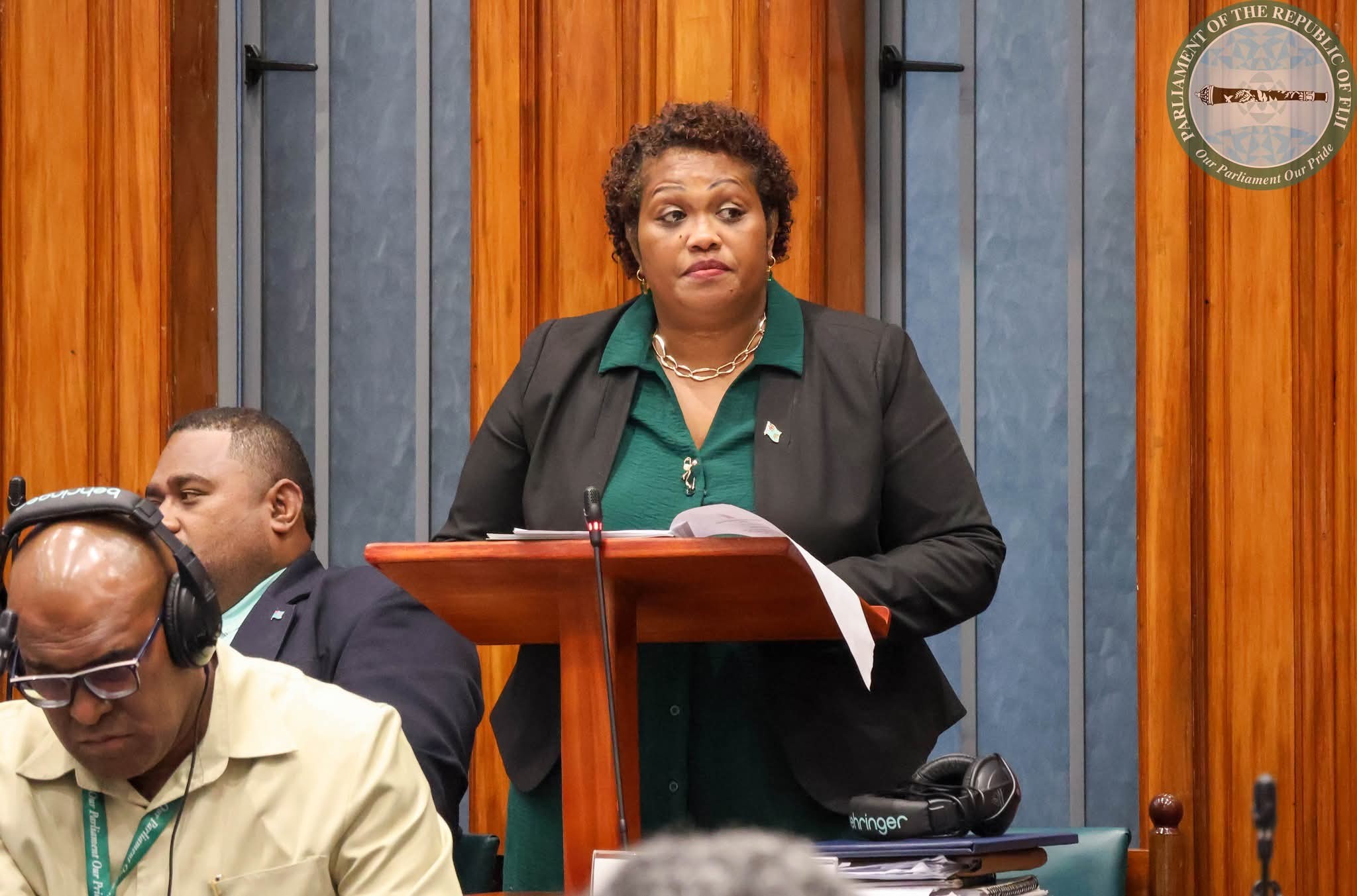
Delivering her ministerial statement in Parliament Tuesday, Bainivalu said Fiji’s 1.3 million square kilometre EEZ remains highly vulnerable to organised illegal fishing.
“Fiji, being a large ocean state with an Exclusive Economic Zone of approximately 1.3 million square kilometres, primarily faces challenges of monitoring, control, surveillance, and enforcement,” she said.
“IUU fishing involves the violation of fisheries regulations and the management measures that protect fish stocks and biodiversity. IUU fishing is about fishing for commercial purposes without a fishing license, or poaching in marine protected areas, or using prohibited fishing gears such as dynamites and underwater breathing apparatus, or catching and selling prohibited and undersized fish, or non-reporting and misreporting of fisheries catches.”

Bainivalu said offenders operate across all areas from rivers and customary fishing grounds to the high seas.
“The increase in domestic and international demand for seafood, along with limited alternative livelihoods, the push for higher profits and financial incentives, and weak regulations, creates an environment conducive to illegal fishing.”
She told Parliament the financial loss is significant: “IUU fishing results in a loss of approximately FJD$50 million, equivalent to USD$21.8 million in annual revenue to our blue economy.”
Bainivalu said the Ministry is shifting from traditional patrols to an intelligence-led Monitoring, Control and Surveillance (MCS) model.
“Fiji’s strategic approach moves beyond simple physical patrolling of our fisheries waters to an intelligence-led approach to improve Monitoring, Control, and Surveillance,” she said.
At the heart of the new system is the Fiji Fisheries Surveillance and Operations Centre (FFSOC) at Walu Bay which she described as “maritime air traffic control” for fishing vessels.
“It uses specialised software that integrates diverse data streams into a single visualisation platform with a live map displayed on large screens.”
The Centre analyses vessel movements using VMS, AIS, satellite imagery, electronic reporting (ER), and electronic monitoring systems (EMS). Intelligence is then passed to the Fiji Navy or authorised officers for at-sea or port enforcement.
Bainivalu highlighted Fiji’s leadership in rolling out cameras at sea.
“Fiji has proactively pioneered EMS on our long-line fleet… which includes the detection of illegal discarding of fish, retention of prohibited species, mistreatment of bycatch… and unauthorised transshipment.”
Onshore, she said the Ministry relies on community cooperation, enforcement agencies and market checks to target inshore illegal fishing, supported by court action and awareness campaigns.
Bainivalu confirmed the Fisheries Act Amendment (Bill 33 of 2025) will give authorised officers expanded powers, including the ability to search land premises and issue fixed penalty notices to deter non-compliance.
She also highlighted Fiji’s role in the Port State Measures Agreement, electronic reporting, and Niue Treaty cooperation, allowing shared patrols and data exchange with Pacific neighbours.
“Aerial and surface surveillance partnerships” with Australia, New Zealand, France, the United States and the Forum Fisheries Agency remain essential, she said.
Bainivalu warned that illegal fishing is increasingly tied to wider criminality.
“The illegal, unreported, and unregulated (IUU) fishing will continue to increase, as it links with trafficking and other human rights violations.”
The Minister said Fiji is now advancing seafood traceability from “catch to plate” and lifting transparency in fisheries governance.
“Fisheries Transparency is about the public availability of information on our fishing industry and meaningful participation of relevant stakeholders,” she said.
Traceability, she added, will “improve market access for sustainable products” and strengthen food safety and consumer confidence.
“The Ministry of Fisheries is mandated to manage our fisheries waters to ensure the sustainability and health of our fisheries stock and associated biodiversity for the well-being of all Fijians.”
She said Fiji will continue to invest in technology, expand enforcement and strengthen cooperation to protect its ocean resources.
“The Ministry is committed to enhancing its efforts to fight illegal, unreported, and unregulated fishing, demonstrating
Fiji’s position on responsible ocean stewardship also ensuring a safe, secure, and prosperous future for all Fijians,” she said.