

The ongoing discharge of treated radioactive wastewater from Japan’s Fukushima Daiichi nuclear plant continues to stir deep concern across the Pacific, with legal experts warning that the issue goes far beyond environmental impacts; it cuts to the heart of human rights, sovereignty, and justice.
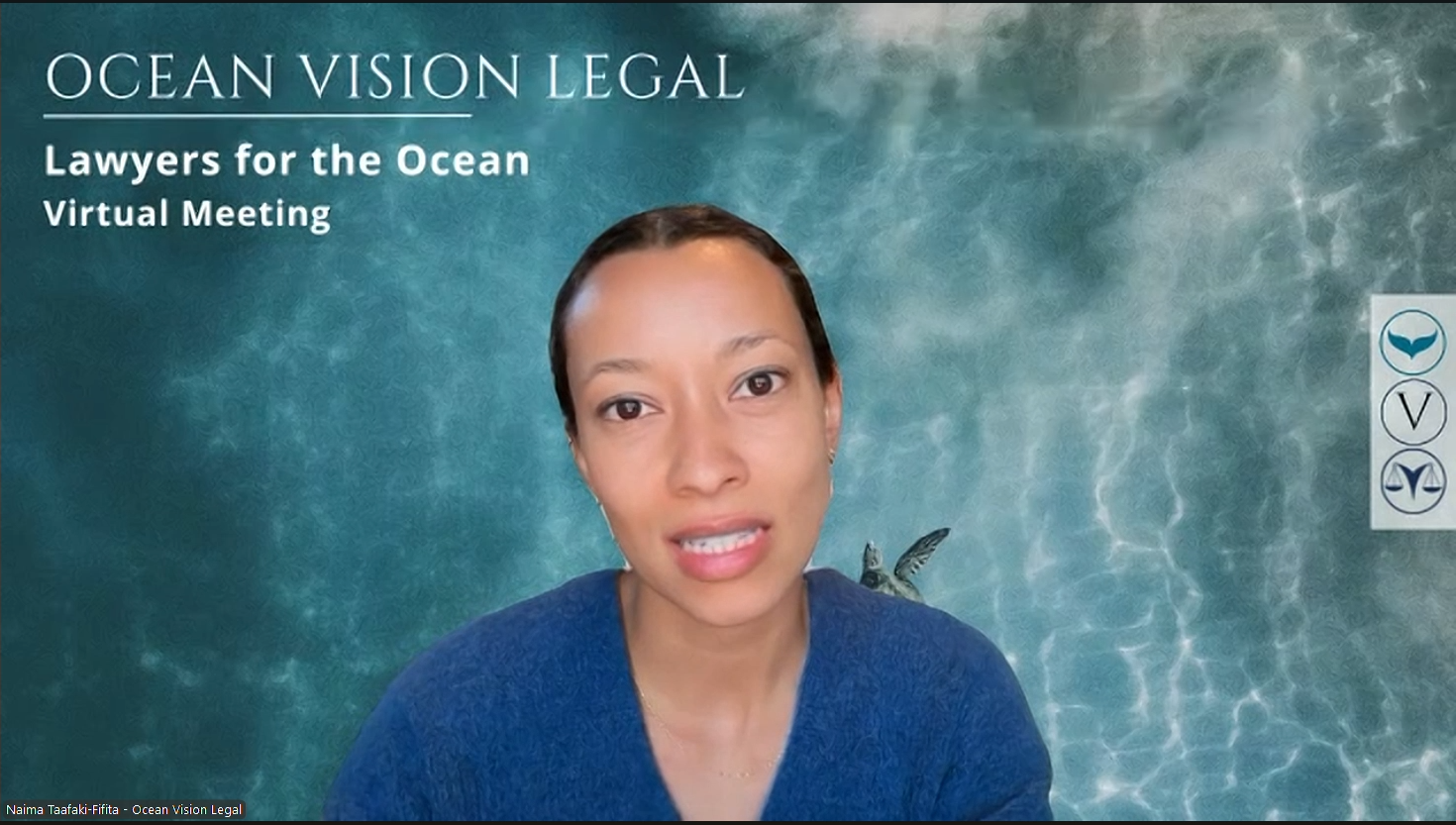
Speaking during the 2025 State of the Ocean: Unpacking the Year in Ocean Threats and Successes webinar, Naima Taafaki-Fifita, Senior Associate at Ocean Vision Legal, said Japan’s continued release of Advanced Liquid Processing System (ALPS)-treated water, a process expected to continue for 30 years, “reveals the magnitude of the risk and the pollution” facing the Pacific.
“Since August 2023, Japan has conducted 14 discharges, releasing portions of over 1.3 million metric tonnes of treated water into the Pacific Ocean,” she said.
“The Japanese government assures that the releases meet internationally safe standards, but six UN Special Rapporteurs have cautioned that the ALPS system cannot remove all radioactive contaminants.”
Taafaki-Fifita explained that these radioactive substances, capable of bioaccumulating in marine life, “may pose grave risks to human rights, particularly the rights to life, health, food, and culture, not only in Japan but across the Pacific.”
The UN experts’ concerns were bolstered by a submission from Ocean Vision Legal on behalf of the Pacific Network on Globalisation (PANG) and over 50 Pacific civil society organisations, which presented evidence of human rights violations linked to Japan’s discharges.
“This is not just an environmental issue,” she stressed. “It’s a legal and moral one. By discharging these radioactive contaminants into the Pacific, Japan risks breaching its obligations under international law, including the International Covenant on Civil and Political Rights (ICCPR), the Convention on the Rights of the Child (CRC), and United Nations Convention on the Law of the Sea (UNCLOS).”
For Pacific communities, Taafaki-Fifita said the discharges “reopen historic wounds.”
“This is a deeply personal issue as well as a political one,” she said. “Our region still bears the legacy of nuclear testing, and communities continue to live with intergenerational radiation impacts. Japan’s unilateral decision, taken without regional consent, underscores deeper issues of justice, participation, and transboundary accountability.”
Looking ahead, she said 2026 must be a year of integration and Pacific leadership.
“The key will be rejecting siloed approaches and ensuring ocean protection is co-designed and co-led by local and Indigenous communities,” she said. “We can’t afford to treat governance, climate, biodiversity, and security as separate agendas.”
She emphasised that the Treaty of Rarotonga, the South Pacific Nuclear Free Zone Treaty established in 1986, provides a powerful legal foundation for regional action.
“One often overlooked feature of the treaty is its explicit commitment to keeping our region free from radioactive pollution,” she said.
“Article 7 obliges states not to dump radioactive matter at sea and to actively ensure that no one introduces it into Pacific waters. That’s not just a prohibition, it’s a positive duty.”
She said Pacific governments could invoke Article 10 of the Treaty in 2026 to “clarify the scope of Article 7 and reaffirm the Pacific’s nuclear-free status against all forms of radioactive discharge.”
At the same time, she called for Pacific control over scientific data and verification.
“Japan and the International Atomic Energy Agency (IAEA) rely on data frameworks that Pacific states have very little ability to independently verify,” she said. “Yet somehow, we’re expected to rely on those same datasets to judge what is safe for our health, our ecosystems, and our cultures. Legally, not being able to verify the science undermines rights under international law.”
She said regional bodies must “strengthen coordination among existing Pacific scientific institutions” so that “Pacific experts, not external actors, hold and interpret the evidence that informs our legal and policy responses.”
Taafaki-Fifita outlined three key next steps for Pacific states:
– Formally respond through coordinated submissions calling for a halt to discharges pending independent verification.
– Reference the UN communication within the Rarotonga Treaty framework to reinforce the legal link between human rights and environmental protection.
– Integrate human rights-based monitoring into regional governance to include cultural rights, food security, and Indigenous knowledge systems.
“What comes next is about closing that accountability loop,” she said. “We now have international human rights findings and regional legal instruments. The task is to translate those into enforceable regional standards, grounded in Pacific law and backed by science and Pacific authority.”
She concluded with a call for solidarity and hope: “It’s true that the hope in ocean protection can feel scarce, because progress is slow and threats are accelerating. But real change happens when local action and international advocacy work hand in hand. Pacific peoples have an inherent right to be part of these conversations, not as outsiders, but as knowledge holders and traditional custodians of the ocean.”
“And for everyone else,” she added, “remember that this isn’t just a Pacific issue; the ocean connects and sustains all life. Protecting it is a shared responsibility,” she said.