



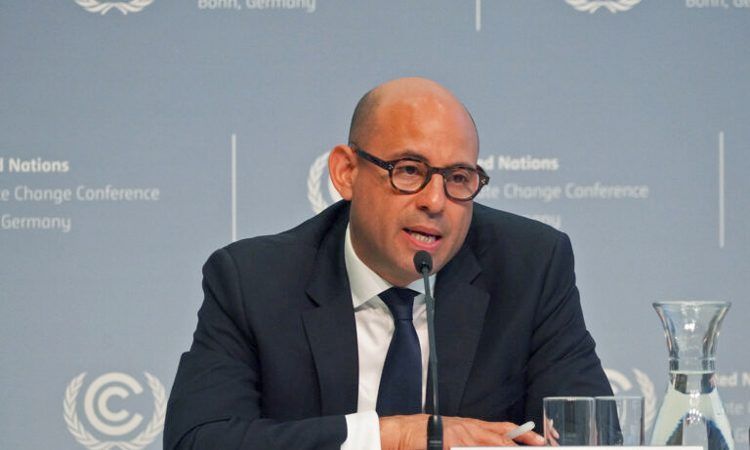
UN Climate Change Executive Secretary Simon Stiell has issued a stark warning that the world is moving too slowly on climate adaptation, urging governments and investors to act now to protect lives, livelihoods, and economies from escalating climate impacts.
Speaking at the launch of the National Adaptation Plans (NAP) Progress Report this week, Stiell said the findings show both real progress and serious gaps in global efforts to build climate resilience.
“Every year, the impacts of climate change grow more intense, and more uneven,” Stiell said.
“Adaptation is not optional; it is absolutely essential.”
He recalled his recent visit to his home island of Carriacou, devastated by Hurricane Beryl. “Although the spirit of the people is incredibly strong, many continue to struggle to rebuild their lives,” he said.
The new report highlights that 67 countries including 23 Least Developed Countries and 14 Small Island Developing states have submitted National Adaptation Plans to the UNFCCC.
Stiell said this reflects “a big collective commitment, despite very limited capacity and resources.”
He noted that countries are increasingly integrating adaptation into national development strategies, strengthening coordination, financing, and monitoring systems. “They are deepening their efforts in every key sector – for example in agriculture and health – with specialised plans,” he said.
Crucially, he added, the plans are adopting a “whole-of-society approach,” engaging more women, youth, Indigenous Peoples, local communities, and the private sector in both planning and implementation.
But Stiell warned that progress is being undermined by a lack of funding.
“No prizes for guessing the number one constraint. Many countries still lack access to the funding that’s needed. Too often, they face complex approval processes, fragmented support, and overdependence on external expertise.”
He said the systems are ready, but finance must flow “right now,” calling on investors to step up.
“This report could easily be sub-titled: ‘No more excuses, investors!’ Because investors and financial institutions can no longer say they don’t know where or how to invest in adaptation.”
The challenge, Stiell said, is to match national priorities and needs with “more quantity, but also better-quality finance — long-term, predictable, and equitable support that empowers countries to take the lead.”
Looking ahead to COP30, he said the upcoming global climate conference will be a key test of solidarity, where countries are expected to agree on adaptation indicators and close the adaptation finance gap.
“The roadmap to mobilise US$1.3 trillion in climate finance will clearly be key at COP30,” Stiell said.
“Let’s be very clear: climate finance is not charity. It is vital for protecting every population and economy, and the global supply chains that every nation depends on.”
He said COP30 must deliver on three fronts: demonstrating that climate cooperation works, accelerating implementation, and connecting climate action to real lives everywhere.
“Before this report, we faced two climate adaptation challenges – direction and speed. Now it’s largely just one: the direction is right – but we have a serious need for speed,” he said.
“Meeting that test is how we turn plans into protection, prosperity, and progress,” he said.