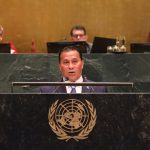

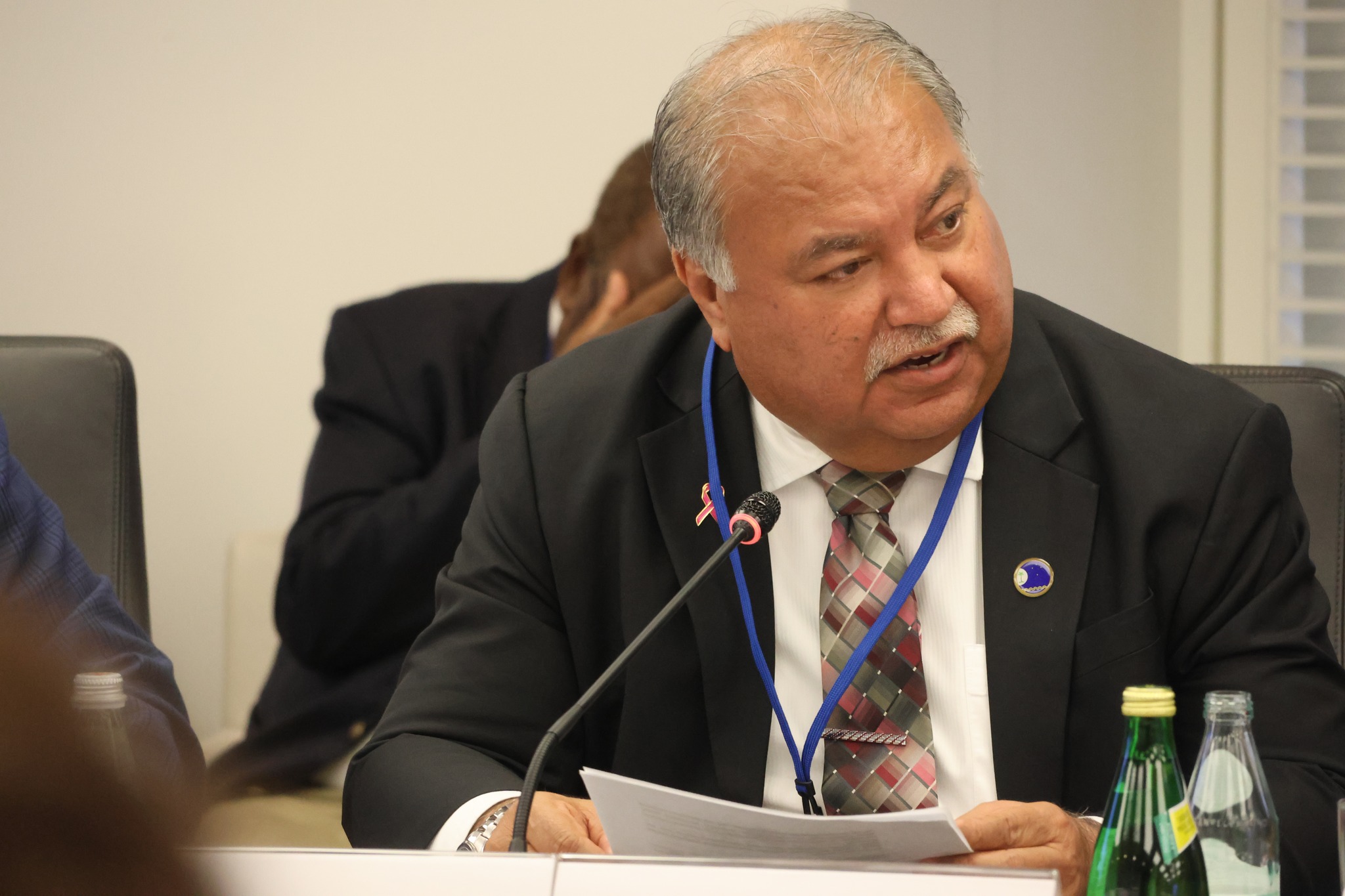
Forum Secretary General Baron Waqa says improving the efficiency, affordability, and safety of payments across the Blue Pacific is vital for building a more inclusive and resilient regional economy.
Speaking at the 2025 World Bank and IMF Annual Meetings in Washington DC, Waqa said, “For our Pacific Island nations, payment systems are the arteries of commerce, remittances, and livelihoods. Yet today, Pacific businesses and families still face some of the highest transaction costs in the world.”
He said the Forum Secretariat, in partnership with the World Bank, Pacific central banks, and development partners, is working to address this challenge through the Pacific Strengthening of Correspondent Banking Relationships Project.
“The USD$77 million project is being implemented in eight Pacific Island Countries, and will soon include Papua New Guinea as the ninth member by early next year,” Waqa said.
He highlighted that the project includes a Payments Technical Assistance component aimed at improving payment system oversight, promoting interoperability, ensuring consistent standards, and enhancing the collection of remittance and gender-disaggregated data to support inclusive financial policies.
“The project is also advancing the procurement of a firm to conduct a Feasibility Study for a Pacific Payments Mechanism — a detailed assessment to inform the design of a regional payment aggregation mechanism aimed at improving economies of scale, reducing costs, and strengthening cross-border connectivity among Pacific markets,” he said.
Waqa stressed that given limited capacity and competing priorities, Pacific Island Countries must leverage existing platforms like the Pacific De-risking Group, which coordinates implementation of the regional roadmap for correspondent banking relationships.
“Importantly, there is a need for a coherent and focused approach by all development partners, to ensure that our member countries have clarity and oversight on the technical assistance being provided, its objectives, and how it aligns with existing regional priorities,” he said.
“Only through collective effort and coordinated action can we build a more connected, resilient, and inclusive financial future for our Blue Pacific,” Waqa said.