
By Sanjeshni Kumar
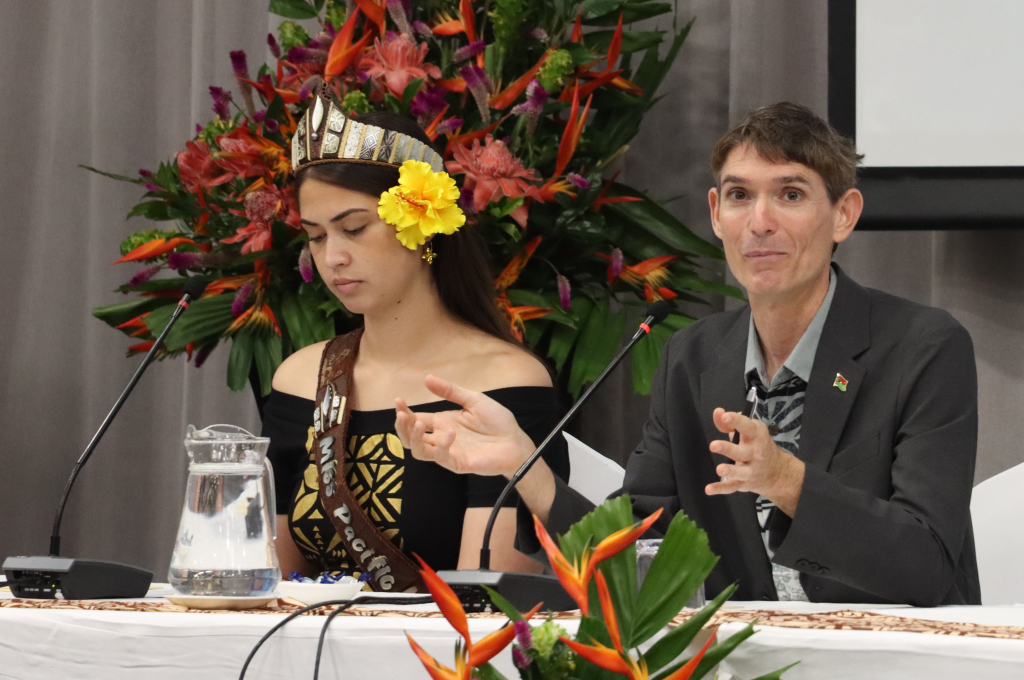
Vanuatu climate change and marine conservation expert, Dr Christopher Bartlett, says the recent International Court of Justice (ICJ) Advisory Opinion gives Pacific nations the legal power to hold major emitters to account for climate harm, even if they have left the Paris Agreement.
“The advisory opinion clarifies the law that all countries have to abide by,” Dr Bartlett told Pasifika Environews/PACNEWS.
“Pacific governments, including Vanuatu’s, now know exactly what they have to do to meet their international climate obligations, whether under the United Nations Framework Convention on Climate Change (UNFCCC), human rights law, environmental law, or even customary law.”
He said this legal clarity allows Pacific nations to “demonstrate best practice” through ambitious climate plans, and then challenge high-emitting partners to do the same.
“If we’re able to meet our obligations in our Nationally Determined Contributions (NDCs), then we can go to those who are historically responsible for climate change and say, you also have to meet yours,” he said.
“If we see NDCs that take us beyond 1.5 degrees, or new fossil fuel projects and subsidies, we can now say international law makes it clear this is an internationally wrongful act.”
Importantly, Dr Bartlett said the ICJ ruling also closes a dangerous loophole.
“Some very important, huge-emitting countries have left the Paris Agreement, which would essentially make them unaccountable,” he explained.
“But the court said, not correct. All countries have obligations inside and outside the Paris Agreement, and even if you’ve left, you still have to meet customary obligations to prevent harm.”
On climate finance, Dr Bartlett said the opinion makes clear that “finance is not supposed to be seen as a gift. It’s an obligation of countries to address the harms and injuries that have been caused. This is a new way to approach finance discussions and will be supremely helpful for the Pacific.”
Vanuatu has already begun integrating the ICJ opinion into its domestic policies.
“Next week, our National Advisory Board is going to be endorsing our next NDC, our NDC 3.0,” he said.
“We’ve gone through every single target to make sure it adheres to the international legal obligations the court has outlined.”
While Vanuatu has not yet decided whether to pursue litigation, Dr Bartlett said the opinion makes it a viable pathway for vulnerable nations.
“I would expect that some countries, possibly in the Pacific, might go to a contentious case at the ICJ, or another judicial forum, to bring claims of harm, injury, or climate loss and damage,” he said.
However, he stressed that the ruling’s primary purpose is for nations to self-assess and raise ambition before COP30.
“The advisory opinion is not intended just for us to hold them accountable — it’s for each state to hold itself accountable. My hope is that this clarity will make everybody go back, look at their NDCs, and say, we can do better, we must do better, we’re legally obliged to do better,” he said.