
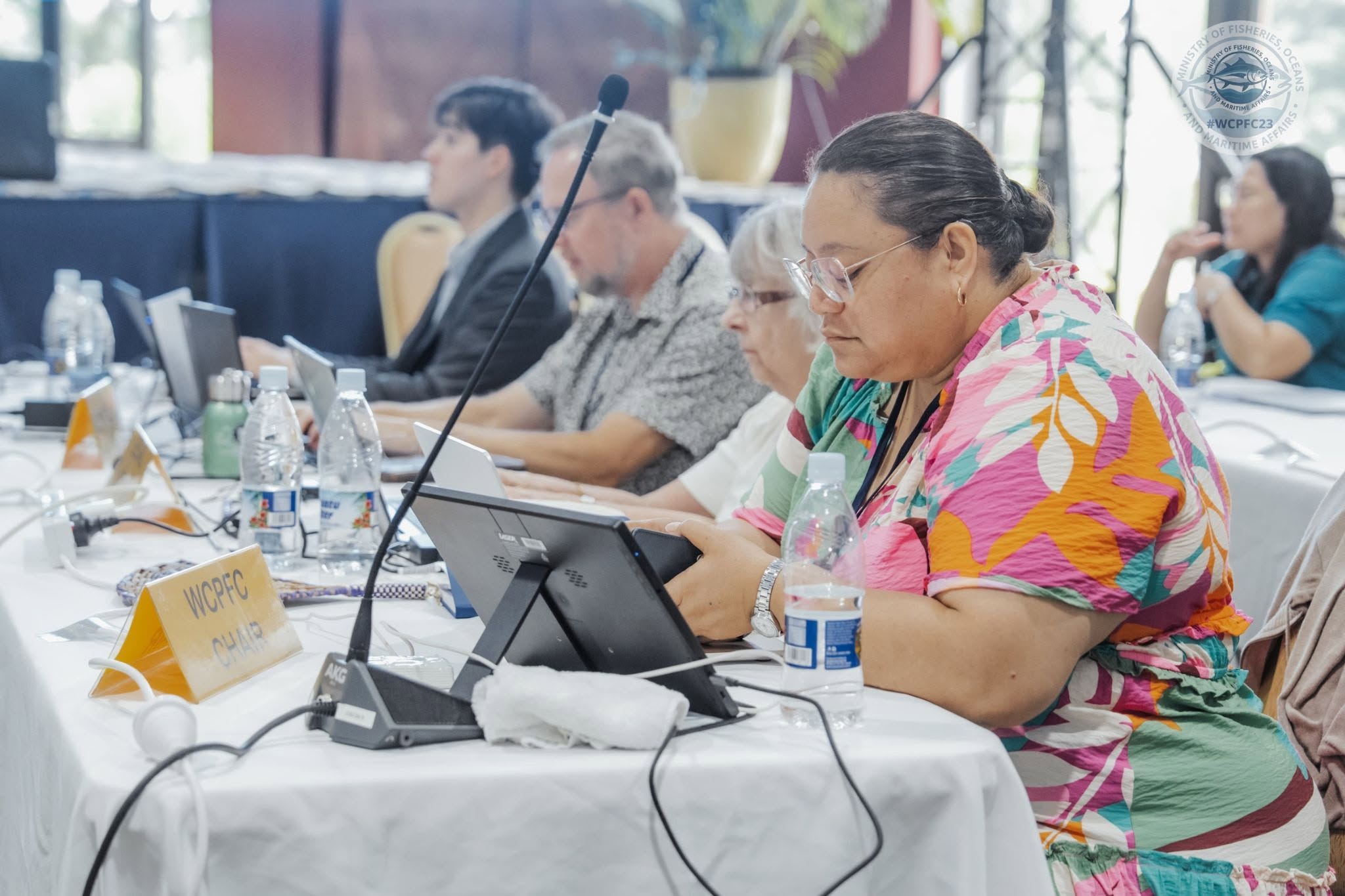
By Pita Ligaiula
The adoption of a landmark management procedure for bigeye tuna and an implementation measure for South Pacific albacore are among the three major priorities facing the Western and Central Pacific Fisheries Commission (WCPFC) as it begins its 23rd annual meeting in Vanuatu Monday.
Outgoing WCPFC Chair Dr Josie Tamate said the Commission must also agree on a management procedure for Pacific bluefin tuna and determine the way forward on key work programmes recommended by its subsidiary bodies.
In an interview with PACNEWS ahead of WCPFC23 in Port Vila, Dr Tamate said the decisions would be critical to advancing tuna management across the world’s largest tuna fishery.
The meeting, running until 5 December, comes as Pacific Island countries push for stronger management arrangements that protect their fisheries interests and secure long-term benefits from tuna resources.
Dr Tamate identified the adoption of an implementation measure for South Pacific albacore, a bigeye tuna management procedure and progress on Pacific bluefin tuna as her key priorities.
On bigeye tuna, she said reaching agreement on a management procedure was particularly important, as Members consider arrangements covering both purse seine and longline fisheries for the first time.

‘Very important,” Dr Tamate said when asked about the significance of reaching agreement on the measure.
However, she said the Commission first needed scientific advice on some of the procedure’s core components before Members could make a decision.
A special meeting of the Scientific Committee was held in Port Vila from 27 to 28 November, immediately before WCPFC23, to consider the outstanding scientific issues.
The outcome of those discussions will inform Members’ consideration of the proposed management procedure during the Commission meeting.
The proposed bigeye measure is a significant step towards a more comprehensive approach to managing the species across different fishing methods and fleets.
South Pacific albacore allocation is another major issue for Pacific Island countries, which are seeking an allocation framework covering their exclusive economic zones and the high seas south of 10 degrees south.
Dr Tamate acknowledged the challenges in securing agreement, saying allocation decisions involved several competing considerations and required consensus among Commission Members.
“There are a number of factors that need to be considered. Allocation is complicated and decisions are by consensus,” she said.
The allocation issue remains important for Pacific Island countries seeking greater recognition of their rights and interests in the management and economic benefits of the region’s tuna resources.
WCPFC23 will also consider high seas transhipment, climate change and the rights of Small Island Developing States as part of the wider fisheries management agenda.
For the Pacific, the outcome of the meeting will have implications for the sustainability of tuna stocks, fishing opportunities, economic returns and the ability of island countries to exercise their rights as coastal States.
Dr Tamate said the Commission would also need to determine the way forward on a range of other priorities and work programmes set by WCPFC and recommended by its subsidiary bodies.
Members have until 5 December to reach agreement on the measures before the Commission.
PACNEWS coverage of WCPFC23 in Port Vila, Vanuatu, is made possible with the support of the Waitt Institute.