


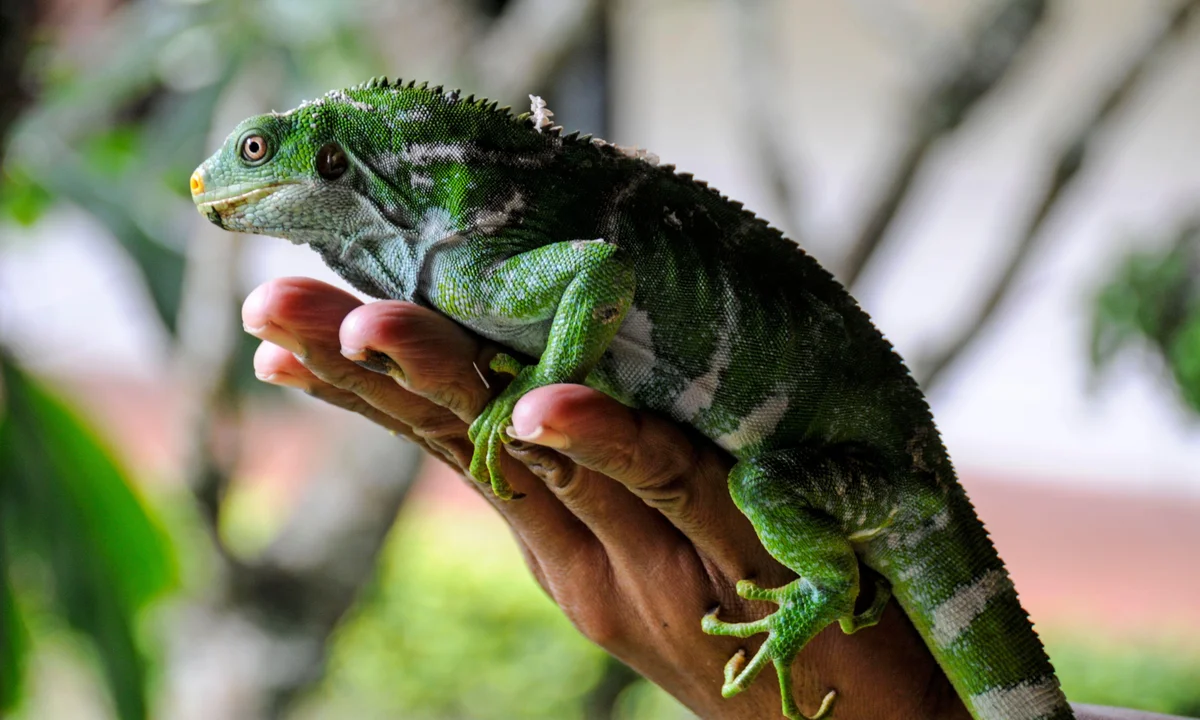
Fiji has secured broad international support for its objection to a proposed commercial breeding operation in Canada involving two endangered iguana species native to Fiji, forcing the Convention on International Trade in Endangered Species (CITES) to defer a decision until next year.
The CITES Standing Committee, at its 81st meeting in Geneva from 02 to 6 November, did not accept Canada’s proposed registration and agreed to reconsider the application at its 82nd meeting (SC82).
Canada also agreed to continue discussions with Fiji, while the Committee approved an investigation into imports of Fijian iguanas into India.
New Zealand, Brazil, Panama, the Dominican Republic and Kenya supported Fiji’s objection, while four Parties backed the proposed registration.
Fiji is opposing the registration because documentation submitted so far does not establish the lawful origin of the original breeding stock for the Central Fijian banded iguana (*Brachylophus bulabula*) and Fiji banded iguana (*Brachylophus fasciatus*), both listed under CITES Appendix I.
“This is a good outcome for Fiji and for the credibility of CITES. Support from Parties across Africa, the Americas and Oceania reflects a shared view that the lawful origin of founding stock must be established before any commercial breeding operation is registered,” said Dr Sivendra Michael, Permanent Secretary for Environment and Climate Change and Chair of Fiji’s CITES Management Authority.
He acknowledged Fiji’s Deputy Permanent Representative in Geneva, Keleni Seruvatu, for presenting the country’s case and thanked the Parties that supported its position.
Fiji maintains it has no record of authorising live exports of the two species to Europe or the international pet trade since their listing under Appendix I in 1981.
While the immediate parental stock was reportedly imported into Canada from breeding operations in Austria and the United Kingdom, Fiji says this does not establish the lawful origin of the original founder animals.
“Breeding in captivity, over however many generations, does not make an unlawful origin lawful,” the Government said.
Dr Michael said Fiji could not support a registration process that left serious questions about the legal origin of the founding stock unresolved.
“The underlying concern is that registration without resolving the provenance questions could create the first legal commercial pathway for these Appendix-I species and increase the risk that specimens originating from unlawful collection could be presented in trade as captive-bred,” he said.
“Fiji makes no allegation of wrongdoing against the Canadian operator. What remains unresolved is the origin of the founder stock, and that must be settled before any registration is accepted.”
Australia, New Zealand, Solomon Islands and Tonga had jointly objected to the proposed registration in support of Fiji, while the United States lodged a separate objection.
The CITES Secretariat referred the objections from Fiji and the United States to the CITES Animals Committee for review in October 2025.
Fiji has welcomed Canada’s agreement to continue dialogue ahead of SC82, including possible genetic analysis, but insists the questions surrounding the origin of the breeding stock must be resolved before registration.
The country also secured agreement for an investigation into the international trade of Fijian iguanas imported into India under a separate CITES agenda item.
CITES Trade Database records show at least 100 Fijian iguanas of three species were imported into India from Austria. These included 70 Fiji crested iguanas (*Brachylophus vitiensis*), 22 Fiji banded iguanas and eight Central Fijian banded iguanas.
The Fiji crested iguana, which is endemic to Fiji and classified as Critically Endangered, has only been legally exported from Fiji to bona fide zoos and never for the pet trade.
Fiji said the species first appeared in international trade from Mali, with no record of any lawful import.
In June 2025, the CITES Secretariat issued Notification to the Parties No. 2025/081 at Fiji’s request, advising countries not to issue permits for the species without first consulting Fiji’s CITES Management Authority.
Fiji asked the Standing Committee to include the Indian imports, and any subsequent trade involving the three species, in the unresolved cases already under investigation.
The Committee agreed.
Fiji says the outcome reinforces the need for strict verification of the legal origin and traceability of endangered wildlife before commercial breeding operations or international trade permits are approved.
The Government maintains that conservation safeguards must prevent illegally sourced wild specimens from entering international markets under the label of captive-bred animals.