

United Nations Secretary-General António Guterres has warned that El Niño is intensifying the global climate crisis, with new forecasts showing hotter-than-normal conditions across nearly every land area on Earth through October and raising the risk of record-breaking temperatures and worsening impacts worldwide.
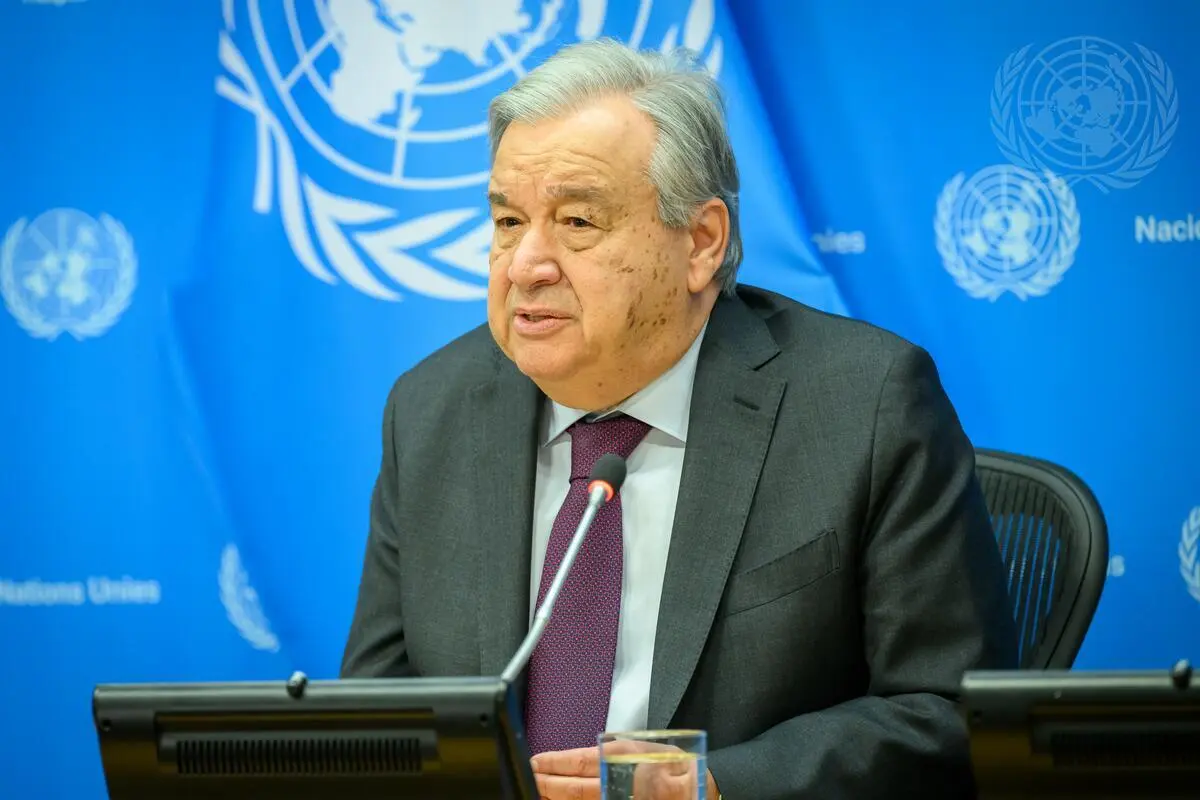
Speaking at a press conference in New York, Guterres said the world was facing an escalating crisis driven by climate change and a strengthening El Niño.
“Two months ago, I warned that El Niño was arriving on our doorstep.
“Now it is inside the house – and turning up the heat,” he said.
He said record-breaking heat, devastating wildfires and rising sea-surface temperatures had already marked the northern summer, but warned that “this is only a warm-up act.”
Citing new forecasts from the World Meteorological Organisation (WMO), Guterres said El Niño is strengthening while Pacific waters driving the weather pattern have “never been this warm this early in an El Niño.”
“Taken together, that risks shattering every seasonal record – and driving even more severe effects worldwide.
“We are in uncharted territory,” he emphasised.
Guterres said El Niño affects not only temperatures but also global rainfall, with India’s monsoon already running well below average and hotter, drier conditions forecast across Central America, the Caribbean, parts of South America, South Asia, the Southwest Pacific, Europe and Africa.
“The verdict is clear: the climate crisis is in overdrive.”
“What we do know is deeply alarming: heat is claiming lives on a growing scale, day after day, in every region of the world,” he stressed.
He said extreme heat is placing billions of people at risk, disrupting economies, infrastructure and food supplies, while disproportionately affecting children, older people, persons with disabilities, outdoor workers and vulnerable communities.
“Extreme heat is widening inequalities, deepening hunger, weakening economies, and pushing development further out of reach.”
Guterres said more action is needed in four key areas: protecting people through heat-health action plans and early warning systems, making workplaces safer, designing cities and infrastructure to withstand rising temperatures, and addressing the root cause of the crisis by reducing fossil fuel use.
“We hear much about record heat, drought, and wildfires – but not enough about the real change that is driving these events – the accelerating climate crisis powered by fossil fuels,” he said.
He warned that continued investment in fossil fuels would make future heatwaves more severe.
“Every new fossil fuel project approved today makes tomorrow’s heatwaves more dangerous, and our world less secure.”
Guterres warned that the world can no longer delay action.
“Today’s findings show that extreme heat is not a future threat.
“It is here. It is becoming more dangerous.
“And unless we act – to protect people and tackle the root cause of the crisis – it will become deadlier still.
“The warm-up act is over. We cannot afford to wait for the main event,” he said.