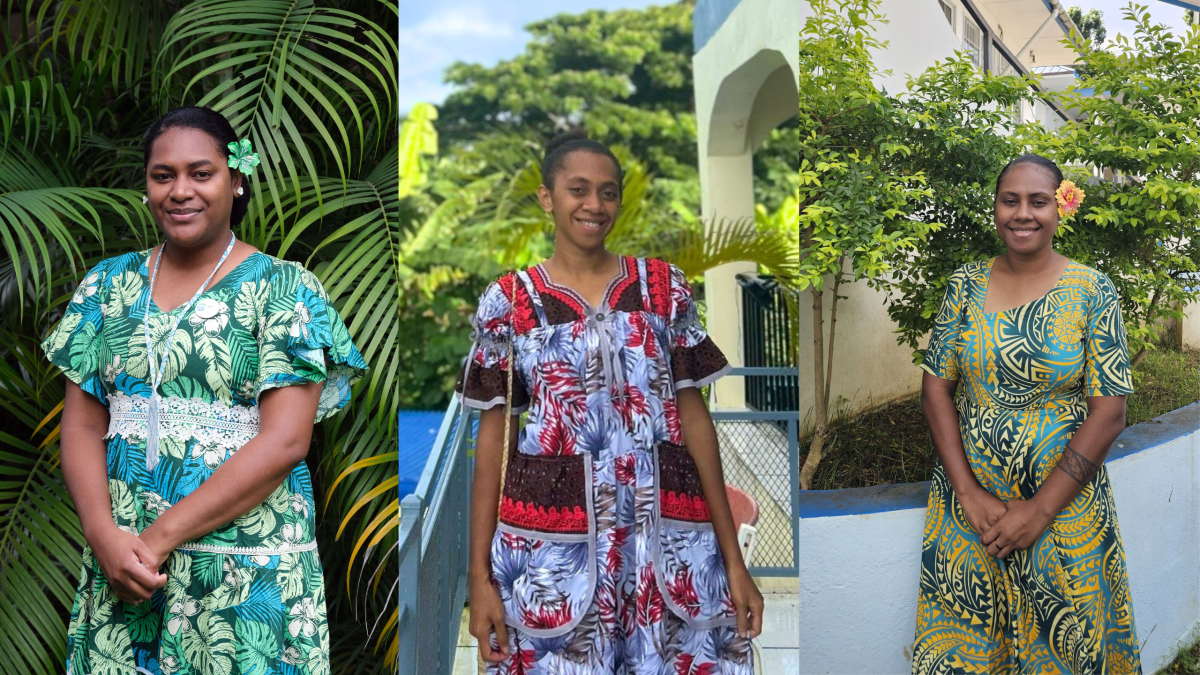
From marine science and management to maritime law, three young women are helping to shape the future of ocean governance in Vanuatu.
Through the Pacific Early Ocean Career Professionals (ECOP) programme, Lina Tolis, Chrystal Ida Silas and Jessica Maoh worked with coastal communities to ensure that science, policy and traditional knowledge come together to protect our shared Pacific ocean.
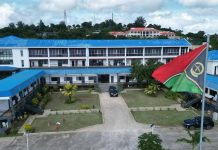
Among those leading this effort are Lina Tolis, a marine science graduate, Chrystal Ida Silas, a marine management officer, and Jessica Maoh, a former seafarer turned legal professional. Through the Pacific Early Ocean Career Professionals (ECOP) programme, the three young women were embedded within Vanuatu’s Ocean and Maritime Affairs Department, where they contribute to national ocean priorities by working closely with coastal communities.
Supporting Vanuatu’s ocean governance
Growing up on different islands across Vanuatu, Lina Tolis, Chrystal Ida Silas and Jessica Maoh all developed a deep connection with the ocean that would shape their career paths.
For Chrystal, witnessing the impacts of climate change on small island communities inspired her to study marine management: “I chose marine management out of a strong interest in the ocean; I felt motivated to help develop policies to protect marine environments. Living in Vanuatu, I see how our smaller islands are being affected every year by climate change.”
Jessica’s path was different but equally rooted in the ocean. After working as a seafarer, she chose to study law to help shape the legal and policy frameworks that support sustainable ocean management: “While my path shifted from working at sea to studying law, my passion for the ocean has never changed. Instead, it evolved. I am now motivated to contribute through policy, legal frameworks, and governance that create lasting and positive impacts for my community and for Vanuatu.”
Lina initially planned to pursue general science before discovering marine science: “My first study plan was science, but I figured it was too general. However, since I was always interested in the health and care of our oceans, I decided to pursue my studies in Marine Science at USP Laucala Campus.”
Between 2025 and 2026, the three young professionals joined Vanuatu’s Ocean and Maritime Affairs Department through the Pacific Early Ocean Career Professionals (ECOP) programme. Their placement coincided with a landmark moment for ocean governance: the adoption of Vanuatu’s first Ocean Act in January 2026. The legislation formally recognises the role of traditional leaders and coastal communities in managing marine resources while supporting sustainable development and food security.
As ECOP, Lina, Chrystal and Jessica have helped promote the Ocean Act through community awareness sessions, field visits and engagement with traditional leaders, ensuring communities are involved in its implementation.
Working hand in hand with coastal communities
Putting the Ocean Act into practice starts in Vanuatu’s villages, where communities have managed marine resources for generations. Throughout their placement, Lina, Chrystal and Jessica worked closely with chiefs, traditional institutions, fishers, youth groups and local leaders across the country. Their experience reinforced a common lesson: effective ocean governance must be built with communities, not simply for them.
Jessica believes traditional knowledge and governance are essential to sustainable ocean management: “I was drawn to this work because coastal communities are at the frontline of ocean change. In Vanuatu, traditional entities play a vital role in managing nearshore areas and marine resources, and their knowledge and practices have sustained these ecosystems for generations. Their voices are essential in shaping policies that are fair, effective, and sustainable…”
She explains that the new Ocean Act marks an important step by formally recognising the role of traditional entities in managing reefs and coastal areas.
For Chrystal, accompanying awareness sessions on the new Ocean Act in Santo provided valuable insight into community priorities “We held awareness sessions with the chiefs of Hog Harbour, on the east coast of Espiritu Santo Island, followed by another session with stakeholders from Sanma Province. It was a great experience because I was able to see firsthand how these awareness sessions are conducted, how communities respond to the information shared, and the concerns they raise.”
One of the strongest messages from community leaders was the need for government agencies to work together. “They have asked for us (when returning) to go back with the other stakeholders that will be involved in the whole process, such as those from fisheries, the Vanuatu Department of Environmental Protection and Conservation, Malvatumauri Council of Chiefs and more, also to accompany us so that all of us are clear on our roles and we are singing a unified song.”
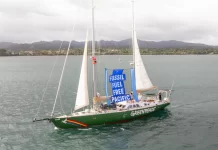
Lina’s work complemented these community discussions through field activities. She joined the National Geographic Pristine Seas expedition team during their visit to Vanuatu, supporting school outreach activities and the filming of a documentary at the Loane Marine Protected Area on Pentecost Island. By combining scientific research, education and storytelling, the expedition helped raise awareness of the importance of marine conservation.
By working directly with communities, the three young professionals have not only contributed to the implementation of Vanuatu’s Ocean Act but have also gained invaluable experience that is shaping the next generation of Pacific Ocean leaders.
The ECOP Programme: an experience that opened opportunities
For Lina, one of the defining moments of her placement was contributing to two major milestones for Vanuatu’s ocean governance: “The highlights of my career as an ECOP were being the Team Leader in the National Geographic PhotoCamp expedition in October 2025, as well as in the gazette of Vanuatu’s first Oceans Act in January 2026.”
Looking back, she says the programme allowed her to put years of study into practice while working alongside the very communities she wanted to serve: “After graduating, working in the Vanuatu Ocean Affairs Department as an ECOP gave me firsthand experience working with my community to care for our Exclusive Economic Zones. This is something I am always grateful for.”
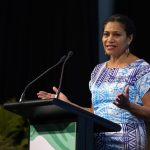
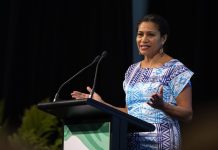
For Chrystal, attending the Pacific Islands Ocean Conference in Honiara was one of the most memorable experiences of the programme. It allowed her to connect with professionals from across the Pacific and better understand the regional importance of ocean governance.
“The best memory I had during the placement program was the opportunity for the Vanuatu ECOPs to attend the Pacific Island Ocean Conference in Honiara. One of the highlights was meeting the Pacific Ocean Commissioner, speaking with him directly, asking questions, and learning from his experiences and insights.”
Jessica also describes the conference as a turning point in her career. Meeting scientists, policymakers and practitioners from across the Pacific reinforced her commitment to ocean governance while opening doors to new opportunities: “Engaging with scientists and practitioners who are equally committed to protecting, conserving, and sustainably managing Pacific resources for current and future generations was particularly inspiring. This was also my first major international exposure, and it helped me build confidence in connecting with people who share the same passion for protecting our ocean.”
That experience encouraged her to pursue further professional development: “During the conference, I was introduced to the Floating University programme, which sparked my interest. I later applied and was fortunate to be selected.”
For Lina, Chrystal and Jessica, the ECOP programme has been more than a professional placement. By working alongside communities and supporting the implementation of Vanuatu’s Ocean Act, they have shown that effective ocean governance depends on strong partnerships between science, policy and traditional knowledge.