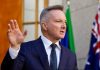
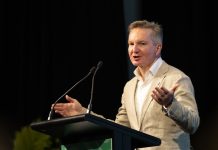
Australian Prime Minister Anthony Albanese is seeking to finalise a security deal with the Solomon Islands within months, off the back of a major diplomatic win elsewhere in the Pacific.
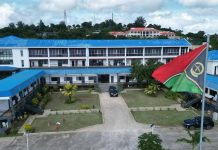
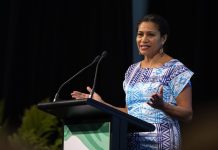
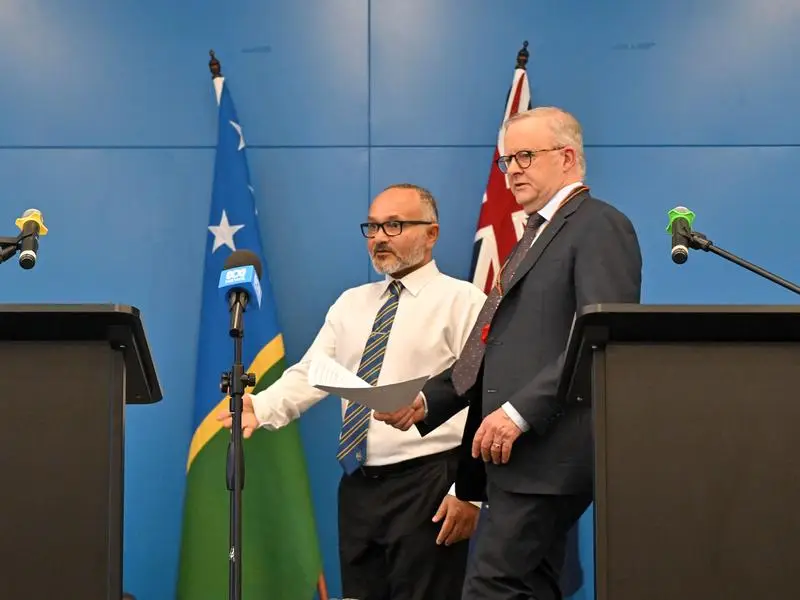
The prime minister arrived in Honiara on Tuesday morning, receiving a red-carpet welcome as he was greeted by his Solomon Islands counterpart Matthew Wale.
The leaders held a brief bilateral meeting at the airport moments after Albanese touched down.
The prime minister told Wale there was “much more that we need to do together”, including the development of a comprehensive treaty.
“We will task our ministers to continue to do work on that and hopefully to conclude that by the end of the year,” he said.
Wale said he was extremely pleased to see Albanese so soon after his own visit to Canberra in early June.
“We have much to transact, so we look forward to great conversations,” he said.
Albanese will become the first foreign leader to address the Solomon Islands’ Independence Day celebrations.
He entered the national stadium alongside Wale and both were given floral garlands to wear.
The visit to the Solomons followed Australia signing a mutual defence alliance, known as the Ocean of Peace treaty, in Suva on Monday.
The alliance, which views an attack on one nation as an attack on the other, marks Fiji’s first mutual defence pact.
The Pacific island nation has become Australia’s fourth formal ally, joining the U.S, New Zealand and Papua New Guinea.
The treaty allows other Pacific nations to join the alliance.
Wale has previously called for a Pacific-wide pact.
The agreement was signed alongside the Vuvale Union, which includes $1 billion (US$690 million) in investment over the coming decade into key areas including climate and economic initiatives.
During a joint press conference with Albanese, Fijian Prime Minister Sitiveni Rabuka said he did not anticipate any “severe pushback” from China.
“I believe that they will welcome the understanding that it is within Australia and Fiji,” he told reporters.
“It does not threaten Fiji’s relationship with China nor Australia’s relationship with China.
“And as we have made it very clear in the past, your enemies are not necessarily my enemies.”
But China’s foreign ministry spokeswoman Mao Ning issued a frosty response on Monday evening.
“We do not engage in geopolitical rivalry or seek selfish political games.
“It is hoped that the country of concern will truly respect the independence of Pacific Island nations, focus on their sustainability, such as economic development, and avoid targeting any third party or harming the interest of any third party,’ she said.