

Pacific nations have been urged to strengthen collective ownership of ocean governance and confront growing pressures on regional independence, with the former Pacific Islands Forum Secretary General calling for unity, resilience and greater economic self-determination.
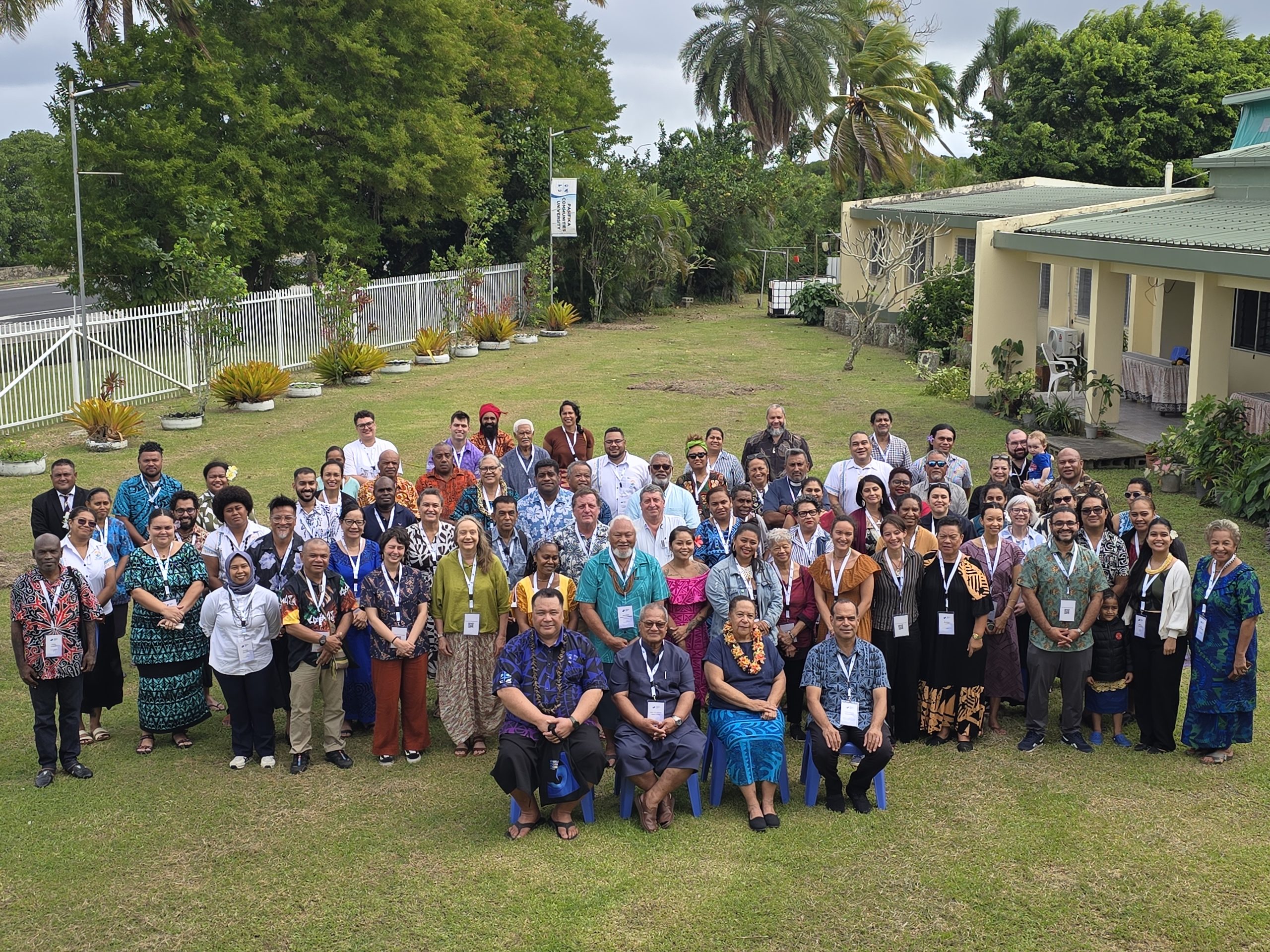
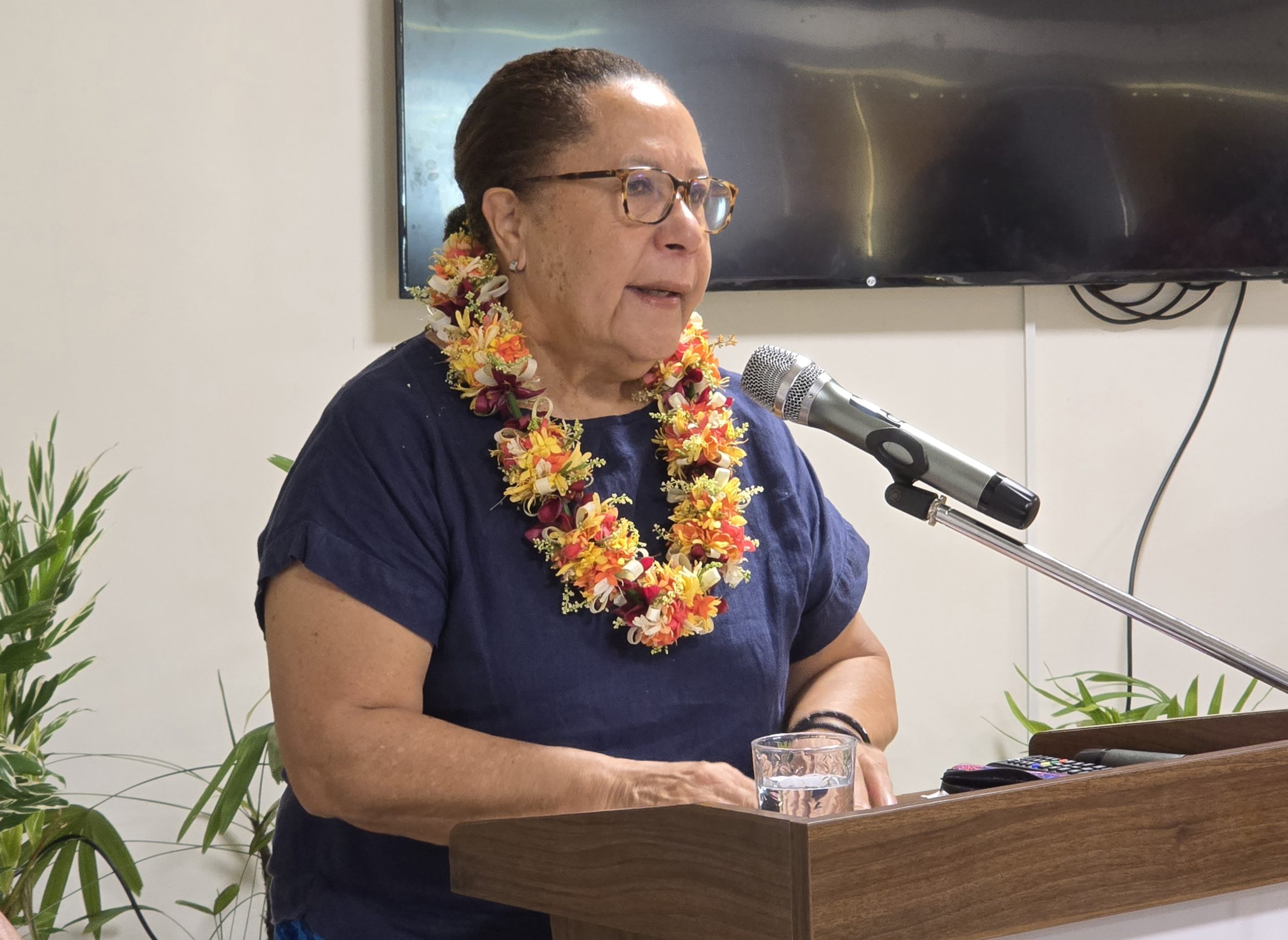
Opening the State of the Ocean Convening in Suva on World Ocean Day, Dame Meg Taylor said the gathering reflected more than geography, but a shared identity rooted in the ocean.
“We are gathering as people of the Pacific and as people of the ocean. That is not an accident. That is a statement of who we are,” she said.
Taylor traced the region’s deep historical connection to the ocean, describing Pacific societies as communities of “extraordinary ingenuity” with sophisticated systems of navigation, governance and knowledge long before the arrival of colonial powers.
She said modern regional institutions were later built as part of efforts to reclaim control over governance structures established during the colonial era.
“It was to reclaim our institutions, assert our agency, and build something genuinely our own,” she said.
Taylor highlighted the establishment of the Pacific Islands Forum in 1971 as a turning point in regional cooperation, strengthening Pacific voices on the global stage and enabling collective action on shared challenges.
One of the Pacific’s most significant contributions to global governance, she said, was its leadership in shaping the United Nations Convention on the Law of the Sea (UNCLOS), particularly the creation of Exclusive Economic Zones extending 200 nautical miles from coastlines.
“The EEZ concept was our response,” she said. “It said, this is our ocean, these are our resources, and we have rights over them that the world must recognise.”
She said Pacific nations had effectively transformed political sovereignty into legal sovereignty through international law, helping establish what is now regarded as one of the world’s most advanced and integrated ocean governance systems.
Taylor emphasised the Treaty of Rarotonga, which established the world’s first nuclear-free zone in a populated region, and regional fisheries institutions that strengthened Pacific control over marine resources.
Among these, she said, the Parties to the Nauru Agreement remained one of the strongest examples of Pacific-led governance.
“It is a model for what our strongest regional institutions look like, combining legal design with political trust and collective restraint,” she said.
Despite these achievements, Taylor warned that the region faces increasing external pressures, including geopolitical competition and rising militarisation in the Pacific.
“The Pacific has become strategically significant to the United States, China and their respective allies in ways that were not true a generation ago,” she said.
She expressed concern over expanding military infrastructure and proposals involving foreign military assets within the South Pacific Nuclear Free Zone.
“The language of partnership is often genuine, but the question of whose priorities shape the agenda is one we must always keep asking,” she said.
Taylor said these developments are placing new strains on regional unity, noting that differing interests among PIF members have at times made it more difficult to maintain coordinated positions on key issues, including climate change.
She said the region, however, continues to demonstrate global leadership through initiatives such as the Blue Pacific Continent narrative, the 2050 Strategy for the Blue Pacific Continent, and sustained climate diplomacy that contributed to securing the 1.5-degree Celsius temperature goal in the Paris Agreement.
Taylor also highlighted recent legal and diplomatic gains for the Pacific, including the International Court of Justice advisory opinion on climate change, which was initiated through a Vanuatu-led process involving young Pacific advocates.
“Small states, acting collectively, change what international law says, and this is an extraordinary outcome.”

She welcomed a recent United Nations General Assembly resolution, tabled by Vanuatu, calling on member states to comply with obligations arising from the advisory opinion, which passed with 144 votes in favour.
“This is the Pacific, through sustained diplomacy, through law, through collective effort, requiring the world to answer for its obligations to our ocean, our community, and our future.”
Taylor identified economic independence as one of the most pressing structural challenges facing the Pacific, warning that continued reliance on external funding creates vulnerabilities for regional institutions and can influence policy priorities.
She highlighted the Pacific Resilience Facility, endorsed by Forum leaders in 2025, as an example of Pacific-owned development designed to strengthen community resilience and reduce dependency on external actors.
“What we are asking of our partners is not charity,” she said. “We are asking for partnership that is genuinely aligned with our own strategies and our own priorities.”
Taylor urged civil society organisations to continue holding governments and regional institutions accountable while maintaining a long-term vision for the region’s future.
She expressed confidence in the Pacific’s ability to navigate current and future challenges, drawing on a long history of collective action and ocean stewardship.
“We have achieved things that many thought impossible,” she said. “We have shaped international law. We have protected our ocean. We have stood together again and again when the world expected us to be divided.”
She called for continued Pacific ownership of ocean governance.
“The ocean has always been our highway, our home, our identity,” she said. “Let us govern it as ours,” said Dame Taylor.