

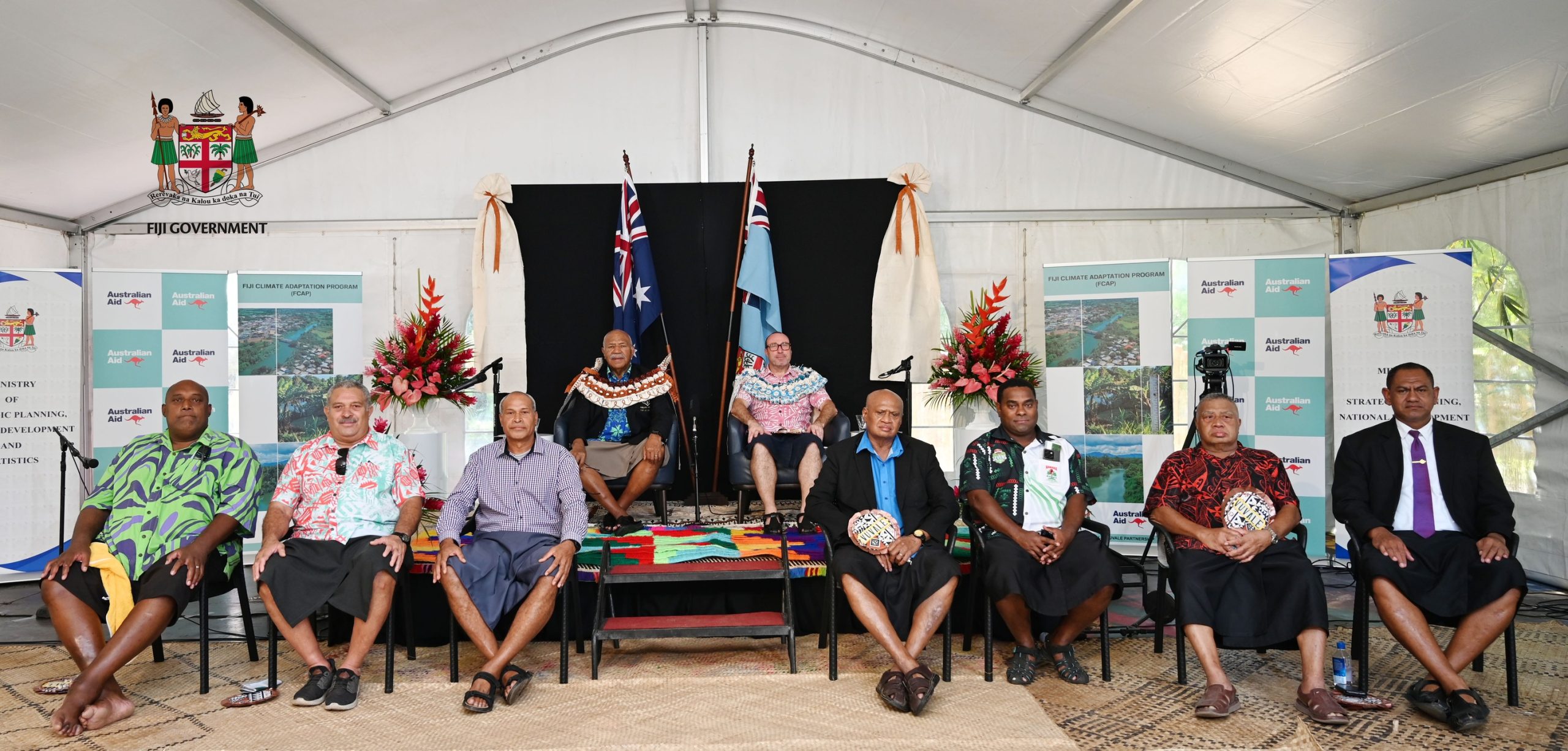
Fiji and Australia have launched a major new initiative to strengthen resilience to flooding across the country, marking a significant milestone in the two nations shared response to the escalating impacts of climate change.
The Fiji Climate Adaptation Programme (FCAP) represents a FJD$35 million (US$17.5 million) joint investment aimed at improving flood early warning systems, enhancing water management, and supporting community-led adaptation efforts across Fiji.
Prime Minister Sitiveni Rabuka, while officiating at the event in Nadi, highlighted that this initiative aligns closely with Fiji’s national climate priorities and reflects the strength of the Vuvale Partnership between Fiji and Australia.
“Under this programme, we will strengthen governance systems for water and flood management, improve early warning systems, and support communities to implement practical adaptation measures,” Prime Minister Rabuka said.
“Importantly, the programme will also support nature-based solutions and community-level resilience initiatives that empower local communities to respond effectively to climate risks.
“The initial focus in the Nadi River catchment will allow us to pilot innovative approaches that can later be expanded to other flood-prone areas across Fiji.”
Australian High Commissioner to Fiji, Peter Roberts, said Nadi’s vibrancy and economic success are closely tied to its natural environment, while also highlighting the challenges posed by climate change.
“It is great to be in Nadi which is such a vibrant community. A large part of that vibrancy and economic success is due to the river flowing through Nadi. But that also makes Nadi a significantly climate-exposed community,” Mr Roberts said.
“Here, when heavy rain falls and the river rises, it brings a stark reminder: climate change is not a distant concern, but a daily reality. As nations in the Pacific, we share this experience, and we have seen how flooding has impacted our communities.
“Losses from floods and cyclones alone average around FJD$500 million (US$250 million) each year—approximately five percent of Fiji’s GDP—while events like Tropical Cyclone Winston have caused impacts equivalent to 20 percent of GDP.
“Fiji and Australia already have a long history of working together to prepare for and respond to severe weather events. Most recently, through our partnership with the Ministry of Rural and Maritime Development and National Disaster Risk Management, Australian-provided emergency supplies were pre-positioned and distributed by the Fiji Government to communities that needed them most.
“That was great work, and we should all be proud of it. Now, our ambition is to go beyond responding to these events and work together to prevent and mitigate their impacts before they occur.”
The launch also highlights progress toward the proposed Nadi Flood Alleviation Project a long-term initiative aimed at addressing one of Fiji’s most persistent climate challenges.
Planning for the project began decades ago, underscoring the importance of identifying sustainable and effective solutions for the Nadi floodplain. In December 2024, the Coalition Government endorsed in Cabinet the pursuit of the project and agreed to explore feasible solutions from a range of options identified in previous studies.
Australia, through the Australian Infrastructure Financing Facility for the Pacific, has worked closely with Japan, through the Japan International Cooperation Agency, and Fiji to review options and identify key infrastructure solutions to reduce flood risks.
These proposed works include the construction of protective flood infrastructure to safeguard homes, businesses, infrastructure, and critical national assets — including Fiji’s international airport. They also include improvements to drainage systems and the development of a diversion channel designed to redirect excess water during major flood events.
As these infrastructure works continue to be designed, the Fiji Climate Adaptation Program will commence in the Nadi Basin, delivering strengthened environmental management, upstream revegetation, improved water governance, and enhanced early warning systems to help communities better prepare for and respond to flood events.
The initiative represents another important step toward securing a safer and more resilient future for Fiji — one where communities are better protected, more adaptive to climate risks, and supported through meaningful development partnerships.