
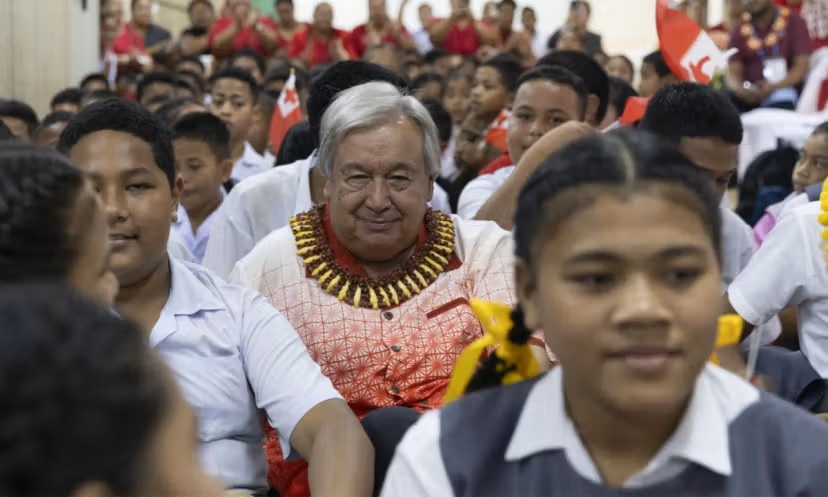
The head of the United Nations in the Pacific says UN operations across 15 countries in the region will not be affected by a deepening global budget crisis that has prompted stark warnings from the organisation’s leadership in New York.
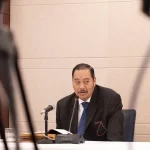
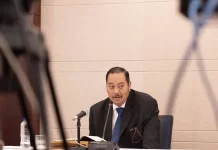
Dirk Wagener, the UN Resident Coordinator for Fiji, Solomon Islands, Tonga, Tuvalu, and Vanuatu, announced this week that funding for Pacific programmes comes from a separate pool and remains secure, despite the UN facing a record shortfall in its core budget.
It follows a warning from UN Secretary General António Guterres that the organisation is at risk of “imminent financial collapse” after member states failed to pay billions of dollars in mandatory contributions.
Wagener said the UN’s work in the Pacific, spanning 32 agencies with a combined budget of around US$327 million, is funded differently from the UN’s regular budget.
“They fund those agencies either through voluntary core contributions or through specific contributions they make earmarked to projects and specific initiatives,” Wagener said.
Pacific leaders have long warned that global funding systems are not working for small island states.
Speaking at the UN General Assembly, Vanuatu’s Permanent Representative, Odo Tevi, said climate impacts were “pushing our countries backwards”.
He said Pacific nations needed “predictable and accessible finance” to respond to growing risks.
At the UN Ocean Conference, Palau’s Minister of Agriculture, Fisheries and the Environment, Steven Victor, said: “While we lead globally in safeguarding our marine resources, Pacific Island Countries remain among the least supported in doing so.”
Wagener’s reassurance comes as the UN’s financial crisis intensifies. In a letter sent to all 193 member states, Guterres said countries now owed a record US$1.6 billion, warning that the shortfall is threatening the organisation’s ability to operate.
“The United Nations is at risk of ‘imminent financial collapse’,” Guterres wrote, saying the crisis was “deepening, threatening programme delivery”, and that money could run out by July.
He said 77 percent of assessed contributions had been paid in 2025, leaving the highest unpaid total in the organisation’s history.
“I cannot overstate the urgency of the situation we now face. We cannot execute budgets with uncollected funds, nor return funds we never received,” Guterres wrote.
He said the UN was being hit by a “double blow” from a financial rule requiring it to return unspent money to member states, even when the funds were never paid in the first place.
“Just this month, as part of the 2026 assessment, we were compelled to return US$227m funds we have not collected,” the letter said.
“The bottom line is clear,” Guterres added. “Either all member states honour their obligations to pay in full and on time or member states must fundamentally overhaul our financial rules to prevent an imminent financial collapse.”
The crisis has been driven in large part by the United States, the UN’s largest contributor, which has refused to pay into the organisation’s regular and peacekeeping budgets and has withdrawn from dozens of UN agencies.
Other countries, including the United Kingdom and Germany, have also announced cuts to foreign aid.
At UN headquarters in Geneva, cost-saving measures have become visible, with heating turned down and escalators regularly switched off.
Across the world, the impact is already being felt. The UN’s human rights office has warned that serious violations may go undocumented due to a lack of funds.
In Afghanistan, the UN Population Fund has closed mother and baby clinics, while the World Food Programme has cut food rations for refugees fleeing the conflict in Sudan.
Despite the global strain, Wagener says Pacific communities should not expect disruptions to UN support in areas such as climate resilience, health, education and disaster response.
He says UN agencies in the Pacific remain focused on delivering programmes on the ground, even as the wider organisation faces one of the most serious financial threats in its history.