



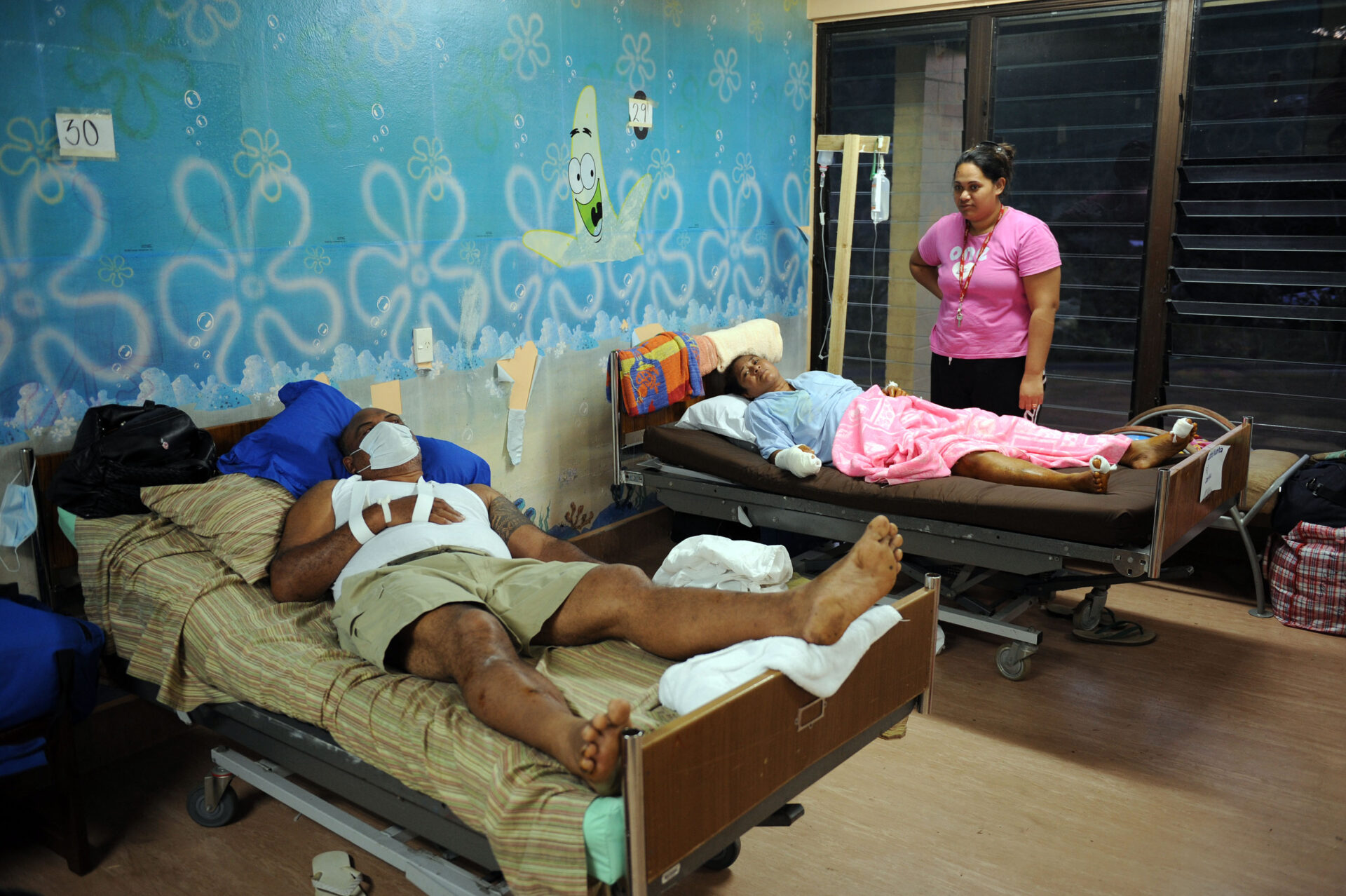
A major new study by the Australia Institute has warned that labour migration policies promoted by Australia and New Zealand are accelerating a health workforce crisis across the Pacific, undermining already fragile health systems and threatening long-term development.
The study, Addressing the Health Workforce Crisis in the Pacific, finds that while labour mobility schemes deliver short-term income gains for individual workers and families, they are also stripping Pacific Island countries of skilled health workers they cannot afford to lose.
The report aligns its findings with the Pacific Islands Forum’s 2050 Strategy for the Blue Pacific Continent, which prioritises sustainable economic development. It echoes a warning from the Forum’s former Secretary General that to “facilitate this priority though, the region must consider strategies that promote immediate to short term wins, as well as long term economic viability”.
According to the research, current labour migration practices are delivering immediate benefits but are simultaneously weakening the foundations needed for long-term health system sustainability across the region.
Drawing on evidence from health workers and unions across Pacific Island countries, the study shows that health systems are under severe strain due to low wages, unpaid allowances, rising living costs, staff shortages and poor working conditions.
Many health workers are leaving public health services because facilities are understaffed, equipment is inadequate, training opportunities are limited and occupational health and safety risks are growing. Climate change is compounding these pressures, increasing risks for frontline health workers and adding to system stress.
Health workers remaining in the system are often overworked and unable to provide adequate care, creating daily stress and burnout. In many countries, anti-union discrimination and weak social dialogue prevent unions from addressing these problems effectively.
The report finds that significant numbers of Pacific health workers are migrating to Australia and New Zealand through multiple pathways, including government-managed schemes such as PALM and RSE, as well as employer-sponsored skilled migration programs.
A key concern is the growing recruitment of nurses and other skilled health professionals into lower-skilled care jobs in aged care, disability support and early childhood education. These roles often do not recognise workers’ qualifications and provide little or no skills development relevant to Pacific health systems.
The study notes that losing even small numbers of experienced workers can have devastating impacts in small health systems already struggling to cope.
The recruitment of nurses into personal care roles is described as de-skilling, undervaluing workers and failing to meet both individual aspirations and national health needs.
The report highlights a lack of oversight of recruitment practices by labour hire firms, private training providers and aged care employers. Recruiters are accused of providing misleading information and false promises about job roles, conditions and pathways to skills recognition.
It warns that increased reliance on private recruitment agencies, with limited government or union involvement, is likely to worsen exploitation and poor treatment of Pacific workers.
The study also points to structural problems in aged care sectors in Australia and New Zealand, including low pay, poor job quality and chronic understaffing, which drive demand for migrant labour. Temporary migrant workers, particularly women, are identified as highly vulnerable to exploitation, racism and discrimination.
While Australia and New Zealand have committed to supporting Pacific development priorities and have strengthened some worker protections, the report says both governments take a narrow and siloed approach to labour migration.
Their focus is largely on individual worker outcomes rather than broader impacts on health systems in countries of origin. At the same time, skilled migration programs are expanding to include care workers with far less regulatory oversight than Pacific-specific schemes.
The report notes that under these programs there are no effective controls to prevent the recruitment of skilled health workers from Pacific countries with already depleted workforces.
It contrasts this approach with the United Kingdom, where labour migration programs for social care workers are being shut down due to exploitation and failure to address poor pay and conditions.
A recurring finding is the lack of “real reciprocity” in labour migration arrangements. Unions in both Pacific Island countries and destination countries argue that current systems benefit Australia and New Zealand while placing disproportionate costs on Pacific health systems.
Public sector and health unions in the Pacific are often excluded from migration policy design and implementation, especially where labour migration is treated as a trade issue rather than a human and workforce issue.
The report stresses that unions are central to building sustainable health systems and achieving development goals, yet are routinely sidelined.
The study calls for urgent reforms by Pacific governments, Australia and New Zealand, and regional partners.
Key recommendations include developing labour agreements that treat migration holistically, align with WHO and ILO standards, and explicitly protect Pacific health systems. It urges stronger bilateral agreements that include caps, fair recruitment rules, mutual recognition of qualifications and return migration requirements.
The report calls for greater investment in Pacific health workforce training, improved data systems to track migration impacts, and stronger social dialogue with unions at every stage of policy development.
For Australia and New Zealand, it recommends tighter regulation of skilled migration pathways, increased development assistance targeted at health workforce retention, and stronger protections to ensure migrant workers receive equal treatment.
Pacific Island governments are urged to engage unions as key partners, strengthen collective bargaining, invest in domestic training institutions and ensure returning health workers can reintegrate into the system without penalty.
The report concludes that labour migration should not come at the cost of collapsing health systems, warning that without coordinated action, Pacific countries risk losing the skilled workers essential to the health and wellbeing of their people.