


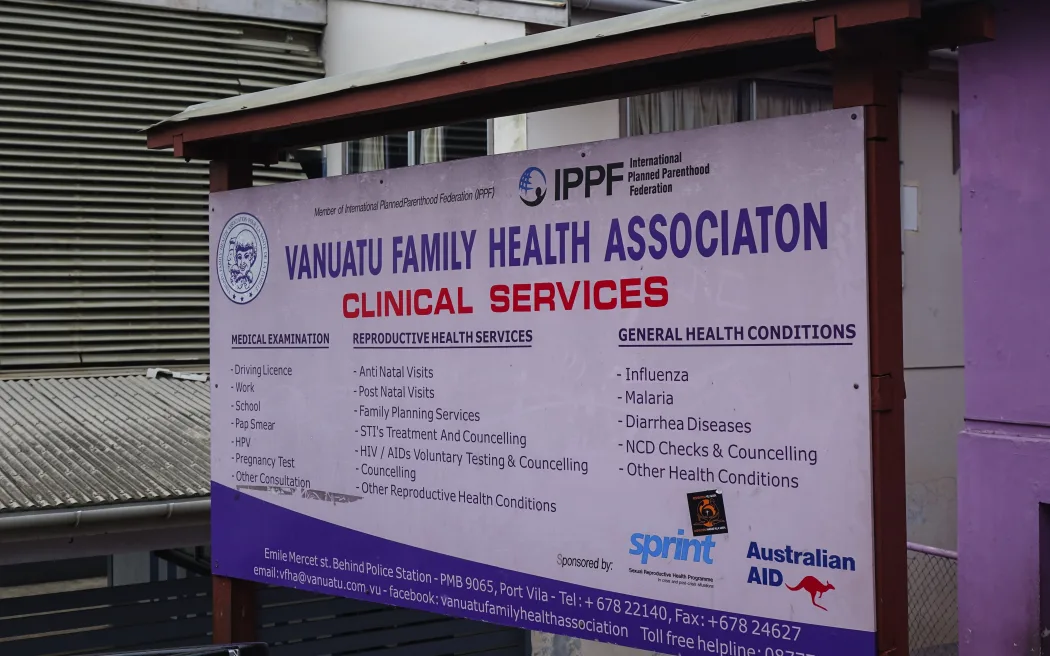
Skilled health workers from Pacific Island countries are being poached to fill Australia’s shortage of care workers, pushing health systems in the region to the brink of collapse, according to new research.
A report by the Centre for Future Work at The Australia Institute and Public Services International found that many Pacific workers arriving in Australia are being deskilled, underpaid and exploited.
Care workers have been added to the Pacific Australia Labour Mobility (PALM) scheme, which was traditionally aimed at seasonal agricultural workers. The report says this shift has driven skilled health workers including nurses to quit their jobs for lower-skilled but better paid roles in Australia.
The research details the deteriorating state of health systems in Fiji, Papua New Guinea, Samoa, the Solomon Islands and Vanuatu, warning that many services and hospitals are operating at just 30–40 percent capacity or worse.
It also highlights that Pacific workers in Australia are vulnerable to poor treatment because of their visa status.
Vanuatu’s population of 327,000 is spread across 83 islands, with 75 percent living in rural areas. The country remains highly vulnerable to climate change and natural disasters and is still recovering from a major earthquake in December 2024 that left many people without jobs.
Tourism dominates the private sector and the labour force participation rate sits at 58 percent. The Vanuatu Trade Unions Combined (VTUC), formed in 2021, represents workers across key sectors and has raised concerns about outdated labour laws.
According to the report, Vanuatu’s health system struggles due to the lack of implementation of critical policies and plans. Non-communicable diseases and communicable diseases continue to rise, and access to quality health care is poor, especially in rural areas.
There are severe shortages of skilled health workers, with nurses and medical officers in short supply and rural positions going unfilled. Women make up most of the health workforce but are concentrated in the lowest paid roles.
Vanuatu is the largest supplier of workers to Australia and New Zealand under seasonal schemes. In 2023, remittances accounted for 13 percent of Vanuatu’s GDP. More than 16,000 ni-Vanuatu were working overseas that year, representing 20 percent of the nation’s prime-aged adult men.
The report notes that Vanuatu has had to recruit workers from overseas because of the loss of skilled labour. In 2023, the government introduced an Emergency Employment Visa to bring in 1,500 foreign workers to address local shortages. In 2024, Vanuatu adopted a National Labour Mobility Policy aimed at improving governance and reducing the negative impacts of labour migration.
Participants in a Talanoa workshop expressed fears about limited freedom of association and the weakness of social dialogue in Vanuatu. They described poor working conditions, lack of entitlements, and a culture of nepotism and harassment in the health sector.
Nurses are leaving because jobs are not suitable, with many asked to work outside their areas of expertise. Services in several provinces are run down and workloads are high. The Public Sector Commission has been slow to approve contracts and entitlements, prompting workers to move to NGOs or other non-health roles.
Health systems are heavily reliant on inexperienced workers as senior staff leave.
The report warns that public servants, including health workers, are joining PALM and RSE schemes, worsening local shortages. Skilled health workers migrating to Australia and New Zealand are being deskilled, unable to practice in their professions because their qualifications are not recognised.
This loss of skilled workers from rural areas leaves critical roles unfilled and weakens already struggling services.
There are also concerns about exploitation in labour schemes, with reports of poor living conditions, overcrowding, unsafe drinking water, and sexual harassment. Workers often find that employment conditions differ from what they were promised.
The report notes that while Vanuatu has introduced measures such as blacklisting abusive employers and developing reintegration programs, unions have not yet seen “success stories.”
The study concludes that Australia’s reliance on Pacific workers to fill its care workforce gaps is causing lasting harm to health systems across the region, with Vanuatu among the hardest hit.