

By Pita Ligaiula in Manila, Philippines
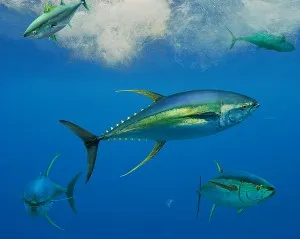
The Western and Central Pacific Fisheries Commission (WCPFC) wrapped up its annual meeting in Manila Friday with a major win for Pacific tuna fisheries, agreeing to a long-awaited management procedure for South Pacific albacore — a billion-dollar species central to the economies of many island states.
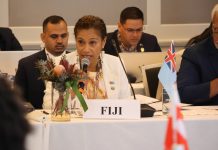
In an exclusive interview with PACNEWS, WCPFC Chair Dr Josie Tamate said she was “very, very happy” with the outcome, calling the agreement a top priority and a long time coming.

“The Commission has finally adopted a Managing Procedure for South Pacific Albacore. I’m very, very happy,” she said.
“That was my top priority for this meeting. Mainly there’s been a lot of work coming through the year, and to get it across the line, it’s all the hard work of the members. But also I want to recognise the FFA members, especially the Southern Islands who have worked tirelessly throughout the year.”
She said members pushed through the usual sticking points to deliver the result Pacific states had sought.
“It’s not easy, but the outcomes of today’s meeting was what we wanted. It was just a matter of getting all the members working through the details. It’s always the details that come through. We’ve still got work to do in implementing the management measure, but I think in terms of stepping in the right direction, we’ve done that. I’m really happy with that,” Dr Tamate told PACNEWS after WCPFC22 in Manila.
 Asked about the significance of the decision for Pacific communities that rely on tuna, Dr Tamate said the management procedure sends a strong signal of stability.
“The step in the direction of adopting the Management Procedure is the necessary first step, the next step that we need to do. And this complements some of the work that FFA members have done this year in terms of their allocation process,” she said.
“So next year we’ll be again continuing to work on analysing some of those details. I want to say that it is a big positive signal. I hope that it will help the small island states, especially those FFA members who, like Fiji for example, who have a big Albacore tuna fishery that they rely on their own.”
She said the Commission’s job is clear to keep key Pacific tuna stocks sustainable.
“In terms of sustainability, I think this is the work of the Commission is to make sure that we do have management procedures as we work on the harvest strategies. It’s just a way of making sure that we do have the key stocks in the Western Central Pacific are sustainable.”
 Transshipment — one of the Commission’s most contentious issues saw no breakthrough.
“There was no decision on the transshipment. So work continues,” Dr Tamate said.
“I think the current CMM, the Conservation Management Measure, still applies. In that measure, transshipment is banned in the high seas, but there are exceptions. And those are some of the details that will continue.”
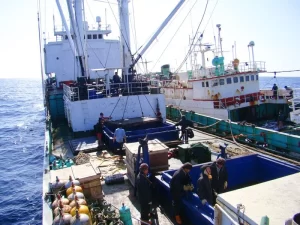
She said the debate is far from new.
“I’m sure the Commission will continue to work through, because this is not the first meeting that we’ve discussed transshipment. It’s been ongoing. Last year it was discussed in Fiji, and because there was no working group at that time, they didn’t see any progress, so the Commission decided to agree to suspend that working group.”
She said keeping the issue alive is critical.
“So it’s back in the Commission. I don’t think it never went away, but I think it’s having it discussed here, even though there’s no agreement on the way forward, but I think it’s having that, keeping it in the Commission, it will enable further discussion as part of the Commission’s work.”
Dr Tamate also welcomed progress on Article 30 — the provision recognising the disproportionate burden borne by small island developing states.
“Article 30, yes. I think that’s a very important milestone, an achievement that FFA members have been calling for,” she said.
“There is a disproportionate of burden from managing the fisheries… There’s a need to support the capacity of the small island states to be able to meet the requirements, meet the obligations.”
Countries agreed to a terms of reference for the review and a reporting template — both steps Pacific members had long pushed for.
“That agreement is part of the Commission’s responsibility to make sure that those seats are not burden by the decision that’s been made by the Commission,” she said.
The Pew Charitable Trusts welcomed the agreement, calling it a decisive moment for Pacific fisheries.
Dave Gershman, a senior officer working on international fisheries, said: “Pew commends the Western and Central Pacific Fisheries Commission (WCPFC) for adopting a management procedure for south Pacific albacore tuna.
“This US$1 billion fishery is critically important to many Pacific Island economies, and this long-term approach automatically sets fishing limits based on the stock’s health, to ensure sustainability of the species for the foreseeable future.
“Critically, this adoption also means that South Pacific albacore fisheries can maintain a sought-after ecolabel that identifies them as a good choice. As consumers demand more accountability and sustainability from tuna companies, this adoption is a signal from WCPFC members that they take the concerns of the public, and their conservation mandate, seriously.
“To complement this promising new management plan, effective implementation will be needed. Governments should work together next year to finalise their effort and put words into action,” he said.
WWF Pacific’s Fisheries Conservation officer, Seremaia Tuqiri said the adoption was overdue but significant.
“WWF expressed its relief and appreciation at the adoption of the management procedure of the South Pacific albacore tuna. It has taken over 10 years to get to this stage.
“Economic interest is often the driving force for decisions made so for the cooperating members of the WCPFC to come to an agreement on a harvest control rule that balances development aspirations, food security, economic development, and the long-term stability of a highly migratory fish stock speaks volumes of the sacrifice, goodwill, and sincerity that exists,” said Tuqiri.
The adoption of the South Pacific albacore management procedure (SPA MP) marks one of the Commission’s most significant achievements in years, giving Pacific states hope for a more predictable, sustainable future for one of their most valuable fisheries.
But the message from Dr Tamate, PEW, and WWF is the same: the job is not finished
The real test begins with implementation next year.