
By Pita Ligaiula in Manila, Philippines
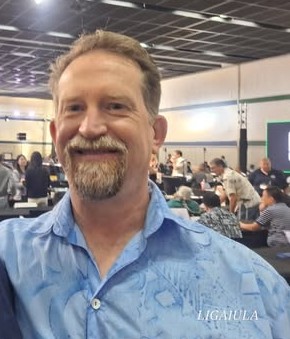
Calls to shut down high seas transshipment erupted at WCPFC22 on Thursday, with Sharks Pacific Policy Director Bubba Cook and the Indonesian Migrant Workers Union (SBMI) warning that the practice is fuelling IUU fishing, corruption, opaque supply chains and ongoing labour abuses.
Cook delivered one of the sharpest interventions of the week, backing statements from Republic of Marshall Islands (RMI), Forum Fisheries Agency (FFA) and Parties to the Nauru Agreement (PNA) and accusing some members of treating high seas transshipment as a “blanket entitlement” rather than the narrow exception originally intended by the Commission.
“We would like to align ourselves with and support the previous comments of RMI, FFA, PNA and, while Sharks Pacific appreciates the effort of Korea to seek compromise, we wish to again highlight what is recognised as one of the most persistent and damaging weaknesses in the Commission’s Monitoring, Control, and Surveillance architecture,” Cook said.
He said the record is “clear,” highlighting to repeated evidence linking high seas transshipment to “IUU catch, data falsification, unverified product movement, and opaque supply chains.”
“Its remote and lightly monitored nature also facilitates other illicit activity, including drug trafficking, arms trafficking, and labour abuses enabled by vessels staying at sea for months or years without scrutiny,” he said.
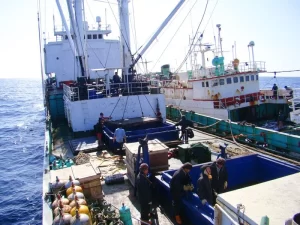 Cook reminded delegates that Conservation and Management Measure (CMM)2009-06 was designed to reduce not expand—at-sea transfers.
“Some CCMs have treated it as a blanket entitlement and increased high seas transshipment to the point where it now functions as the rule rather than the exception, which is directly contrary to the measure’s intent and an insult to every member that doesn’t rely on transshipment,” he said.
Cook dismantled several arguments used to defend the practice:
*On “impracticability”, Cook said “Not one CCM relying on high seas transshipment has submitted even a basic vessel-level assessment… If you have different ‘operational realities’ and want to prove impracticability, just bring the receipts as the Cook Islands suggested!”.
*On industry viability, he said “The argument that longliners cannot remain viable without high seas transshipment implies that the industry operates on margins so thin that accurate reporting is at risk—effectively reinforcing the case for stricter controls.”
*On IUU prevention, he cited the Commission’s own 2025 Transshipment Report, which acknowledges “substantial data deficiencies, unverified reporting, and potential unreported transshipments” which Cook said are “by definition, IUU.”
*On 100 percent observer coverage, Cook said claims must be viewed with caution.
“Observers are often nationals of the same flag state, sometimes paid directly by vessel operators, and in some cases simultaneously serving as crew.”
“Sharks Pacific believes the most effective, efficient, and enforceable solution is simple: ban all at-sea transshipment and require vessels to land their catch at the nearest designated port,” he told delegates.
Cook said that if the practice continues, the Tuna Commission must “pursue the robust reforms recommended by Sharks Pacific and other members” and adopt best-practice standards modelled on the FAO Voluntary Transhipment Guidelines.
“For these reasons, the Commission must take steps to address this deficiency, we support the recommendation of RMI and Korea to defer the issue to next year,” he concluded.
Meanwhile, the Union of Indonesian Migrant Workers (SBMI), backed by Accountability.Fish, echoed the call for an outright ban, saying the human cost of the practice is undeniable.
“It is time for CCMs to bring an end to the practice of transshipment on the high seas,” SBMI said.
“What is often promoted as an efficient solution in fisheries has, in reality, become a gateway for IUU fishing, as well as repeated cases of abuse of workers.”
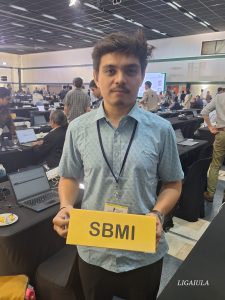
SBMI said at-sea transfers keep crews “cut off from oversight for long periods, leaving them exposed to exploitation with little chance of protection or escape.”
While acknowledging the existence of observer coverage and electronic monitoring, the group said, “significant limitations” make oversight unreliable — especially given isolation, technological gaps and “vulnerabilities that cannot be fully addressed by simply strengthening monitoring tools.”
“We all see that even with new reporting tools, observer arrangements, and data checks, cases of IUU fishing activity and forced labour connected to transshipment persist,” SBMI told delegates.
“This suggests that the problem is not only the quality of monitoring but the nature of the at-sea transshipment activity itself.”
SBMI said the Tuna Commission cannot claim to be serious about ending IUU fishing or protecting migrant crews while allowing the practice to continue.
“If the Commission is genuine in its intention to eliminate IUU fishing and put an end to abuse at sea, then the only credible path forward is to stop transshipment on the high seas.”
They urged WCPFC to shift toward fully port-based transshipment where “checks are stronger” and “accountability is real.”
“No amount of efficiency can justify the cost of human suffering,” SBMI said. “Ending transshipment at sea is not only a policy choice. It is a moral duty.”
The interventions are expected to add pressure on WCPFC22 negotiators as the Tuna Commission wrestles with competing positions from SIDS, distant-water fishing nations (DWFNs) and the NGO community over one of the most contentious compliance issues in the region.