



By Pita Ligaiula in Manila, Philippines
Australia and the Pacific Community (SPC) have urged the Western and Central Pacific Fisheries Commission (WCPFC) to reset its crowded harvest strategy timetable, warning that without a smarter schedule the Commission risks bottlenecks and stalled progress on key tuna stocks.
Their joint paper, tabled at WCPFC22 in Manila, lays out a wider set of planning challenges that sit beyond the existing harvest strategy workplan including clashing timelines, technical workload pressures, and a looming congestion of critical decisions in 2026.
The paper calls for a coordinated rethink.
It argues that harvest strategies for all key tuna stocks must be planned holistically, not in isolation, noting the Commission “requires adequate time to properly consider harvest strategy matters” and is facing “a backlog of items falling due over a relatively short period.”
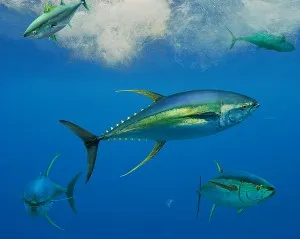
A central recommendation is to bring the three tropical tuna stocks – skipjack, bigeye and yellowfin into alignment so their management procedure outputs can feed into the Tropical Tuna Measure at the same time.
To achieve this, Australia and SPC propose two major adjustments:
*A one-off extension of the skipjack management procedure cycle from three years to four, synchronising it with the first running of the bigeye MP in 2027.
*Moving the full Tropical Tuna Measure review from 2026 to 2027, easing pressure on the Commission and subsidiary bodies.
21st Scientific Committee meeting of the Western and Central Pacific Fisheries Commission (SC21) has already backed the skipjack extension, noting stable stock indicators and strong MSE performance that support a four-year cycle. The report says only minimal amendments to Conservation and Management Measure (CMM) 2022-01 and CMM 2023-01 would be needed to enact the changes.
Australia and SPC say the updates are essential to “set the Commission up for an efficient cycle of activity going into the future.”
But conservation groups warn the clock is already ticking.
WWF Japan’s Uematsu Shuhei told the meeting next year will be important for bigeye and yellowfin.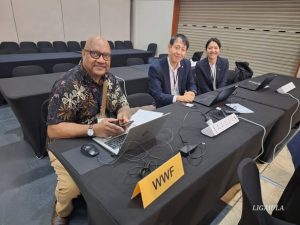
“If Harvest Strategy with Management Procedure and Harvest Control Rules for both species agreement delay, not only it will sustainable fisheries become more distant, but also it could have negative impact on fisheries and markets in the future,” he said.
He cautioned that the Commission’s five-day annual session is nowhere near enough to settle the heavy agenda.
“Considering the many time-consuming discussions on Southern Albacore, we believe only five days of commission meeting will not be enough,” he said.
WWF is calling for at least two additional hybrid meetings before WCPFC23 “to allow many stakeholders to discuss them adequately before the meeting and reach consensus on the HS for Bigeye and Yellowfin tuna,” noting online formats could help reduce costs.
With albacore still unresolved and bigeye and yellowfin next in line, members now face a tight timetable and a clear warning that without an immediate reset, the Commission risks falling further behind on its harvest strategy commitments.