
Vanuatu has warned world leaders at COP30 that climate disasters strike every season and its communities cannot wait, calling for urgent action and climate finance that reaches the most vulnerable.
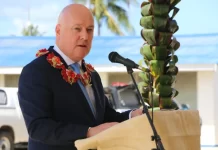
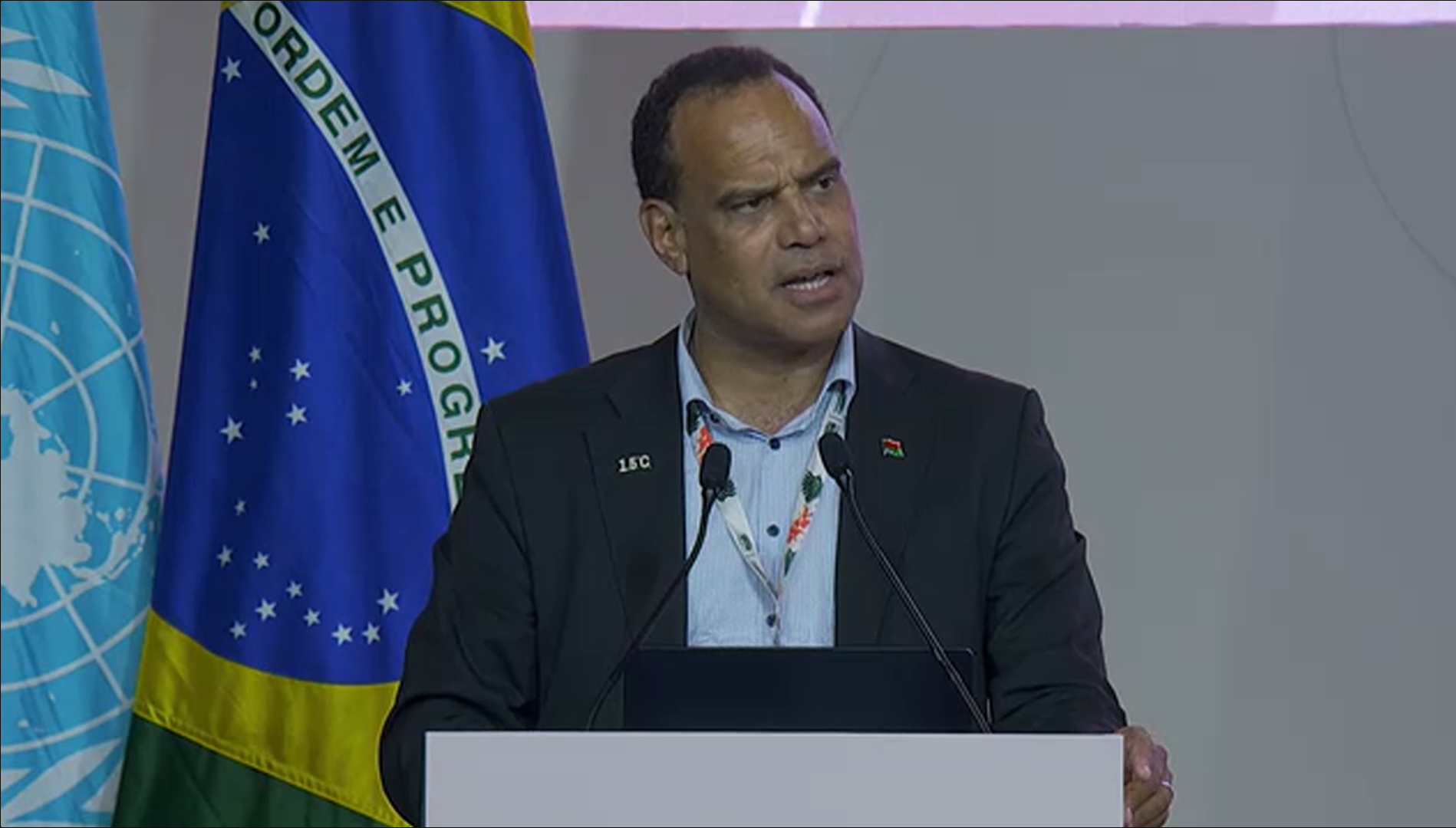
Speaking at the High-Level Segment in Belém, Vanuatu’s Minister of Climate Change Ralph Regenvanu said his country remains “among the most climate vulnerable nations on Earth,” facing climate impacts that are “not just environmental shocks, they are economic shocks of an existential scale.”
Regenvanu said the effects are already devastating. “In just the past decade, extreme weather events have inflicted damages equivalent to well over half of our GDP,” he said, noting that these repeated blows continue to “lock us in a cycle of perpetual recovery” and threaten the nation’s hopes for a self-determined future.
Citing this year’s International Court of Justice (ICJ) opinion, he stressed that the world now has legal clarity: states have binding obligations to protect the climate system.
“The ICJ reaffirmed what small island developing states have long insisted,” he said, adding that the findings “echo the IPCC’s warnings, reaffirming that 1.5 is the limit of survival in countries like Vanuatu.”
Vanuatu has submitted one of the world’s most ambitious NDC 3.0 commitments, but Regenvanu emphasised that “ambition from vulnerable states is not enough.”
He urged all major emitters to finally align their national commitments with a 1.5°C pathway “with the urgency that the science and now international law demands.”
He also highlighted the need for climate finance, saying ambition must be backed with funding that is “additional, accessible, grant-based, predictable, and equitable.”
Climate finance, he said, “is not charity. It is a legal and moral obligation grounded in responsibility and capacity as affirmed by Article 9.1 of the Paris Agreement.”
But current systems, he argued, are failing the communities most at risk.
“Accessing climate finance requires navigating complex procedures that undermine the very purpose of the support,” he said.
His frustration was clear: “Our communities cannot wait years for approval while disasters strike every season.”
Regenvanu welcomed the operationalisation of the Loss and Damage Fund but warned its success depends on “real resourcing and rapid disbursement.”
For Vanuatu, loss and damage is not theoretical. “It is already eroding our livelihoods and territory,” he said, stressing that the most vulnerable must be prioritised due to their special circumstances.
He cautioned that adaptation alone cannot protect small island nations: “The limits of adaptation are already being reached.”
Looking ahead, Regenvanu said the 2025 NDC synthesis report highlights the widening gap between what is needed and what countries have committed. “The timeframe for addressing 1.5 is urgent, and the window for action is closing,” he said.
Vanuatu strongly backed Brazilian President Luiz Inácio Lula da Silva’s call for a global roadmap “for a just, orderly and equitable transition away from fossil fuels.”
Regenvanu said such a plan is central to accelerating implementation of the Paris Agreement and closing the 1.5°C ambition gap.
“We need a clear action plan focused on implementing GST-1 (first Global Stocktake under the Paris Agreement), particularly the GST Energy Package.
“Together, we can and must deliver a future where no nation is left behind,” he said.