
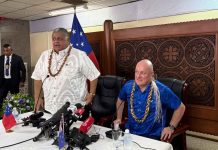
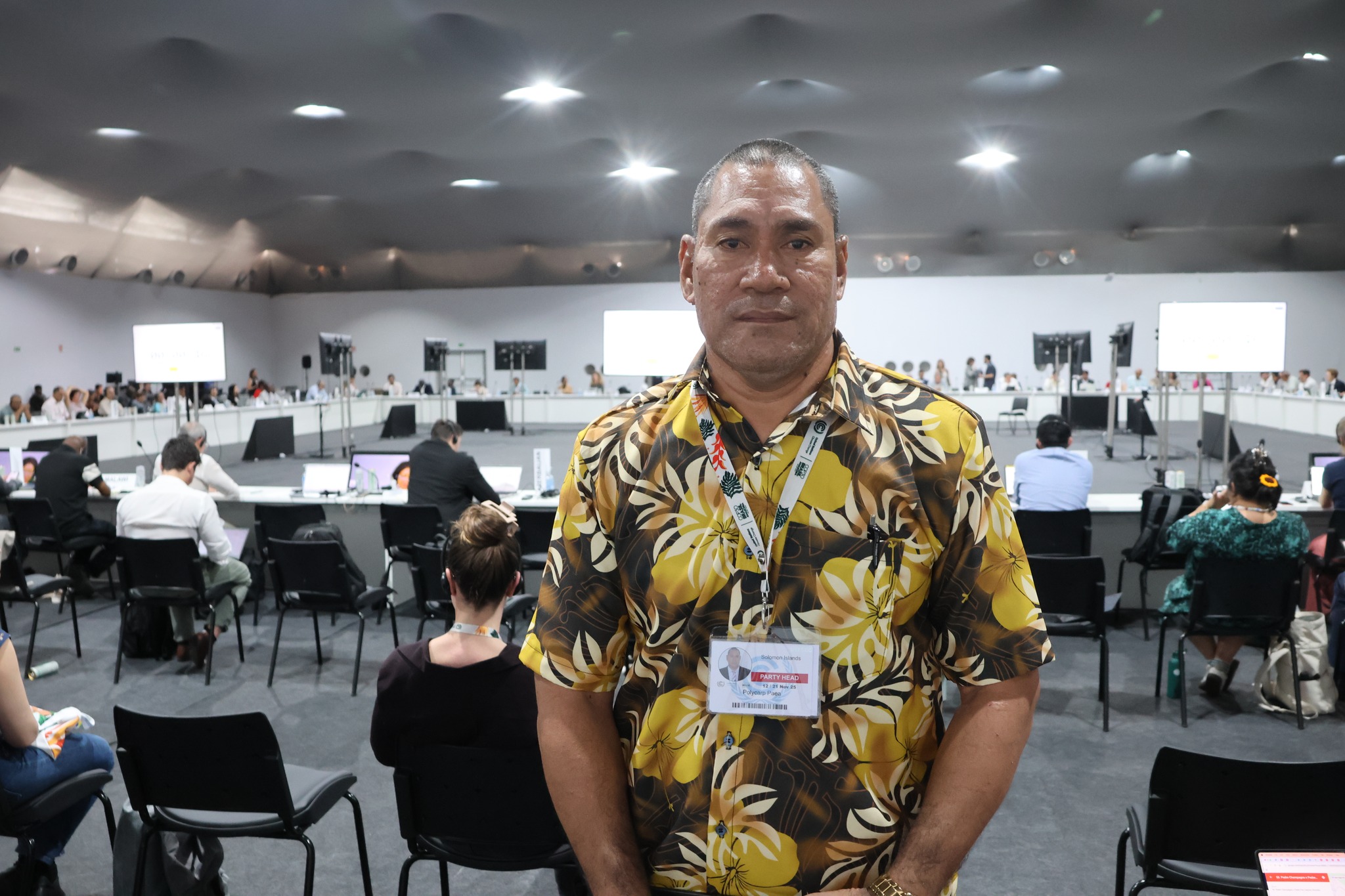
Solomon Islands Environment Minister Polycarp Paea has delivered a blunt message in Belém, warning that Pacific nations are “at the frontline of a climate crisis not of our making” and demanding that developed countries meet their legal obligations on climate finance.
“We contribute less than 0.03 percent of global emissions, yet face the most devastating consequences — rising seas, intensifying storms, and the slow erosion of our cultures, sovereignty, and livelihoods,” Paea told the 3rd High-Level Ministerial Dialogue on Climate Finance.
He said the International Court of Justice’s recent Advisory Opinion made it clear that wealthy nations have binding responsibilities to provide developing states especially SIDS and LDCs with financial resources, technology, and capacity support.
“This obligation is not discretionary. It is a duty rooted in the principles of fairness and differentiated responsibilities that form the foundation of the UNFCCC and the Paris Agreement,” he said.
Paea backed the Baku to Belém Roadmap and its push to scale climate finance “from billions to trillions” by 2035, but stressed that the money must be predictable and fair.
“We cannot adapt with debt,” he said.
“Our economies are already strained by high debt-to-GDP ratios; loan-based finance only compounds our vulnerability. What we need is grant-based and concessional financing, provided in ways that are timely, simplified, and accessible.”
Speaking on behalf of Pacific Islands Forum Chair, Paea welcomed the Roadmap’s focus on reforming multilateral development banks and improving concessionality but warned that the Pacific cannot wait years for approvals.
“For the Pacific, delays of five years or more in project approvals mean lives lost, coastlines disappearing, and cultures displaced. The global financial architecture must evolve to deliver finance at the speed and scale of the crisis.”
Paea said climate finance is both a legal responsibility and a matter of survival.
“Climate finance is not an act of goodwill — it is an investment in our shared humanity and a legal and moral duty,” he said. “For the Pacific, climate finance is our right to survive, to thrive, and to secure a future for generations now and yet to come.”
Fiji, Federated States of Micronesia, the Solomon Islands and Tuvalu delivered statements at the ministerial level, while Tonga was represented by its Head of delegation.