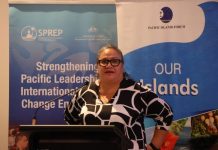

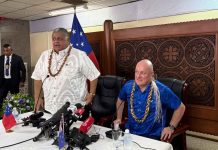


Fiji’s Minister for Fisheries, Alitia Bainivalu, says the successful hosting of the 9th Pacific Tuna Forum has reinforced Fiji’s leadership in ocean conservation and sustainable fisheries management across the region.
Delivering a ministerial statement in Parliament Thursday, Bainivalu said the two-day event, held in Denarau from 14 – 15 October, brought together 430 participants including fisheries experts, policymakers, industry leaders, and development partners to discuss the future of the Pacific’s tuna industry under the theme “Pacific Tuna 2050: Resilience, Innovation, Equity, and Sustainable Trade for a Prosperous Future.”
“The 9th Pacific Tuna Forum showcased regional cooperation and solidarity and, most importantly, reaffirmed Fiji’s position on ocean conservation and sustainable fisheries management,” Bainivalu said.
She said Fiji’s co-hosting of the Forum with Papua New Guinea highlighted the Pacific’s shared goal of managing its tuna resources responsibly and ensuring that Pacific Islanders continue to benefit from one of the region’s most valuable natural assets.
“The Western and Central Pacific Ocean accounts for nearly 60 percent of the global tuna harvest,” Bainivalu told Parliament.
“The stock status in the WCPO not only indicates effective fisheries management and robust scientific monitoring but also demonstrates strong regional cooperation.”
Bainivalu outlined measures taken by Fiji to safeguard tuna stocks, including national quotas, licence caps, closed fishing areas, and protections for sharks, turtles, marine mammals, and cetaceans.
She said Fiji’s leadership in sustainable tuna management has also been supported by practical steps to increase onshore processing and value addition.
“Fiji has been fortunate that out of the 15 developing states in the region, we have been able to lead the quest of being able to invest in onshore processing establishments to value-add products and export tuna caught within our waters as a Fijian product,” she said.
Bainivalu added that while the Pacific Islands Forum Fisheries Agency (FFA) members collectively harvest about 1.5 million metric tonnes of tuna annually, only 214,000 tonnes are processed in FFA countries — meaning 86 percent of the catch is processed offshore.
“When raw materials are exported offshore for processing, we miss out on job opportunities, equitable wealth creation, and the transfer of technology and knowledge,” she said.
The Minister said hosting the Forum gave Fiji an opportunity to engage directly with global industry leaders and strengthen its national strategy to increase returns from the tuna value chain.
“The 9th PTF provided an opportunity for the Fisheries Ministry to learn and understand the global tuna supply chain and identify new entry points into the competitive global tuna trade market,” Bainivalu said.
She said the Forum discussions focused on four pillars — resilience, innovation, equity, and sustainable trade — to guide the industry toward long-term sustainability and fairer benefits for Pacific communities.
“The number of registered participants reached 430 from the targeted 300, confirming that the Pacific Tuna Forum remains the leading platform for dialogue, cooperation, and strategic engagement on the tuna industry in the Pacific,” she added.
Bainivalu highlighted Fiji’s advantage as one of the region’s most developed tuna industries, with a fully domesticated long-line fleet, onshore processing facilities, and established export markets in Japan, the U.S, and the EU.
“The 9th PTF created a space and platform to present and market Fijian-caught and produced fisheries products, which is essential to the industry’s growth,” she said.
She said the discussions would help “re-strategise development aspirations and provide a strategic direction to transform the fisheries sector,” including investment in cold-chain infrastructure and logistics under Fiji’s role as a regional fisheries hub.
Bainivalu said the government’s $562,500 (US$281,250) budget allocation for hosting the Forum reflected its commitment to strengthening regional partnerships and promoting sustainable fisheries management.
“The successful convening of the Pacific Tuna Forum is a clear indication that, through collaboration, solidarity, and a shared vision, the Pacific region can continue to protect, develop, and sustain its tuna resources for the long-term benefit of our people,” she said.
“As we look ahead, we do so with confidence and conviction that we can continue to build a future where we capture greater returns from processing, marketing, and branding our own products,” she said.