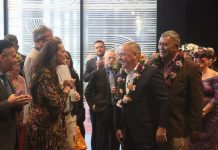
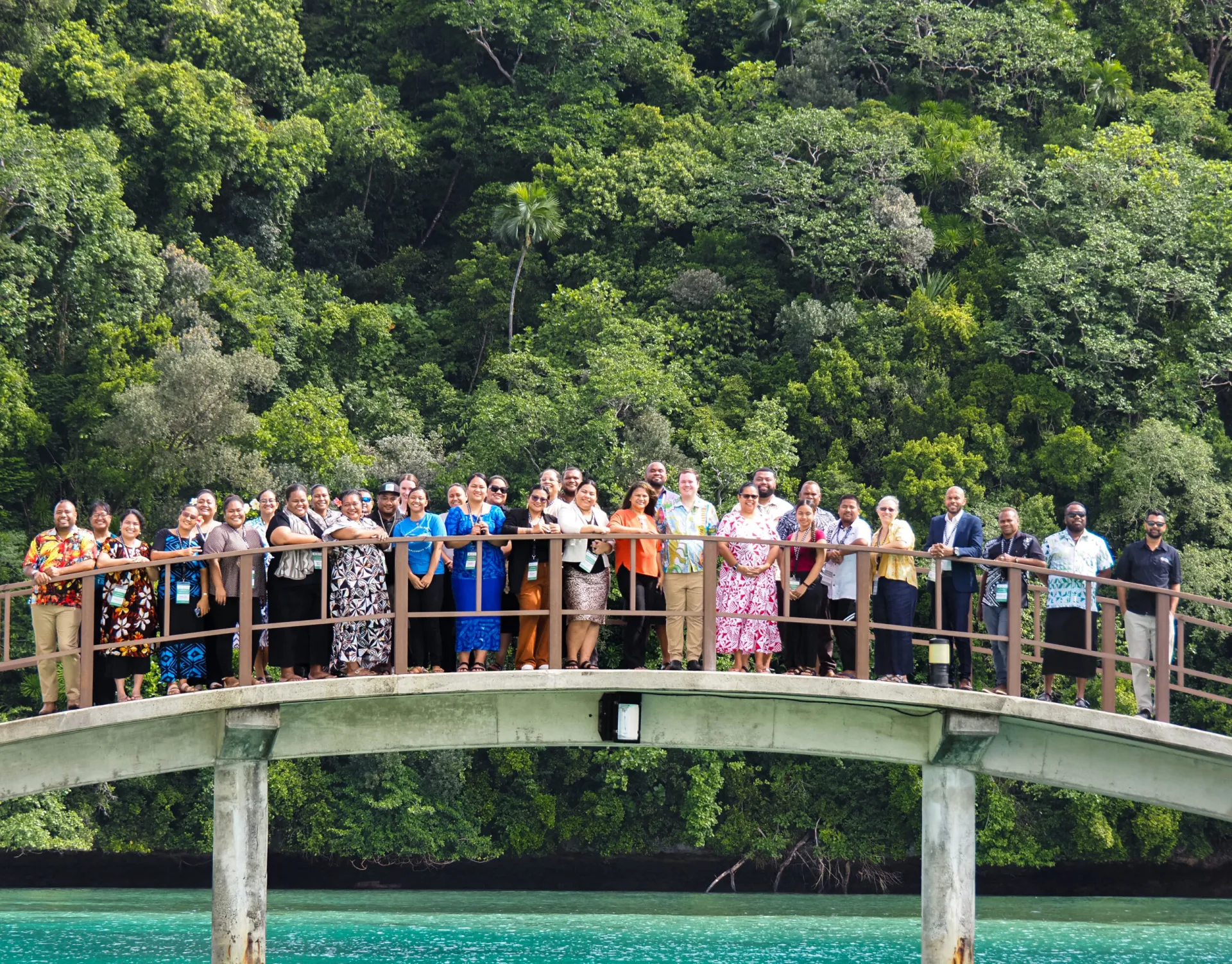
Journalists and Communication officers from across the Pacific have gathered in Palau this week for a regional Media Masterclass, held alongside the Second Pacific Disaster Risk Management (DRM) Ministerial Meeting, which is opening tomorrow.
The five-day masterclass aims to strengthen collaboration between the media, scientists, and disaster management officials on climate, ocean, and disaster risk topics across the region.
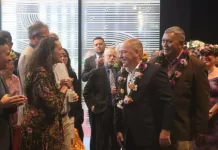
Officiating at the opening, H.E. Toby Sharpe, Australian Ambassador to Palau, highlights the essential role of communicators in shaping the Pacific’s response to growing climate and disaster challenges.
“I understand the vital role that each of you play, whether you’re a journalist, a communicator, a scientist or a technical expert, in shaping how the region understands and responds to the challenges of climate change, ocean health, and disaster risk,” Ambassador Sharpe said.
“This Masterclass is not just a training course, it’s a strategic investment in regional resilience. It provides the added value of facilitating coverage of the Ministerial meeting.”
Organised by the Pacific Community (SPC) through its Climate and Oceans Support Programme in the Pacific (COSPPac), the training seeks to build stronger partnerships between the media and technical agencies, including National Disaster Management Offices (NDMOs) and National Meteorological and Hydrological Services (NMHSs).
Rhonda Robinson, Director of SPC’s Geoscience, Energy and Maritime (GEM) Division, said the masterclass will help journalists and communicators improve their reporting on complex science and disaster issues, while supporting regional coverage of the DRM Ministerial.
“The masterclass provides a critical opportunity to initiate cooperation, strengthen existing partnerships, and build trust and engagement on climate, ocean, weather, and disaster-related topics across the Pacific,” she said.
Meanwhile, Pacific Islands News Association (PINA) representative Leilani Raklai encouraged participants to use their storytelling skills to make science and disaster information more relatable to communities.
“As Pacific journalists, our job is to tell stories that help people understand what’s happening around us, especially during disasters,” she said.
The event builds on the success of previous SPC-led media-science collaborations, including the 2019 UN Decade of Ocean Science Media Masterclass in New Caledonia and the 2023 Pacific Ocean Science Conference in Fiji.
Both initiatives strengthened links between journalists and Pacific scientists, amplifying youth and indigenous voices in regional science reporting.