
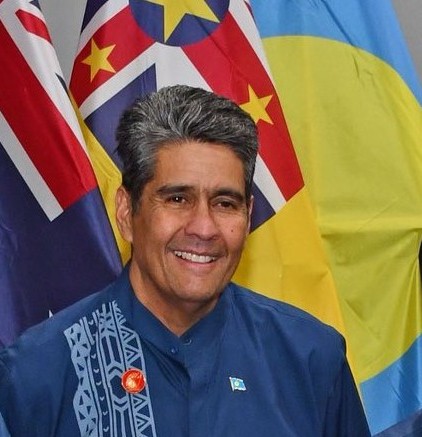
By Pita Ligaiula in Honiara, Solomon Islands
Palau President Surangel Whipps Jr says the International Court of Justice (ICJ) advisory opinion on climate change gives vulnerable nations a powerful tool to demand accountability from major polluters.
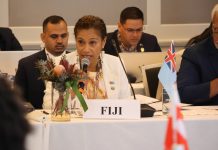
Speaking at a side event on the ICJ opinion at the fringes of the Forum Leaders Meeting in Honiara, Whipps said Pacific nations have grown frustrated with years of inaction at global climate talks.
“We go to climate change conferences, and we keep on talking and talking, and the action is just not happening. So, we have to attack it from all avenues. I congratulate Vanuatu for taking that leadership role and making it happen,” he said.
Whipps said the ICJ ruling provides a foundation for change.
“Now that we have a decision, we can base our arguments and continue to leverage and hopefully change behaviour.
The goal is to change behaviour. The whole country is counting on it,” he said.
He drew comparisons with criminal justice.
“If somebody steals something, you take them to court. If you murder somebody, you go to jail. But if you eliminate a country, there’s no penalty for that. Finally, we have a decision that gives the most vulnerable an opportunity to lead and access the funds we need,” he said.
Whipps said the Pacific has long struggled to secure meaningful climate finance.
“We go to these conferences, they make commitments of all this money, and then we get very, very little — 0.03 percent of the total allocation of funds. And they make it difficult for us.
But now we’re hoping that with this, we can really change the focus and get the action we need to save lives and save countries,” he said.
The Palau President said for low-lying nations like Kiribati, the issue is about survival.
“Ultimately, people of Kiribati and the small islands want to stay where they are. This ruling gives us a chance to fight for that,” Whipps said.