By Pita Ligaiula in Honiara, Solomon Islands
Pacific civil society leaders have called on Forum Leaders to institutionalise their role in regional decision-making, warning that shrinking civic space threatens democracy, transparency, and the delivery of the 2050 Strategy for the Blue Pacific Continent.
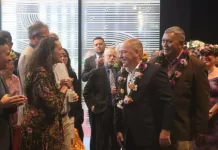
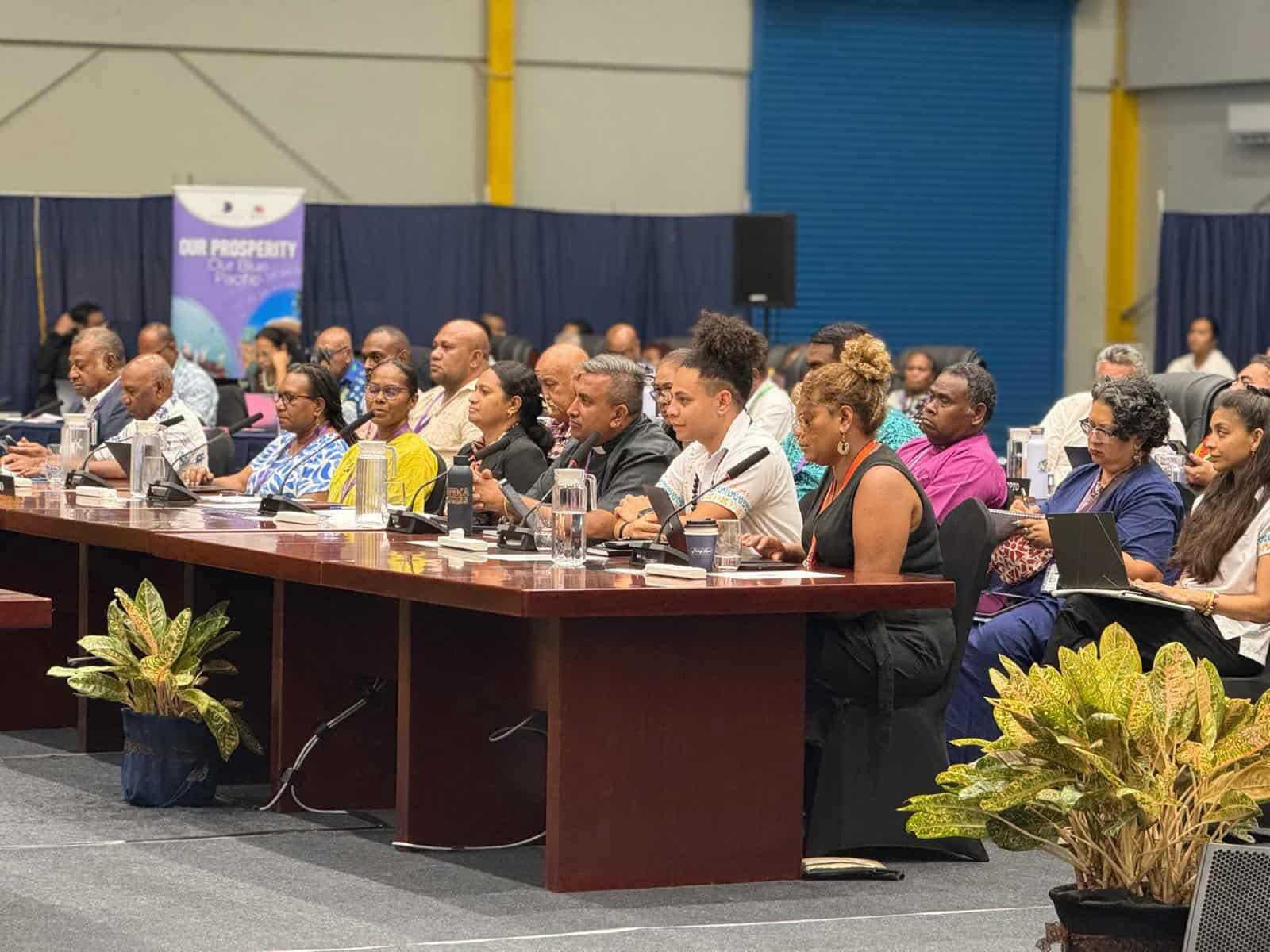
At the 54th Pacific Islands Forum Leaders Meeting (PIFLM) in Honiara Tuesday, representatives from churches, youth, climate action networks, and human rights groups used the CSO–Leaders Dialogue to push for permanent mechanisms to embed community voices in Forum structures.
Pacific Conference of Churches(PCC) General Secretary, Reverend James Baghwan told leaders the Forum’s theme, Iumi Tugeda – Act Now – for an Integrated Blue Pacific, must go beyond words.
“Seen through the 2050 Strategy’s People-Centred Development lens, Iumi Tugeda must explicitly mean civil society too. If we are to integrate our Blue Pacific, we must also integrate the voices and capacities of our communities—women and men, elders and youth, people with disabilities, faith and indigenous custodians—into the way the Forum family makes decisions,” Baghwan said.
He urged leaders to create a joint PIFS–CSO working group to redesign participation, set up annual pre- and post-Forum roundtables, and establish a Regional Non-State Actor Unit within the Forum Secretariat.
“Our grounding message is clear: with a fit-for-purpose mechanism in place, we can better protect the very civic space that keeps Pacific democracy healthy,” he added.
Pacific Youth Council representative Josie-Anne Ashley told leaders that young people are already proving their value in regional diplomacy.
“CSOs, including youth, women, persons with disabilities and community-led organisations, are the navigators on board, holding the compass and charts that point to a sustainable and prosperous future,” Ashley said.
She highlighted youth-led advocacy that resulted in the UN General Assembly referring climate change obligations to the International Court of Justice (ICJ) as proof of what youth can achieve.
“When enabled, Pacific youth deliver,” Ashley said.
“This is the moment to institutionalise participation and partnership. By recognising civil society as equal partners, you strengthen not only our potential but also the resilience of the 2050 Strategy.”
Civil society also raised red flags about growing restrictions on freedoms of assembly, association, and expression in some Pacific countries.
“We call on you, our honourable leaders, to make a regional commitment on civic space protection,” said Willie Tokon of VANGO and PIANGO.
“We respectfully ask that you issue a Pacific Civic Space Protection Declaration as an outcome of this Forum and task the Forum Secretariat to co-design with civil society regional enabling civic space guidelines.”
Tokon said civic space is the foundation of accountability. “Without it, the very values the Blue Pacific vision stands on are compromised.”
From Solomon Islands, Jack Kalisto of Development Services Exchange warned that closing civic space undermines the very principle of people-centred development.
“Civic space fosters transparency, accountability, and social cohesion. It allows communities to participate meaningfully in decision-making processes that impact their lives—be it resource management, climate adaptation, or social development,” Kalisto said.
From Kanaky/New Caledonia, Roselyn Makalu reminded leaders that the Forum has historically championed decolonisation and sovereignty.
“The Forum has upheld the values of unity and sovereignty, rooted in the ‘Pacific Way’,” she said. “We urge you to revive that moral clarity.”
West Papuan advocate Rosa Moiwend pressed leaders to make human rights and self-determination standing items on the Forum agenda, backed by a regional strategy co-designed with communities and independent experts.
“This institutional gap must be addressed if the Ocean of Peace vision is to be credible and inclusive,” Moiwend said.
CSOs also challenged leaders to ensure the 2050 Strategy for the Blue Pacific Continent puts people and nature at its heart.
“The Pacific has always been leaders when it comes to addressing the triple planetary crisis of climate change, biodiversity loss, and pollution,” said Dylan Kava of the Pacific Islands Climate Action Network(PICAN).
“So, when it comes to the 2050 Strategy, we see it as our vaka; and it will stand or fall on implementation.”
He called for a people-and-nature lens across all Forum policies, an independent review of deep-sea mining and blue carbon financing, and dedicated financing for CSO-led delivery.
Regional youth advocate Millicent added that Pacific governments must move beyond token consultation.
“This is the time to shift from consultation to co-creation, from statements to systems, and from vision to implementation — together, as One Blue Pacific,” she said.
Civil society leaders closed their dialogue with a clear appeal that Forum leaders anchor their 2050 Strategy implementation in community voices.
“Working together, we can deliver not just a strategy on paper, but a living vaka that carries our people safely into the future,” Reverend Baghwan said.