


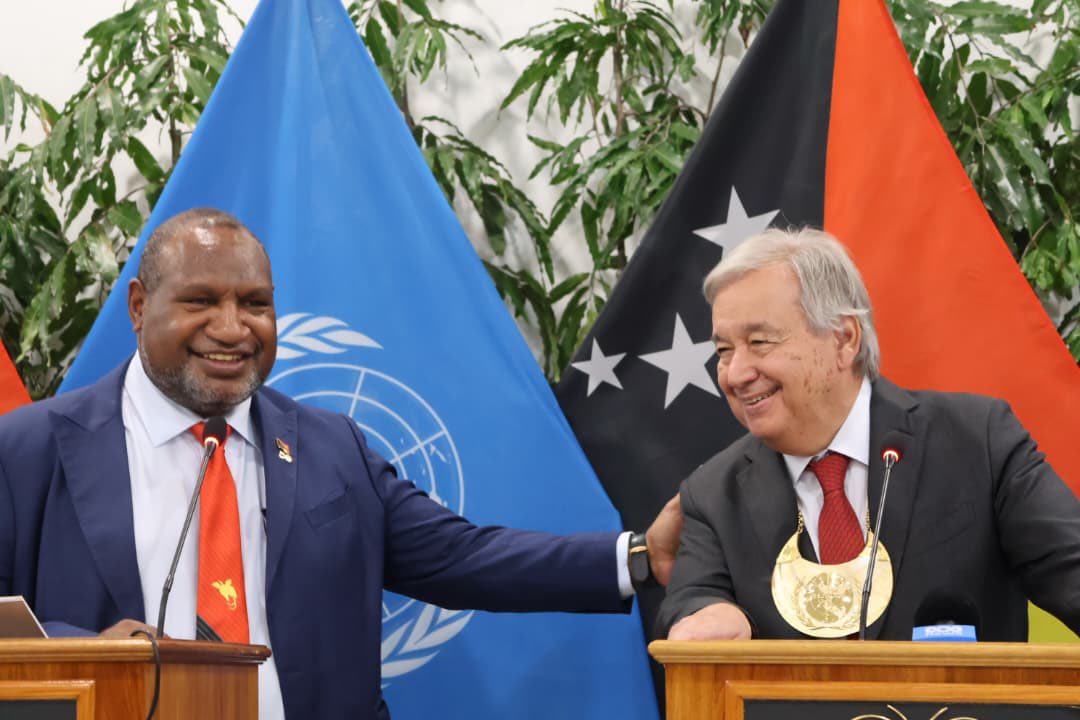
United Nations Secretary-General, António Guterres has hailed Papua New Guinea’s climate leadership and biodiversity stewardship, pledging that the UN will stand firmly with the country and the wider Pacific in demanding stronger action from the world’s biggest polluters.
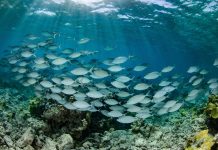
“The Pacific Islands are ground zero for the impacts of climate change, and Papua New Guinea is home to two out of the three Pacific citizens. You are also home to seven percent of the world’s biodiversity and some of the largest coral reefs and rainforests of the planet,” Guterres said while addressing Papua New Guinea’s Parliament.
“We must be ever vigilant in safeguarding these crucial ecosystems, and we have made the case that national protection deserves global support.”
He called climate change a “driver of poverty” and reaffirmed PNG’s moral voice in pushing for climate finance.
“Papua New Guinea does not contribute to climate change. You are even a carbon sink country, and so it’s particularly the G20 who together account for 80 percent of global emissions that have a special responsibility in the present moment,” he stressed.
Referring to the International Court of Justice’s landmark advisory opinion, secured through Pacific advocacy, Guterres said: “That opinion affirms that addressing the climate crisis is a legal obligation under international law, and it builds on your pioneering work on sea level rise.”
He also hailed PNG’s youth, who make up 60 percent of the population, for their climate activism and leadership.
The UN chief warned that the 1.5°C global warming threshold is “in jeopardy.” He urged all countries to submit new national climate plans aligned with that target, covering all emissions and accelerating the shift away from fossil fuels.
“The clock is ticking for countries to submit their new national climate plans or NDCs… We must push all countries to deliver,” he said.
“They must present their new plans at the special event I will host in New York later this month, fully aligned with the objective of keeping 1.5 degrees as the limit of global warming,” he added. “Your voice will be integral again during the annual UN climate conference in Belém, Brazil.”
On climate finance, Guterres was sharply critical of developed nations.
“When the loss and damage fund was decided in the COP in Dubai, the amounts pledged, especially by developed countries, were equivalent to the contract of the best-paid American basketball player. This is not the time for petty contributions. We must find innovative forms of financing—putting levies on fossil fuels and on maritime transportation—so that countries like yours have the necessary resources to face the negative impacts of climate change.”
He urged new funding mechanisms such as levies on fossil fuels and maritime transport.
“We must create the conditions for a country like yours to have the necessary resources to face the negative impacts of climate change. And you can count on the voice of the UN to be entirely at your side.”
Guterres further pressed for developed countries to “honor their promises to double adaptation finance by this year and deliver US$300 billion a year by 2035.”
He emphasised: “Adaptation is for us today a fundamental priority… we understand the need to have a much stronger solidarity internationally to support countries like yours to build the necessary infrastructure, to increase the resilience to resist the dramatic impacts of climate change.”
He linked this to wider systemic change, warning that “climate finance alone is not sufficient. Many developing countries are drowning in unsustainable debt. Today’s international financial architecture is unequal and unjust.”
He called for “meaningful reforms to ensure fair representation, debt relief, tripling the lending capacity of multilateral development banks, and mobilising private capital at scale.”
He also highlighted the very real impacts already facing the Pacific.
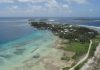
“When we see the sea level rising, when we see the impact on glaciers, when we see the impact on coral reefs, we understand the impact on populations, namely in coastal areas,” Guterres said.
He highlighted PNG’s role as a climate leader despite its low emissions.
“Time and again, we have seen climate leadership flow not from countries with the most wealth and power but from those who know the stakes firsthand. I look indeed for your continued strong leadership in New York, in Brazil, and beyond,” Guterres said.