
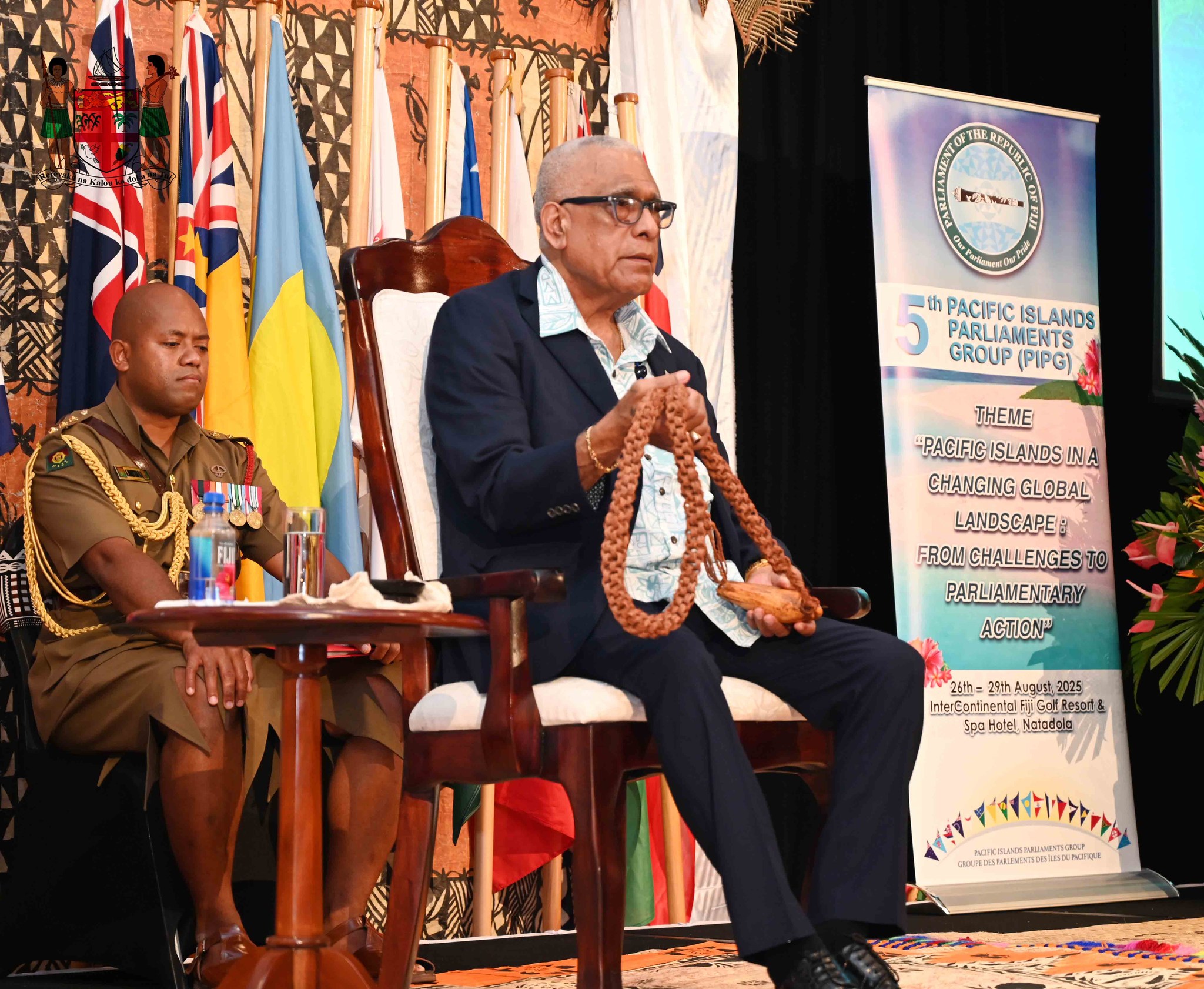
The President of Fiji, Ratu Naiqama Lalabalavu, officially opened the 2025 Pacific slands Parliamentary Group (PIPG) Conference in Sigatoka Tuesday.
Delivering his keynote address, President Lalabalavu welcomed delegates and expressed gratitude for their
presence, noting the conference theme, “Pacific Islands in a Changing Global Landscape: From Challenges to Parliamentary Action.”
He reminded participants that the gathering was not merely ceremonial but a reaffirmation of the Pacific’s commitment to parliamentary democracy, regional solidarity, and the resilience of small island nations.
“The world around us is shifting rapidly, with trade disruptions, economic uncertainties, and the existential threat of climate change reshaping the way we live, work and interact,” he said. “For Pacific peoples, these challenges are not distant headlines — they affect our islands, our families, and our livelihoods.”
The Head of State emphasised that small island states remain uniquely vulnerable to external shocks due to reliance on trade, tourism, and natural resources, with the COVID-19 pandemic exposing starkly the fragility of island economies. Despite this, he said, the Pacific continues to demonstrate resilience, innovation, and unity.
Over the next three days, parliamentarians from across the region will deliberate on key issues, including strengthening economic resilience, harnessing regional integration, and advancing the proposed establishment of a Pacific Inter-Parliamentary Assembly (PIPA).
The President described the initiative as a “historic step forward” that would institutionalise interparliamentary cooperation, strengthen regional governance, and amplify the Pacific voice in global assemblies such as the Inter-Parliamentary Union and the Commonwealth Parliamentary Association.
Turning to climate change, President Lalabalavu urged delegates to take a united stance, stressing that the impacts of rising seas and extreme weather were already being felt across the region.
“We need to have a united and resolute voice – you must deliberate in the next few days on what must become the priority for our region. The Pacific must fight above our weight and tell the rest of the world how urgent and present climate change is for us.”
He told parliamentarians that the Blue Pacific remains the unifying identity of island nations and urged them to strengthen resilience and solidarity in the face of shared challenges.
“Our Pacific neighbours are suffering. Our countries are already suffering,” he said. “If we are to endure, there is one place, there is one ocean that we share, which sustains and nurtures us collectively — the Blue
Pacific which unites us.”
“Together, we can turn challenges into opportunities, vulnerabilities into strengths, and aspirations into action, let us seize this moment to reaffirm regional solidarity and ensure that the Pacific voice is heard loud and clear on the global stage.”
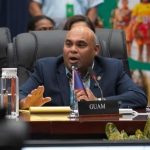
The three-day conference will bring together Speakers, Members of Parliament from across the Pacific to chart the next phase of parliamentary cooperation under the PIPG.
The conference will provide a platform for Pacific Parliaments to collectively address emerging global challenges and strengthen their role in shaping sustainable development.
Over the coming days, delegates will discuss how global economic shifts—such as supply chain disruptions and protectionist policies—affect Pacific Island nations, while exploring strategies to build resilience through diversification, social safety nets, and climate-smart development.
The forum will also examine the power of regionalism, drawing lessons from blocs such as ASEAN, CARICOM, and the European Union, to consider how deeper Pacific cooperation can strengthen bargaining power and amplify the region’s voice internationally.
A major outcome of the conference is expected to be the establishment of the Pacific Inter-Parliamentary Assembly (PIPA). This new body will serve as a structured platform for Pacific legislatures to deliberate on regional issues, oversee commitments, and enhance democratic legitimacy and accountability across the Blue Pacific.