
By Ednal Palmer in Apia Samoa
Climate change induced-Loss and Damage stands the chance of being featured at the Pacific’s highest political gathering — the Pacific Islands Forum (PIF) — when leaders meet in Honiara, Solomon Islands, this September.
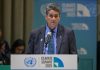
Vanuatu has successfully advanced a proposal grounded in the International Court of Justice’s (ICJ) landmark advisory opinion on climate change, urging PIF leaders to adopt a strong, united declaration reflecting the Court’s findings.
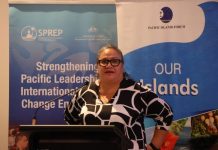
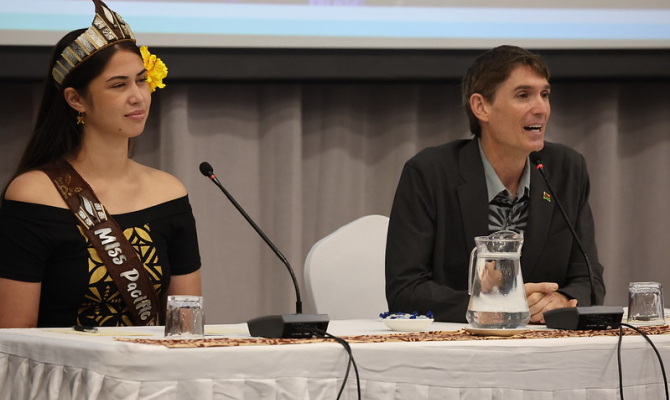
Speaking to Pacific delegates and development partners at the Pacific Climate Change Roundtable convened by the Secretariat of the Pacific Regional Environment in Apia, Samoa, Vanuatu climate change expert, Dr Christopher Bartlett confirmed that the issue has already been cleared for the PIF agenda.
“The idea is to get Pacific Forum leaders to strongly endorse the advisory opinion in their communiqué or declaration,” said Dr Bartlett.
“The language has been finalised by senior officials and will move to Foreign Ministers next week — and then to leaders for the final scrutiny.”
He added that Vanuatu hopes the issue will be taken back to the UN General Assembly, encouraging countries to use the ICJ’s opinion as a framework for meeting their own climate obligations.
The ICJ’s advisory opinion underscores that states have a legal duty to protect the climate system for present and future generations.
It stresses that climate change disproportionately impacts human rights and that these protections must be embedded in climate policy.
While the opinion is not legally binding, it carries significant legal and moral weight and could shape future climate negotiations and litigation worldwide.
The 54th Pacific Islands Forum Leaders Meeting will gather heads of state and government from the Forum’s 18 members: Australia, the Cook Islands, the Federated States of Micronesia, Fiji, French Polynesia, Kiribati, Nauru, New Caledonia, New Zealand, Niue, Palau, Papua New Guinea, the Marshall Islands, Samoa, Solomon Islands, Tonga, Tuvalu, and Vanuatu.
Meeting annually, the Forum charts collective responses to the Pacific’s most pressing issues — from climate change to security — working toward a resilient region of peace, harmony, social inclusion, and prosperity where all Pacific peoples can lead free, healthy, and productive lives.