

The recent International Court of Justice (ICJ) advisory opinion has shifted climate justice from a political ambition to a binding legal obligation — raising the stakes for the International Maritime Organisation (IMO) and the global shipping industry.
Vanuatu, which spearheaded the ICJ process, says the ruling strengthens the hand of vulnerable nations in pushing high-emitting states to act.
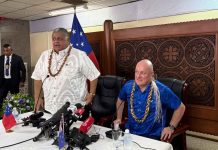
Vanuatu Minister of Climate Change Adaptation, Meteorology, Geo-Hazards, Environment, Energy, and Disaster Management Ralph Regenvanu said the opinion made it clear that climate action by states — under the Climate Change Treaties, the Climate Change Convention, the Paris Agreement, and all international customary law — is a legal obligation.
“The advisory opinion made it clear that action on climate change by states, whether according to the Climate Change Treaties, the Climate Change Convention, the Paris Agreement, or all international customary law, was a legal obligation.
The ruling removed a lot of excuses from high-emitting states and gave vulnerable countries more leverage in their discussions.”
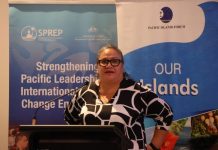
Legal experts gave their view during a webinar hosted by the Micronesian Centre for Sustainable Transport (MCST) — Understanding the IMO’s Net Zero Framework: Risks, Revenues, and the Road Ahead for Climate-Vulnerable States.
MCST Legal Researcher John Fatuimoana Kautoke said the ICJ ruling was significant because it confirmed that the IMO and shipping could not stand separate from global obligations.
“We’ve heard arguments at the IMO that shipping is doing its own work to decarbonise, separate from the UNFCCC process. But the ICJ opinion makes it clear that because climate change is a global threat, your primary obligation to tackle it has a bearing on all environmental agreements you’re party to, including the ones at the IMO.”
While current IMO measures fall short of the 6PAC+ alliance’s ambition, Kautoke said there was still an opportunity to raise the bar in upcoming reviews.
From outside the Pacific, Dr Raúl Zepeda Gil, Advisor to the Mexican Mission to the IMO, said Mexico was part of an environmental integrity group with Switzerland, the Republic of Korea,, and Monaco:
“Probably what we’re going to do is push for the environmental integrity of the measures, because the current projections show we are not going to reach the goals in the IMO strategy. A lot has to be resolved — including how we realign ourselves with the Paris Agreement as soon as possible.”
Kautoke added the ruling would also affect climate finance decisions:
“I’m certain that the ICJ outcomes will have a bearing on the discussions that will be had at the board level, and especially in the disbursement purposes, when we come to finalizing the details. The fund is absolutely vital to ensuring a just and equitable transition.”
The Extraordinary Session of the Marine Environment Protection Committee (MEPC) in October will be the IMO’s first major meeting since the ICJ ruling.
At MEPC83 in April, many Pacific Island nations abstained from voting, refusing to support an agreement they said would do too little, too late to cut shipping emissions and protect their islands.
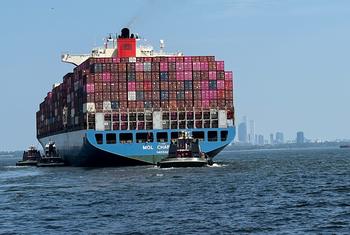
MCST and the 6PAC+ alliance say October will be a test of whether the IMO can integrate climate justice, equity, and environmental integrity into shipping’s decarbonisation pathway — in line with both the Paris Agreement and international law.