The Cook Islands has marked 60 years of self-governance with Prime Minister Mark Brown reaffirming the country’s commitment to its relationship with Aotearoa New Zealand and celebrating decades of progress, identity, and regional influence.
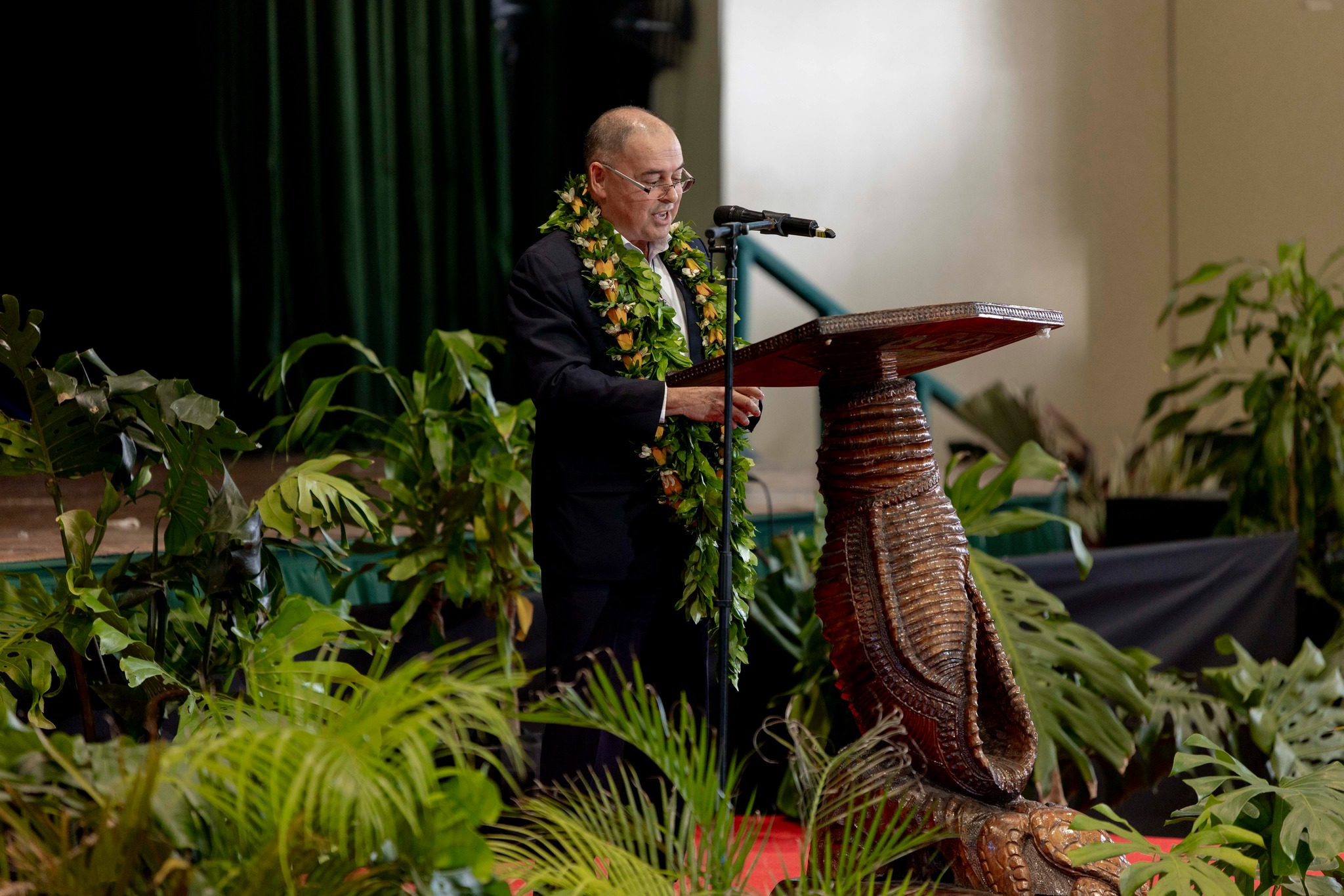
Delivering his Constitution address, Brown reminded the nation that its journey began on 04 August 1965, when the Cook Islands, with New Zealand’s support, chose self-governance in free association with Aotearoa New Zealand under the backdrop of global decolonisation.
“Free association allows for the Cook Islands to maintain New Zealand citizenship, whilst at the same time making our own laws and administering our own domestic and foreign affairs,” said Brown.
He outlined how the nation has evolved from a collection of 15 islands with 250 square kilometres of land to a large ocean state with an exclusive economic zone nearly 2 million square kilometres in size.
Brown credited this growth to generations of Cook Islanders and their work both at home and abroad.
“The Cook Islands modern identity is no longer defined by the projections of large powers that characterise us as ‘small’ – we are a large ocean state growing in influence,” he said.
Highlighting key milestones, Brown pointed to the formal establishment of maritime boundaries, the creation of Marae Moana, the country’s graduation to high-income status in 2020, and a stronger presence on the global stage.
Reflecting on the enduring relationship with New Zealand, Brown said the shared journey is built on ancestral ties, mutual values, and self-determination.
“This choice was grounded in our shared papa’anga or ancestral ties, our shared values, and our vision for self-determination.”
He referenced conventions such as the Joint Centenary Declaration and the 2022 Waka Hourua / Vaka Purua Statement of Partnership as examples of how the relationship has adapted over time to reflect growing Cook Islands agency on the international stage.
With more than 80,000 Cook Islanders living in New Zealand, Brown acknowledged the diaspora’s contributions to sectors including healthcare, education, business, and the arts. At home, he noted that 113,000 New Zealand tourists each year generate $270 million (US$159 million) in the Cook Islands economy, while local imports from New Zealand average $200 million (US$117 million) annually.
“The value of our relationship with New Zealand cannot be overstated and I would like to emphasise that there is not now, nor has there ever been, a strategic shift by the Cook Islands Government or our peoples to reject the value and responsibilities of our relationship of free association with New Zealand,” he said.
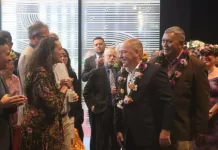
He welcomed the presence of New Zealand Governor-General Dame Cindy Kiro and Dr Richard Davies at the celebrations, calling it “a powerful reminder of the enduring ties between our peoples and our shared Sovereign.”
Brown also paid tribute to Cook Islands soldiers who volunteered during World War I, saying their legacy of duty and shared sacrifice with New Zealand and Australia continues to shape national values.
He acknowledged that after six decades, it is natural for the relationship to be re-evaluated and aligned to modern realities. However, the foundation remains strong.
“We approach these conversations with care and confidence, and we do so as a self-governing nation, proud of our identity, and fully aware of our responsibilities.”
Calling on officials to uphold national values, Brown urged a continued commitment to the partnership: “We will continue to invest in it with honesty, respect, and purpose.”
The Prime Minister looks forward to the future of the Cook Islands’ journey, with people at the centre of every decision and the nation committed to navigating the next 60 years with purpose and unity.