The World Council of Churches (WCC) has issued a strong call for churches and governments to stand united against nuclear threats, colonial control, and militarisation in the Pacific, as the region prepares to mark the 80th anniversary of the atomic bombings of Hiroshima and Nagasaki.
In a statement released ahead of the Pacific Islands Forum Leaders Meeting in September, the WCC threw its full support behind the “Ocean of Peace Declaration,” calling it “a bold regional pledge to move beyond militarised security toward holistic, relational peace.”
“Too often, Pacific voices are relegated to the margins of these power contests,” the WCC said.
“By centring Pacific island priorities—community resilience, ecological stewardship, cultural integrity—rather than serving as chess pieces in geopolitical competition, the Ocean of Peace Declaration can reassert the agency of Pacific peoples.”
The WCC, in partnership with the Pacific Conference of Churches(PCC), called on all Forum leaders and external partners to respect Pacific sovereignty and uphold the principle of “neighbourhood not hegemony.”
The WCC reaffirmed its long-standing commitment to a nuclear-free Pacific, citing the legacy of harm in Ma‘ohi Nui, the Marshall Islands and Kiribati.
“We call for: Independent assessments of nuclear test impacts, transparent data access, reparations, environmental remediation, and universal ratification of the Treaty of Rarotonga and of the Treaty on the Prohibition of Nuclear Weapons (TPNW),” the statement said.
True peace, the WCC said, “requires the dismantling of colonial systems of control and oppression.”
The church network called for:
*Continued listing of Ma‘ohi Nui and Kanaky on the UN decolonisation agenda until full self-determination is achieved.
*A transparent plan from France to decolonise by 2030.
*An international review of Hawai‘i’s political status.
*Full implementation of the UN Declaration on the Rights of Indigenous Peoples, particularly in Aotearoa and Australia.
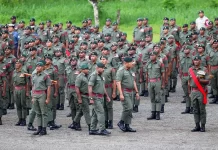
The WCC warned that military exercises like RIMPAC and Marara—especially with AI and autonomous weapons—“undermine peace.”
It urged:
*Transparency and consent for all military activity.
*A UN moratorium on autonomous weapons systems.
*Island-led efforts to establish demilitarised maritime zones.
On the climate crisis, the WCC stressed the Pacific’s central role in safeguarding the planet’s future.
“We call for: A global ban on deep-sea mining, and affirmation of the leadership of Pacific churches in climate advocacy,” the statement said.
The WCC urged:
*Inclusion of frontline Pacific voices in UN climate forums.
*Promotion of eco-communal theology that unites Scripture, Indigenous wisdom, and science.
*Continued church divestment from fossil fuels and action for climate justice.
The WCC reaffirmed its 11th Assembly “Minute on the situation in West Papua” expressing “grave concern” over the ongoing human rights crisis in the Papuan provinces of Indonesia.
It encouraged: “Continued and intensified engagement by the WCC (including advocacy in UN human rights forums, and consideration of the establishment of an ecumenical working group on West Papua).”
It also urged: “All WCC member churches and partners to increase their awareness, accompaniment, and support for the people and churches of Tanah Papua in the midst of this longstanding and worsening crisis.”
The WCC ended its statement with a call to “uphold peace based on justice, dignity, and the sacred relationship between people, land, and ocean.”