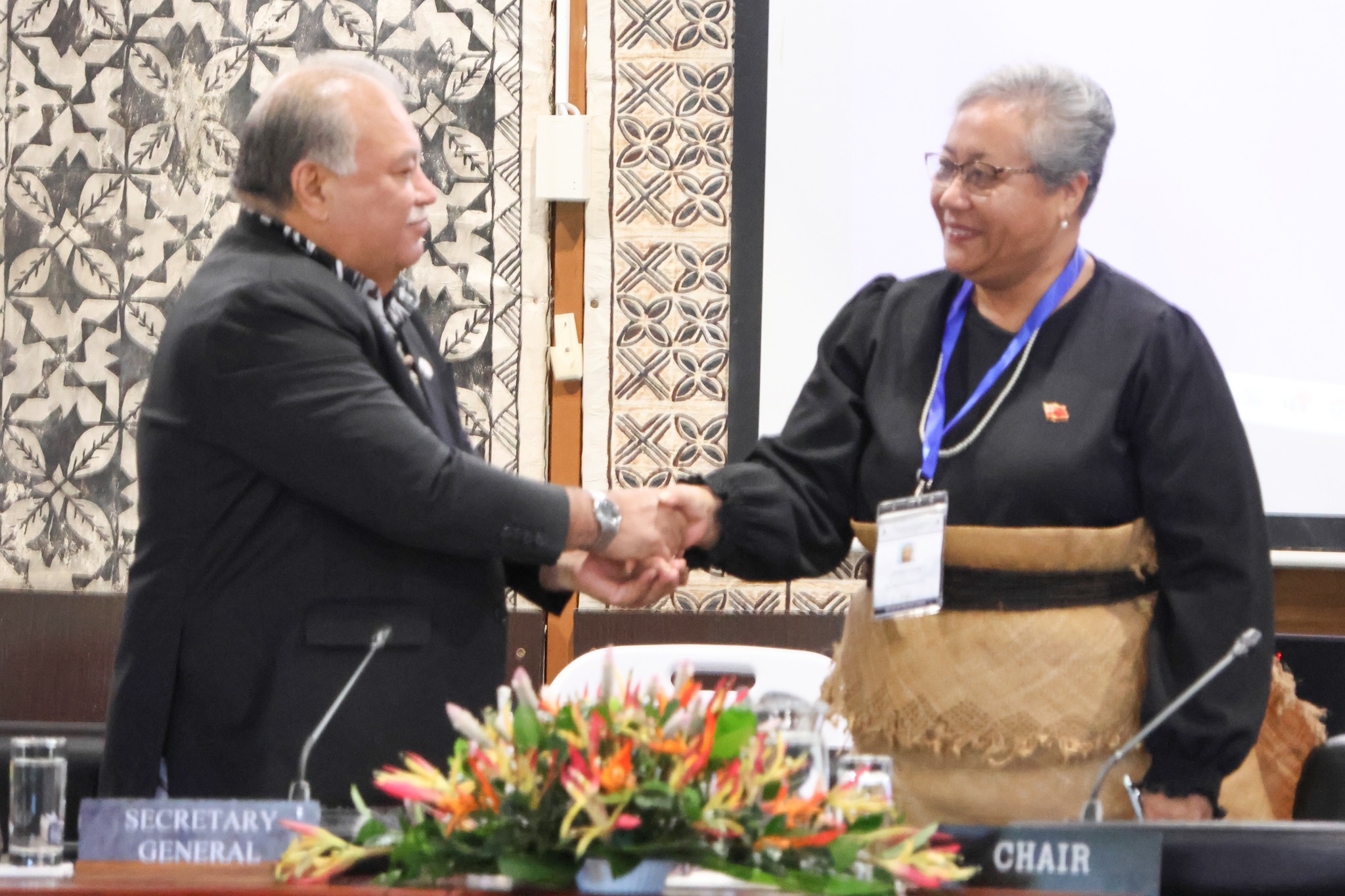
Tonga’s Minister of Internal Affairs, Sinaitakala Tu’itahi, has called on Pacific women leaders to stand united against emerging challenges such as artificial intelligence misuse, political instability, and gender-based violence, warning that the region’s progress on gender equality hinges on collective resilience and adaptation.
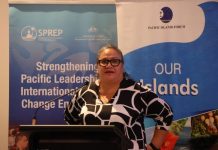
“This morning marks the 4th year of our convening, an important milestone in strengthening this platform to advance bold, solutions-focused dialogue,” said Tu’itahi in her opening remarks as Chair of the Pacific Islands Forum Women Leaders Meeting (PIFWLM).
“It is a space where we come together to identify and confront urgent and emerging challenges to gender equality and social inclusion in the Pacific.”
She highlighted that the meeting is part of a broader conversation across the region, including high-level discussions on economic outlooks, ocean governance, and youth engagement.
“Our retreat reflected the value of these safe spaces for women in leadership, spaces that we have built, nurtured, and now must continue to protect,” Tu’itahi said.
She stressed that regional progress requires an integrated approach.
“Together, these dialogues remind us that our efforts must be integrated, never siloed, and our progress relies on a whole-of-community, whole-of-government, and whole-of-region approach.”
The Minister also called for honest self-assessment among women leaders.
“This is also a time for honest reflection, not only to celebrate our achievements, but to critically assess how we work, how we lead, and how we adapt.”
Tu’itahi warned that Pacific women face growing threats, including “the misuse of artificial intelligence, misappropriation of traditional knowledge and culture, intellectual property theft, and political instability, drug abuse, the rise of HIV, and technology-facilitated gender-based violence.”
Despite the rising pressures, she praised Pacific women for their resilience and innovation.
“I commend the women of the Pacific, in all their diversity, for their courage, creativity and tenacity. You have innovated. You have built your own pathways of resilience and leadership, often when none existed.”
Tu’itahi said the agenda ahead will explore the meaning of leadership and gender equality in the Pacific.
“Only with this clarity can we collectively identify and address the root causes, symptoms, and consequences of gender-based violence.”
She welcomed key initiatives on data and monitoring to support these efforts.
“I, therefore, welcome the opportunity to discuss the Pacific Regional Gender Equality Monitoring, Evaluation, Research, and Learning Plan and the 2025 Pacific Gender Equality Report.”
“These tools provide a vital foundation for action-oriented data, innovation and collaboration that can drive meaningful and measurable progress.”
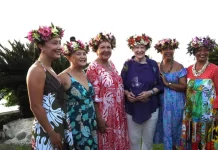
Tu’itahi also paid tribute to Pacific women’s role in shaping the region’s future.
“I honour our Pacific women, and the roles they serve in every level of community. As caregivers, entrepreneurs, business owners, and craftswomen. You are also peacemakers, homemakers, and leaders. You are the backbone of our collective strength — shaping communities, economies, and futures,” she said.