



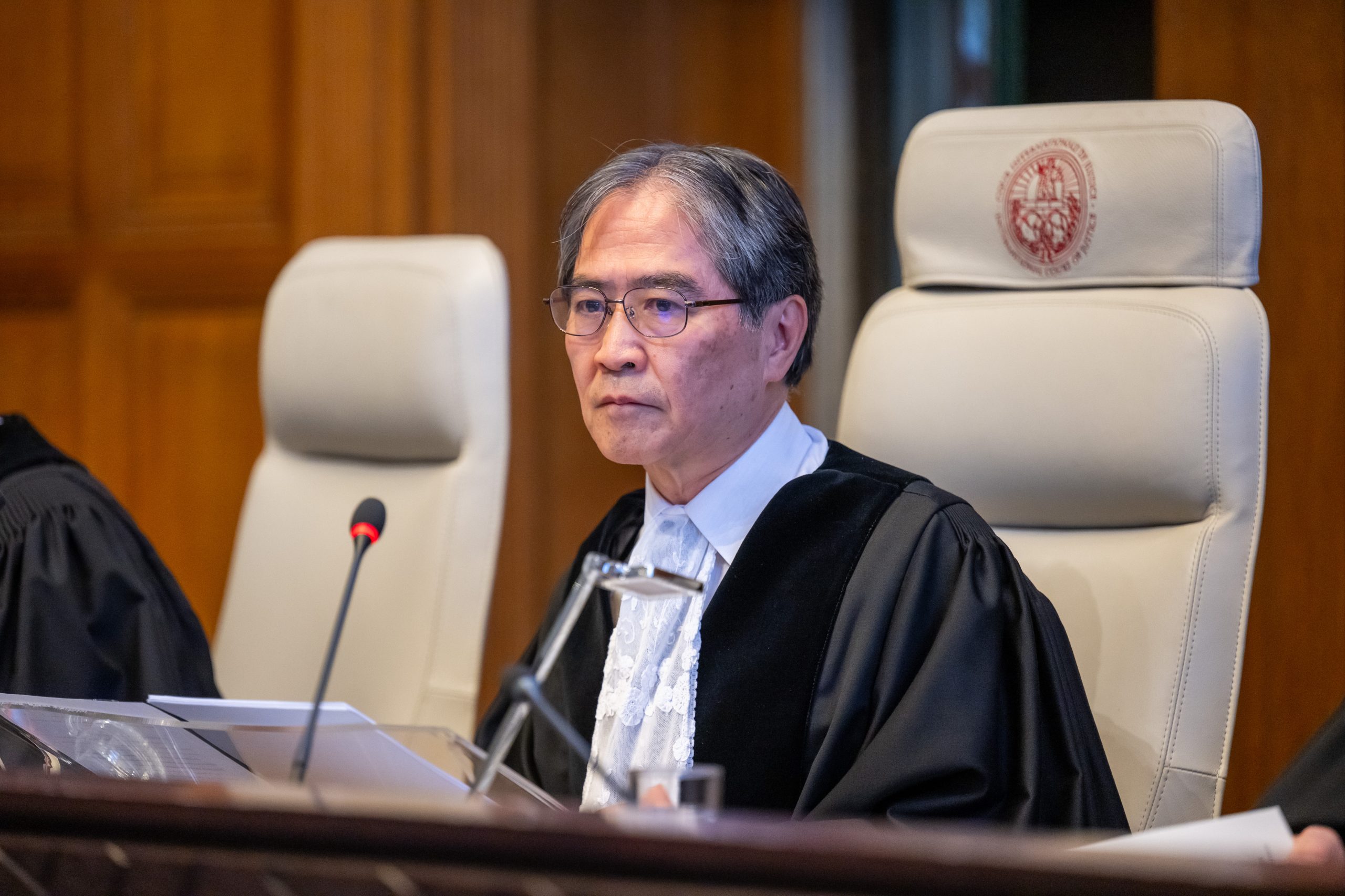
The International Court of Justice (ICJ) has issued a historic advisory opinion that could reshape the global legal landscape for climate action, declaring that States have binding duties under international law to protect the climate system and that a failure to take appropriate measures may constitute an internationally wrongful act.
Delivered under the presidency of Judge Iwasawa Yuji at the Peace Palace in The Hague, the opinion was requested by the United Nations General Assembly (Resolution 77/276), which in 2023 asked the Court to clarify the legal obligations of States in addressing climate change and the consequences for those causing significant harm.
The Court described climate change as “an existential problem of planetary proportions” and a “quintessentially universal risk to all States… of a general and urgent character.” It stressed that protecting the climate system is integral to safeguarding the well-being of both present and future generations.
The Court unanimously ruled that States are bound by obligations under multiple legal frameworks, including the United Nations Framework Convention on Climate Change (UNFCCC), the Kyoto Protocol, the Paris Agreement, customary international law, the United Nations Convention on the Law of the Sea (UNCLOS), human rights treaties, and other environmental agreements.
“The climate change treaties set forth binding obligations for States parties to ensure the protection of the climate system and other parts of the environment from anthropogenic greenhouse gas emissions.”
Under the Paris Agreement, the ICJ said, States are legally required to “prepare, communicate and maintain successive and progressive nationally determined contributions (NDCs) capable of achieving the Agreement’s primary temperature goal of limiting global warming to 1.5°C”.
It stressed that States must act “with due diligence” in implementing these plans, using their “best efforts” to achieve them.
Reaffirming the principle of common but differentiated responsibilities and respective capabilities, the Court stated that developed States must take the lead in reducing greenhouse gas emissions and enhancing carbon sinks.
In addition, the Court emphasised the duty to prevent significant harm to the climate system, even when such harm results from cumulative or diffuse emissions. It clarified that States must co-operate in good faith, sharing scientific and technological information, and “take all measures that are necessary to prevent, reduce and control” greenhouse gas emissions.
Significantly, the Court tied climate obligations to human rights protections, stating that “the full enjoyment of human rights cannot be ensured without the protection of the climate system.” It recognised that climate change threatens rights to life, health, adequate living standards, and the rights of women, children, and Indigenous peoples.
The ICJ also addressed the oceans, affirming that anthropogenic GHG emissions qualify as “pollution of the marine environment” under UNCLOS, triggering obligations for States to “take all measures… necessary to prevent, reduce and control pollution.”
The Court further declared that any State whose acts or omissions cause significant harm to the climate system may be committing “an internationally wrongful act.”
As the judge Yugi stated, “A breach by a State of any obligations identified… constitutes an internationally wrongful act entailing the responsibility of that State. The responsible State is under a continuing duty to perform the obligation breached.”
Such States, he said, are required to “cease wrongful actions or omissions,” provide “assurances and guarantees of non-repetition,” and “make full reparation to injured States in the form of restitution, compensation and satisfaction.”
The Court affirmed that these obligations are erga omnes, owed to the international community as a whole, meaning any State may invoke responsibility.
For small island developing States (SIDS) and other climate-vulnerable nations, the opinion strengthens the legal basis for demanding greater action and accountability from major emitters.
The Court explicitly addressed the plight of these States, affirming that those “specially affected” or “particularly vulnerable” to climate impacts may invoke responsibility where harmed by others’ emissions.
While acknowledging the power of international law, the Court also underscored the role of humanity itself, warning that “a complete solution to this daunting… problem requires human will and wisdom… to change our habits, comforts and current way of life in order to secure a future for ourselves and those who are yet to come.
“Through this Opinion, the Court participates in the activities of the United Nations and the international community represented in that body, with the hope that its conclusions will allow the law to inform and guide social and political action to address the ongoing climate crisis.”
The advisory opinion, though non-binding, is expected to significantly influence climate negotiations, litigation, and policy-making by embedding climate action within a framework of enforceable legal obligations rather than mere political commitments.