
Home Blog Page 98

On the Pacific journey to COP31

0

The COP31 Türkiye – Australia partnership that includes the Pacific is a first in the history of the UN Framework Convention on Climate Change. Türkiye holds the COP31 Presidency, upon which Australia is the President of Negotiations, and COP31 pre-COP will be hosted in the Pacific.

“The COP31 partnership modality is unique and unprecedented in the UNFCCC history, the world is watching closely how the Australia – Pacific partnership, together with Türkiye, reshape collaboration and partnerships going forward including catalysing urgent and ambitious global climate change actions,” said the Deputy Secretary General of the Pacific Islands Forum (PIF) at the opening of the fourth COP31 Pacific Senior Officials Taskforce (PSOT) meeting.

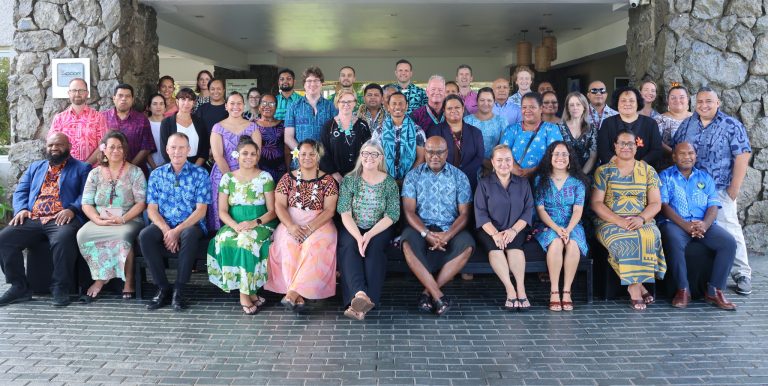
The Pacific is making the most of this opportunity with the COP31 Pacific Senior Officials Taskforce holding their fourth meeting in Nadi, Fiji. This gathering is to discuss and strategise ways forward including through hosting of UNFCCC pre-COP in the Pacific and Australia’s role as COP31 President of Negotiations. Australia in partnership with the Pacific Islands will set the agenda and preside over the pre-COP.

“As we look toward COP31, these discussions remind us of a simple truth, the Pacific must not only be present – we must be heard. The Türkiye – Australia Partnership strengthens our visibility, ensures alignment with our priorities, and opens doors for meaningful participation throughout the pre-COP and the COP processes,” said Tagaloa Cooper, Director of Climate Change Resilience of SPREP.

“Together, let us step forward with unity and purpose, ensuring COP31 delivers the ambitious, just, and durable outcomes our Blue Pacific Continent deserves,” said Cooper.

PIF Secretariat, along with the Secretariat of the Pacific Regional Environment Programme (SPREP) and the Government of Australia make up the Secretariat for the COP31 Task Force supporting Pacific Islands as it moves towards COP31 under this partnership arrangement.

The pre-COP will see the world coming to our corner of the globe for the climate change negotiations – a corner that is home to the world’s most vulnerable to the impacts of climate change despite contributing less than 0.03 percent to the world’s total greenhouse gas emissions.

Building on the efforts of the COP30 Brazilian Presidency, Türkiye and Australia, in consultation with the Pacific will collaborate to strengthen and elevate the action agenda. Australia and Türkiye will work together to identify additional envoys for the action agenda for thematic priorities, including envoys from Pacific Island countries.

“This is an unchartered pathway that we’re walking – the issue of climate change is a matter of life and death for us all. We’re working to come together and collaborate in this spirit of trust and partnership for a successful outcome ahead,” said Esther O’Brien of Solomon Islands, co-chair of the COP31 PSOT Meeting.

“COP31 is our opportunity for the voices of the unheard to be heard. We will work in unity to make sure this happens.”

Also, to take place is a session at COP31 focused on climate finance needs of Small Island Developing States which will provide a platform for pledges to the Pacific Resilience Facility (PRF).

The next meeting to be held on this journey is the COP31 Climate Ministers Meeting to be held in Brisbane, Australia to finalise the way forward under the Australia-Pacific partnership. This will cement steps to build momentum for global outcomes on the climate change stage.

“The innovative COP31 partnership between Türkiye, Australia and the Pacific will bring Pacific perspectives and ideas into the centre of the global climate dialogue this year – I’m really excited to be working with colleagues from across the region to make the most of this opportunity,” said Dr Sally Box of Australia, co-chair of the COP31 PSOT Meeting.

The COP31 Pacific Senior Officials Taskforce Meeting is held in Nadi, Fiji from 19 – 20 February 2026.

Decades of gains overshadowed as Asia-Pacific falls behind on sustainable development targets

0

Climate inaction, biodiversity loss and rising emissions are pushing Asia and the Pacific further off course on the Sustainable Development Goals (SDGs), with the region set to miss nearly nine out of ten targets by 2030, the United Nations has warned.

The Asia and the Pacific SDG Progress Report 2026, released by the UN Economic and Social Commission for Asia and the Pacific (ESCAP) on Wednesday, finds that at the current pace the region will miss 103 of 117 measurable targets – or 88 percent – across the 17 global goals.

Adopted by world leaders in 2015, the goals focus on ending extreme poverty and hunger, ensuring access to clean water and sanitation, and providing quality universal education, among other targets, by 2030.

The findings reveal what ESCAP calls a “stark contradiction.” While Asia-Pacific has made notable progress in reducing poverty, expanding electricity access and lowering maternal and child mortality, these gains are being undermined by environmental decline and widening inequality.

“The very engines of growth that once lifted millions out of poverty and fuelled rapid industrialization are now undermining our future,” said Armida Salsiah Alisjahbana, the Executive Secretary of ESCAP.

“Our greatest collective challenge is also our greatest opportunity: to build a region that is not only wealthier but smarter, healthier and more just.”

The report finds that in critical areas – including climate action, marine conservation and biodiversity – progress is not just stalling but deteriorating.

Greenhouse gas emissions continue to rise. The Red List Index, which measures species’ risk of extinction, shows accelerating biodiversity loss.

Marine ecosystems are in “serious decline”, economic contribution of sustainable fisheries is shrinking, and freshwater ecosystems are under threat.

Urban resilience also remains fragile. Although many countries have adopted disaster risk reduction strategies, indicators tracking the human and economic toll of disasters are worsening, exposing what the report describes as a “dangerous gap between planning and real-world resilience.”

There are areas of solid advancement. The region continues to perform strongly on industry, innovation and infrastructure (SDG 9), supported by near-universal mobile network coverage. Access to electricity is expanding rapidly and is on track to reach its target ahead of schedule.

Health outcomes have improved, with sustained reductions in maternal, neonatal and under-five mortality. Income poverty has fallen significantly over the past decades.

However, inequality remains stubborn. Progress on income distribution is slow, labour income shares are declining and compliance with labour rights is regressing. Informal employment and youth job prospects remain pressing challenges.

Education access has improved, but learning outcomes are slipping, with regression in minimum proficiency in reading and mathematics.

The report also shows that while data availability has improved – with 55 percent of SDG indicators now having sufficient data for assessment, placing the region ahead of the global average – critical gaps persist.

Information shortfalls on gender equality (SDG 5) and peace, justice and strong institutions (SDG 16) are limiting policymakers’ ability to measure whether the most vulnerable are being reached.

Progress in women’s representation in managerial and political roles remains slow.

With just five years remaining until the 2030 deadline, ESCAP stressed that incremental change will not suffice.

“Our current development trajectory is unsustainable, and the window for corrective action is closing rapidly,” it said.

U.S deputy secretary Landau to host Pacific Summit, visit Fiji, Tonga and Samoa

0

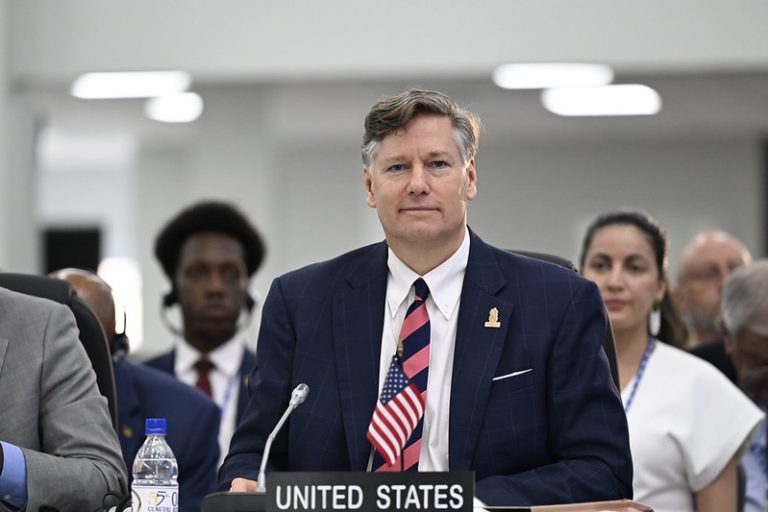
U.S deputy Secretary of State Christopher Landau will travel to Hawaii, Fiji, Tonga and Samoa from 22 February to 02 March 2026, the U.S State Department has announced.

Landau and Admiral Samuel J. Paparo, commander of the United States Indo-Pacific Command, will co-host The Pacific Agenda: Investment, Security, and Shared Prosperity Summit at the East-West Centre in Honolulu.

At the Summit, the Deputy Secretary will meet with leaders from the Pacific Islands and U.S business executives to encourage American investment in the region.

He will also meet with partners and allies to coordinate regional investment efforts.

According to the State Department, the summit advances America First priorities by promoting commercial diplomacy, strengthening U.S partnerships with Pacific Island countries and territories, and expanding collaboration in critical industries.

Following the summit, Landau will travel to Fiji, Tonga and Samoa for official meetings.

During the visit, he is expected to highlight commercial initiatives and reaffirm strong ties between the United States and Pacific Island nations, including through meetings with traditional leaders.

Hard to appeal to Australia’s moral duty on climate, Tuvalu’s Climate Minister says

0

Tuvalu’s Climate Change Minister says it’s hard to engage Australia on a moral level over climate change.

Australia is set to co-host the pre-meeting for this year’s UN climate conference with Pacific nations.

But Dr Maina Talia says that’s an unfair position, while Australia continues expanding its coal and gas projects.

“The message is very simple if we continue to burn fossil fuels if we continue to open new coal mines… we are letting go of our moral responsibility we are letting go of countries like mine to go underwater,” he said.

Fiji’s ex PM and top cop on bail

0

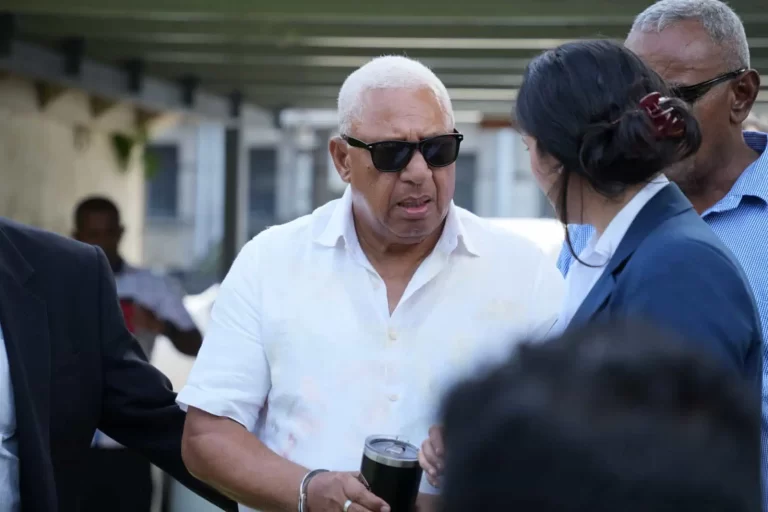
Former Fiji Prime Minister Frank Bainimarama and axed police chief, Sitiveni Qiliho are on bail after facing counts of inciting mutiny.

Arrested Wednesday, the men appeared before Magistrate Yogesh Prasad on strict bail conditions.

Prosecutors allege that the men, between 01 January and 31 July 2023, Bainimarama sent Viber messages to Brigadier Manoa Gadai in an attempt to incite him to take command of the army.

The messages attempted to incite Gadai to overthrow Republic of Fiji Military Forces Commander, Major General Jone Kalouniwai.

On the second count, it is alleged that Bainimarama and Qiliho spoke to Colonels Aseri Rokoura and Viliame Draunibaka and Lieutenant Colonel Atunaisa Vakatale in an attempt to incite them to mutiny.

Other officers were allegedly also approached by Bainimarama and Qiliho.

Deputy Director of Public Prosecutions John Rabuku told the court that the state had no objections to bail. He sought time to furnish full disclosures.

The case has been adjourned to 5 March.

Blacklisting squeeze hits Vanuatu families and businesses, the regulator VFSC warns

0

Vanuatu’s place on international financial blacklists is not just a political issue, it is making life harder for families, businesses, and workers across the country.

The Vanuatu Financial Services Commission (VFSC) says global pressure and tighter banking rules are slowing investment, making simple bank processes more complex, and limiting how easily money can move in and out of the country.

Vanuatu is one of only three Pacific nations, alongside Palau and American Samoa, still on the European Union’s blacklist of non-cooperative countries and territories for tax purposes.

Being on that list makes foreign banks more cautious about dealing with Vanuatu. That can mean more checks, higher costs and, in some cases, banks cutting ties altogether.

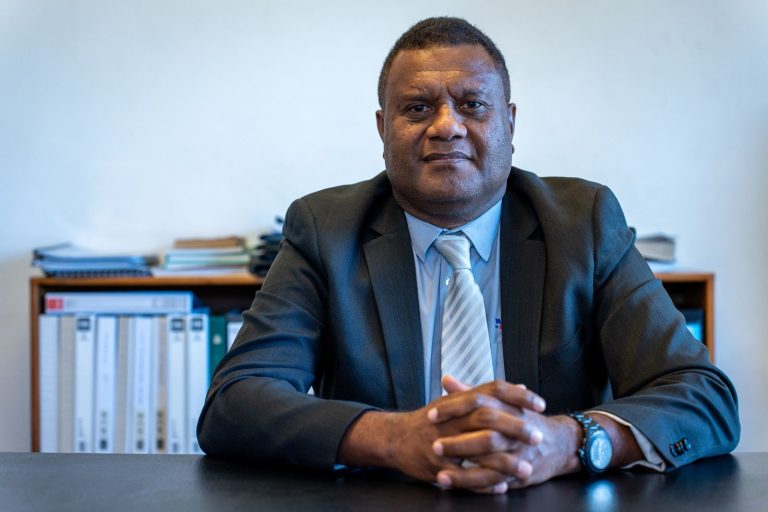
Branan Karae, the VFSC Commissioner, says the impact is being felt well beyond government offices.

“Businesses such as agriculture and tourism have thrived, but the government initiative has been hindered by a lot of those global standards where it’s difficult for foreign banks to accommodate the needs there,” Karae tells PMN News.

He says key sectors such as agriculture and tourism have performed strongly, but wider government efforts to grow the economy are being held back by global financial standards that make it difficult for foreign banks to support local needs.

Vanuatu is not alone. According to the World Bank, Pacific Island countries have experienced one of the sharpest declines in correspondent banking relationships in the world, dropping by about 60 per cent over the past decade.

These relationships allow a local bank to connect with larger international banks so money can be transferred between countries. Without them, sending remittances, paying overseas suppliers or receiving investment becomes more difficult and more expensive.

During a visit to the Pacific in 2024, Ajay Banga, the World Bank Group President, announced a project involving seven island nations including Vanuatu aimed at strengthening these key banking links.

“Safeguarding continuous access to international financial services is essential for the families and businesses of Pacific Island Countries,” Banga said in a statement.

Vanuatu is now looking to a key moment in November – the Financial Action Task Force (FATF) Mutual Evaluation Review. The assessment will examine the nation’s laws and systems to prevent money laundering and terrorist financing.

Karae says passing that review could help rebuild confidence. “If we ultimately pass the FATF assessment, it will help to grow more businesses,” he said.

“When you grow more business, it means more business for employment for the locals, more opportunity for our kids, coming out from university to be able to be an opportunity to be employed, more income for the locals and all this. The add-on effect for the economy should be good.”

In a positive step, Vanuatu has recently become an Associate Member of the International Organisation of Securities Commissions, a global body that sets standards for financial market regulation.

Officials hope this signals progress in improving oversight and rebuilding trust. But for many in Vanuatu, the issue is simple: easier banking means easier business, steadier jobs and smoother money transfers for families.

As the Pacific continues to push for fairer treatment in global finance, Vanuatu’s upcoming review could prove a turning point for its economy and for the everyday people who depend on it.

2026 Tuna RFMO Priorities: A Policy Snapshot of What to Watch

0

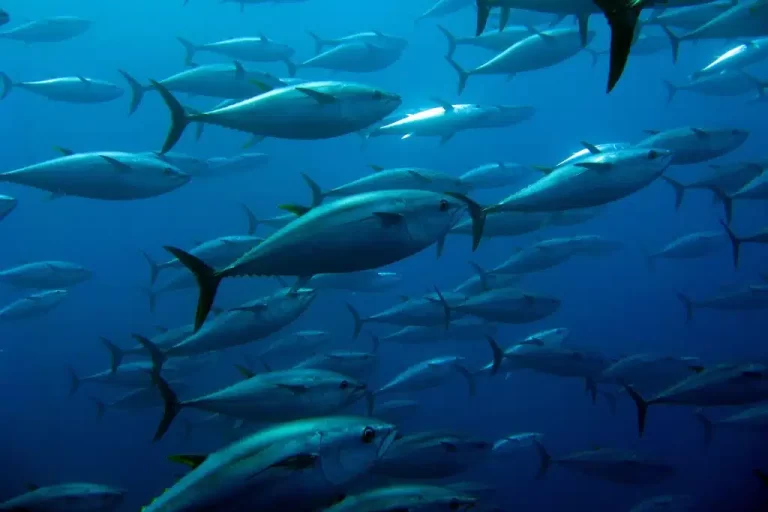
From science on paper to limits on the water, across the major tuna RFMOs (WCPFC, IOTC, IATTC and ICCAT), four common themes are likely to shape delegates’ discussions this year:

Harvest Strategies in Action

With management procedures now agreed for several key tuna stocks, including South Pacific albacore, the focus is on turning science-based strategies into real limits on the water and ensuring long-term sustainability. Key discussions on effective allocation mechanisms will play out across Pacific, Indian Ocean and Atlantic tuna fisheries.

Transparency and monitoring

Decisions on electronic monitoring, observer coverage, and transshipment and compliance systems will determine how quickly monitoring moves from pilot projects into operational practice, strengthening the credibility and traceability of data and directly affecting audits and due-diligence requirements.

Responsible fishing practices

Advancing progress on gear impacts, including the transition toward lower-impact and biodegradable FADs, 2026 will force decisions on timelines, deployment limits, and the use of transparency tools such as FAD registers that will shape ecosystem commitments.

Social responsibility

Labour standards in tuna fisheries remain a rising priority. While most RFMOs are not yet ready to adopt binding rules, labour risk has been identified by many of our Partners as critical for retailers and suppliers, making it essential to keep crew welfare and labour standards aligned with commitments such as ILO 188 and evolving regulatory expectations. We are developing our approach rapidly.

The Evolution of Australia’s Sports Diplomacy in the Pacific

0

Australia has made its biggest Pacific sporting bet so far. Will it deliver results for both Australia and the Pacific Islands?

By Rafael Costa

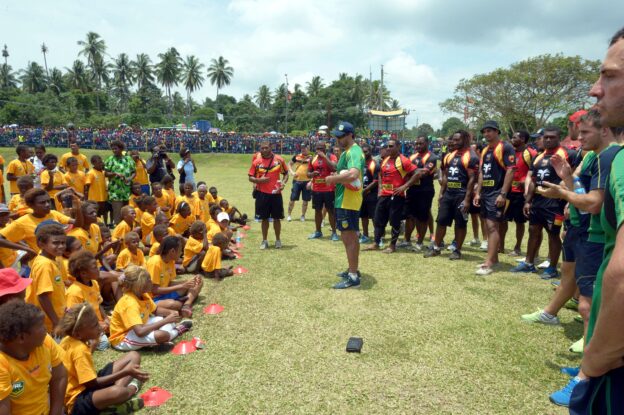
In December 2024, the Australian Government pledged to invest AU$600 million (roughly US$425 million) over a ten-year period for Papua New Guinea to join the National Rugby League (NRL) by the 2028 season. This means much more than just sport. There’s a clause in the agreement that allows Australia to revoke the investment if Papua New Guinea commits to a security deal with China, meaning that the NRL has turned into an official tool of Australia’s foreign policy.

The team, the Papua New Guinea Chiefs, will be the Pacific Islands’ first franchise in Australia’s major rugby league and was offered a dedicated compound for players and their families in Port Moresby. Anthony Albanese, Australia’s prime minister, announced it using undeniably diplomatic language: “Rugby league is PNG’s national sport, and PNG deserves a national team.” Papua New Guinea’s Prime Minister James Marape went in the same direction by confirming that the country had made a “deliberate choice to have Australia as a security partner of choice” before signing the deal.

However, the money and the conditions aren’t the only elements making this deal meaningful. The Papua New Guinea Chiefs project is the product of a decade of Australia’s institutional development to systematically convert sports into a soft power tool for its government.

The structuring of Australian sports diplomacy started in 2015, when Canberra launched what was considered the earliest national strategy for sports diplomacy in the world. That was complemented with projects such as PacificAus Sports, a leading program created in 2019 that reached more than 850 athletes in 120 events in Tonga, Solomon Islands, Vanuatu, Papua New Guinea, and Fiji.

Australia and New Zealand joined the Pacific Games for the first time in that same year. Moreover, the Australian government’s funding for the Fijian Drua men and women’s teams led both to join Rugby Pacific, where the women’s team won back-to-back championships in 2022 and 2023.

Tim Watts, assistant minister for Australian Foreign Affairs, continued this institutional drive. In November 2024, he led the creation of the Sports Diplomacy Consultative Group, a mechanism meant to connect the Department of Foreign Affairs and Trade (DFAT) with 22 sport organizations covering multiple sports (such as golf, rowing, surfing, and baseball, among many others).

In February 2025, this step was followed by the publishing of Australia’s “Sports Diplomacy Strategy 2032+,” which explicitly acknowledges sports as “an important source of national power” and a major component of foreign policy. The document’s timing is grounded on what the Australian government refers to as “the green and gold decade,” culminating in hosting the 2032 Brisbane Olympics.

The urgent character of Australia’s development of sports diplomacy is clearly fuelled by China’s increasing impact in the Pacific region. The Pacific Games Stadium in Honiara, Solomon Islands – built by China for the Pacific Games in 2023 at an estimated cost of US$70 million – demonstrates how China is pursuing its own sports diplomacy goals in the region. Around the same time, the China-Solomon Islands security agreement signed in April 2022 alarmed Western countries and increased Australia’s worries about weakening its influence in such a strategically important region.

However, Australia’s reaction was not a sudden U-turn. The NRL deal with Papua New Guinea builds on an established infrastructure: Rugby Australia collaborations, PacificAus Sports, and consultative instruments linking sports actors with the government.

Sports provides Australia with true leverage. Rugby league is Papua New Guinea’s national sport, a unique case in the world, and players from the Pacific Islands are central to the NRL, making the cultural links undeniable. Yet, the cultural element is not automatically converted into diplomatic results, and mutual love for the game is not a guarantee of strategic alignment. This is exactly why institutional frameworks are so important, as an effort to transform soft power resources into clear strategies, coordinated policies, sustainable investment and measurable initiatives.

Australia’s approach can be compared with Japan’s, whose sports diplomacy is rooted within the Japanese Ministry of Foreign Affairs. The “Sport for Tomorrow” program, created by the Japanese government in 2014 and aimed at being a Tokyo 2020 Olympics legacy project, reached over 204 countries and 13 million people. Japan launched a dedicated Sports Agency in 2015 to promote sports and coordinate sports policy that was previously dispersed across different ministries. This Japanese model proves what constant, sustainable institutional alignment can lead to: using sports events not simply as an exhibition show, but also as a stage for diplomatic engagement throughout a whole region.

Australia is now following a similar pathway, aiming at the 2032 Olympics in Brisbane. Of the AU$600 million dedicated to the agreement with Papua New Guinea, AU$290 million is meant to fund the franchise, whereas AU$250 million will go toward developing rugby league programs within Papua New Guinea, Fiji, Samoa, and Tonga. The investment goes further than just a single team: it foresees a regional growth program with sports at the core. This is precisely the aligned sustainable approach that differentiates improvised action from strategic sports diplomacy.

The Papua New Guinea Chiefs will start competing in 2028 and by that time, Australia will be immersed in the arrangements for the Olympics, with numerous international sports events coming in the near future. The foundation is already laid: a decade of institutional development, a consultative group merging government with sports, an official national strategy acknowledging the power of sports as a tool of soft power. The question is whether Australia can execute this approach and develop the sustainable investment, coordination, and political drive needed to generate solid benefits for the Pacific region and not only fulfil Australian interests.

Pacific Senior officials meet in Nadi to align Pacific priorities for COP31 Presidency and Pre-COP Talks

0

Senior Officials from Pacific Islands Forum member countries are in Nadi, Fiji for two days this week for the fourth COP 31 Pacific Senior Officials Taskforce Meeting.

The taskforce will be discussing updates and progress of the engagement of Pacific priorities for the Australia – Turkiye partnership for the COP 31 Presidency and looking at Pre COP processes which will be held in the Pacific region and the upcoming Pacific Climate Ministers Talanoa to be held in March.

The taskforce is co-chaired by the Minister Counsellor of the Solomon Islands High Commission to Fiji, Esther O’Brien and UNFCCC Head of Delegation – Australia, Sally Box.

This mechanism of the COP31 Pacific Islands Senior Officials Task Force commenced when Australia and the Pacific Islands partnered to submit a bid to host the UN Framework Convention on Climate Change (UNFCCC).

Turkiye also submitted a bid to host. While Turkiye will host COP31 including the world leader’s summit, the UNFCCC Pre-COP will be hosted in the Pacific Islands, supported by Australia.

Through this Australia, in partnership with the Pacific Islands will set the agenda and preside over the pre-COP meeting.

Guterres calls for fair transition to clean energy

0

The world has “entered the age of clean energy” and renewables are now the cheapest, fastest and safest source of new electricity almost everywhere, UN Secretary-General António Guterres said in a video message to the International Energy Agency ministerial meeting in Paris on Wednesday.

He warned that the world’s addiction to fossil fuels remains “one of the greatest threats to global stability and prosperity,” and criticised efforts by some fossil fuel interests to slow progress and spread disinformation.

“Those who lead this transition will lead the global economy of the future,” he added.

Guterres called for the creation of a dedicated global platform to coordinate an orderly, affordable and fair transition away from fossil fuels, aligned with the 1.5°C climate goal.

The platform, he said, should unite producers, consumers, financial institutions and civil society to sequence the decline of fossil fuel investments while scaling up clean energy.

“We face a choice,” the Secretary-General said. “Design the transition together – or stumble into it through crisis and chaos,” he said.

Stay connected

529FansLike
172FollowersFollow
156SubscribersSubscribe
- Advertisement -