Home Blog Page 91

MSG calls for peace as Middle East conflicts escalates

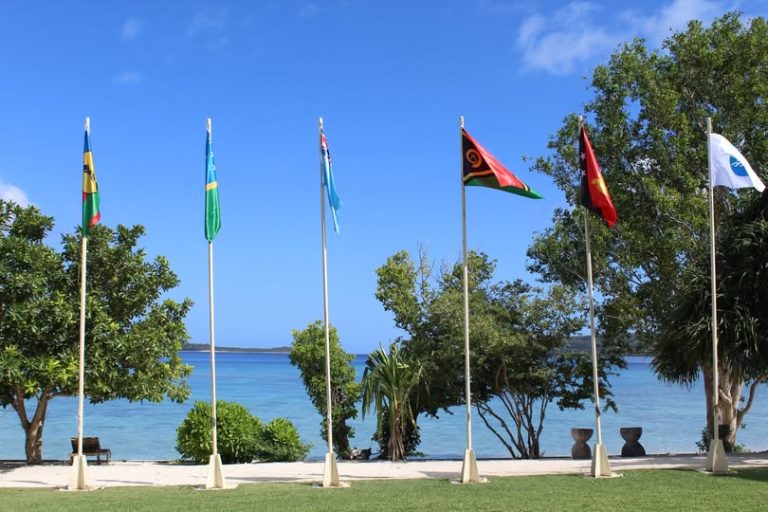
The Melanesian Spearhead Group (MSG) Secretariat has expressed deep concern over the escalating conflict in the Middle East, calling for an urgent and peaceful resolution in line with international law.

Acting Director General Ilan Kiloe said the Secretariat is alarmed by the situation.

“The Melanesian Spearhead Group (MSG) Secretariat expresses deep concern on the escalation of conflict in the Middle East and has called for a peaceful resolution,” he said in a statement.

He stressed the need to uphold international principles under the United Nations Charter.

This, while stressing the importance of adherence to international principles under the United Nations Charter, particularly the peaceful settlement of disputes.

Kiloe said the MSG was built on core Melanesian values that align with global norms.

“The MSG was founded on the enduring Melanesian values of peace, dialogue, respect, and collective responsibility that align to international norms.

These values are espoused in the ‘Efate Declaration on Mutual Respect, Responsibility, Cooperation and Amity’ and the broader Pacific vision of an ‘Ocean of Peace.’

They assure the Pacific as a region of peace, prosperity and neutrality, where sustainable peace is achieved, not through confrontation, but through diplomacy and dialogue.”

He warned that prolonged instability in the Middle East would have global consequences, including for vulnerable economies.

“The MSG Secretariat recognises that prolonged instability in the Middle East will pose greater risks to global stability, with consequences extending far beyond the region that will disproportionately affect vulnerable economies.”

Kiloe highlighted the Pacific’s identity and responsibility as custodians of the ocean.

“The ocean, our ‘blue continent’, is our lifeline – a source of livelihood, passage, and spiritual connection. It represents peace and our shared identity as Pacific Islanders. Our leaders’ ‘Ocean of Peace’ vision is more than a metaphor; it is a commitment to protecting our people, our ocean and the harmony it brings.”

The Secretariat reiterated that dialogue must prevail over violence and urged stronger diplomatic engagement.

“The MSG Secretariat reiterates that peaceful dialogue must always prevail over violence and calls on the international community, including regional partners, to intensify diplomatic efforts, support mediation initiatives, and uphold multilateralism as the primary pathway to peace.

As custodians of a region that aspires to remain truly ‘pacific’, and a sub-region that has long championed dialogue over division and cooperation over confrontation, the MSG Secretariat reaffirms its unwavering commitment to peace, stability, and respect for human dignity worldwide.”

Kiloe said the Pacific must remain steady amid global turmoil.

“It is crucial that our region remains a beacon of peace in light of pandemonium. We have a role to uphold human dignity, protecting the inalienable rights of all people and advocate for the protection of human lives.

Let us keep our world peaceful and prosperous. We owe it to ourselves and our future generations,” said Kiloe.

Argentina eyes Pacific Islands Forum dialogue partnership as NZ says nations must decide

0

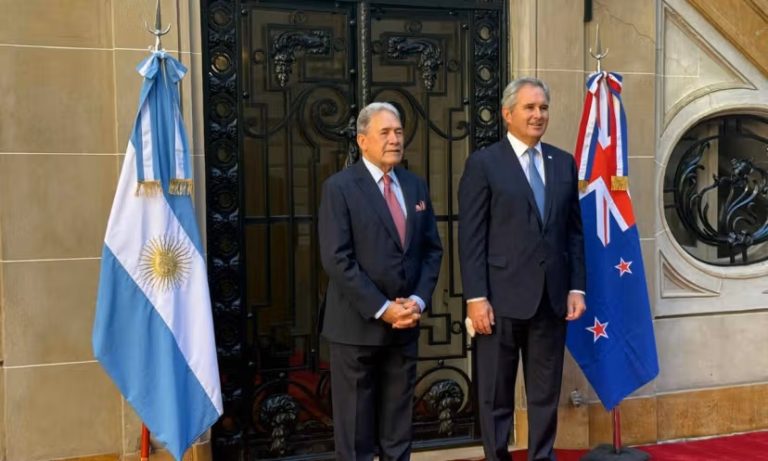
Argentina says it wants a deeper foothold in the Pacific, but New Zealand says any move into the region’s premier political body must be decided by Pacific nations themselves.

Speaking to media in Buenos Aires, Argentina’s Foreign Minister, Pablo Quirno, confirmed his country would be open to becoming a dialogue partner to the Pacific Islands Forum (PIF).

“There’s a lot of shared values in the Pacific region and Argentina as well, from cultural ties to historical cultural ties to historical sport ties, you know, a lot of trade that can be improved and we are like-minded countries,” Quirno says.

Chile is currently the only South American country that holds PIF dialogue partner status.

Quirno also revealed Argentina is exploring the possibility of joining the Comprehensive and Progressive Agreement for Trans-Pacific Partnership (CPTPP), a free trade agreement between 12 countries including New Zealand, the UK and Vietnam.

Quirno says early conversations are underway as part of a broader effort to reposition Argentina as an outward-facing economy.

Despite Argentina signalling interest, New Zealand is careful not to pre-empt the region.

When asked whether New Zealand would support Argentina becoming a dialogue partner, NZ Minister of Foreign Affairs Winston Peters declined to offer an endorsement.

“We don’t make our decision until we ask our colleagues or our cousins,” Peters says.

Both Ministers reaffirmed the need for strengthened relationships between the two countries.

Peters described Latin America, a region of more than 600 million people, as an under-engaged partner for New Zealand.

“[The Pacific] is almost one third of the world’s surface and a whole lot more needs to be done,” Peters says.

“We’ve got other countries in mind, and that’s part of our Pacific plan, and we are confident that they will join in.

“So, we’re going to build, and I think that seeing next year as opposed to where things look this year will be utterly different.”

Peters is currently leading a parliamentary/business delegation to South America, the first since 2007 when he was in the portfolio.

Palau President Whipps to speak at the 13th World Ocean Summit

0

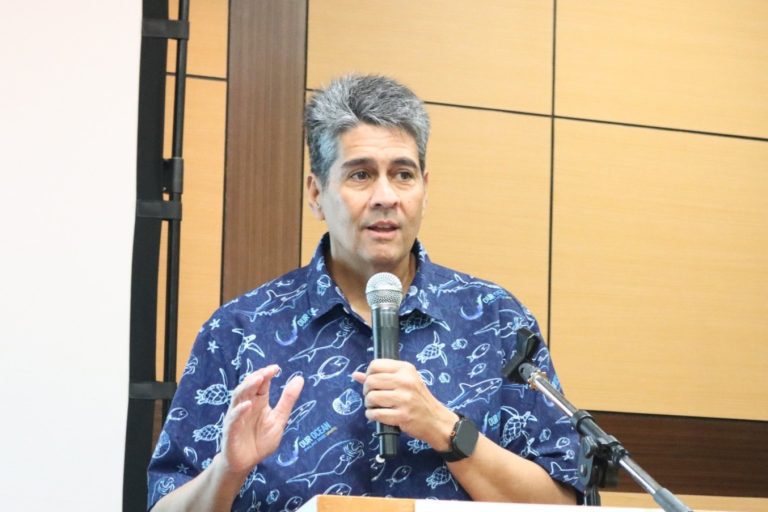
Palau President Surangel Whipps Jr will discuss how science and technology can help Palau, and small island nations, better steward the oceans and safeguard the security of vast EEZs at the 13th World Ocean Summit.

Under the theme “Innovate, Protect, Prosper: Securing Our Ocean Future,” the Summit brings together global leaders, experts, and innovators to shape the future of ocean governance and the blue economy. The Economist is hosting the forum, which will be held from 04 0 05 March 2026, in Montreal, Canada.

President Whipps will share Palau’s vision for an ocean future built on innovation, sustainable management, and international collaboration.

He will emphasise the need for inclusive access to marine technology, stronger science-based protection for deep-sea ecosystems, and a blue economy that prioritizes both conservation and community prosperity.

“As small island nations, we are custodians of vast ocean areas that sustain the planet,” President Whipps said.

“Palau is showing that innovation and stewardship can go hand in hand to secure a future where people and nature thrive together.”

Ahead of Palau’s hosting of the Pacific Islands Forum and ongoing preparations for COP31, President Whipps will also call for stronger partnerships with governments, the private sector, and philanthropic institutions to enhance the Pacific’s leadership on ocean and climate action.

Meanwhile, President Surangel S. Whipps Jr has signed an MOU with Biosphere Dynamics LLC to help strengthen the island nation’s ability to monitor and protect the ocean.

Under the MOU, Palau will work with Biosphere Dynamics and its CEO Peter Houlihan to deploy long-range unmanned aerial systems and integrated analytics to, among other things, detect and document Illegal, Unreported and Unregulated (IUU) fishing across our approximately 600,000 square kilometre EEZ.

This partnership will enhance Palau’s maritime domain awareness, support enforcement operations, and help ensure that data collected remains under Palau’s sovereign control.

The cooperation also provides for training Palauan personnel, improving evidence collection to support enforcement under national law, and developing a model for sovereign EEZ monitoring that can be shared with other Pacific Islands Forum members as we work together to safeguard our ocean and advance 30×30 and global biodiversity goals.

By investing in smarter monitoring of our EEZ, Palau aims to better protect our marine resources, support sustainable fisheries, and strengthen our national security for generations to come.

Biosphere Dynamics LLC is a frontier technology and innovation company developing advanced biodiversity monitoring systems.

Prioritise Pacific voices in policy, say CSOs

0

Civil society has called for inclusive spaces to voice community experiences and challenges in climate mobility policymaking.

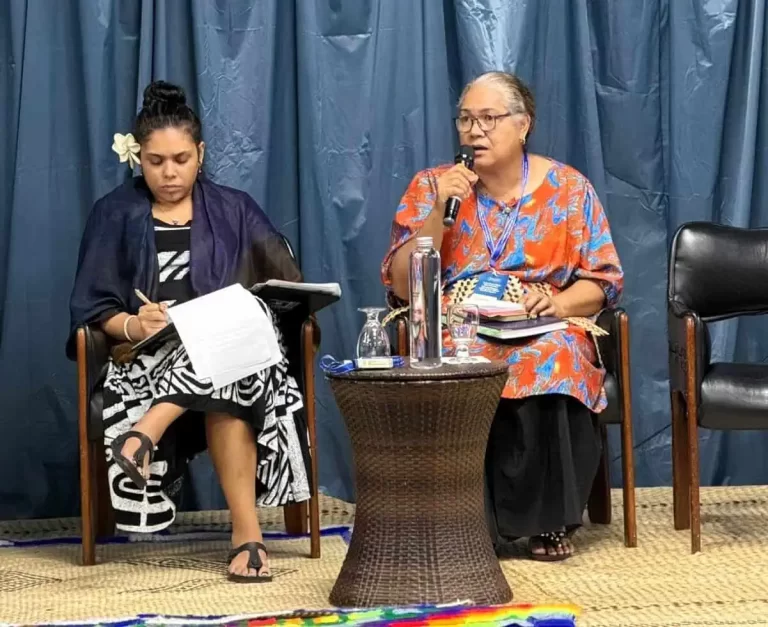
Director of Pacific Islands Association of Non-Governmental Organisations (PIANGO), Emeline Siale Ilolahia said the gap between high-level policies and lived realities of communities facing climate mobility must be bridged.

“Civil society and churches seek ongoing opportunities for dialogue, learning, and strategic input alongside governments and donors; mobility is not new to the Pacific, and existing community migration practices should inform policy frameworks,’’ she said at a workshop in Nadi.

“The framework should support safe and accessible movement for Pacific people, addressing barriers proactively.”

Traditional migration patterns inform contemporary mobility challenges; historically, Pacific migration has been supported by strong family and community ties, ensuring a home base.

She said climate change disrupts these patterns, raising questions about how to preserve cultural continuity and support migrants.

“Civil society challenges the categorisation of mobility that might oversimplify Pacific experiences and calls for transparency about potential hidden agendas; there is a need for honest conversations that reflect community realities, avoiding narratives that deter engagement.”

Policy coherence is needed across sectors such as education and livelihoods, with Civil society advocating for integrated policies that support migrants’ adaptation and citizenship in host countries.

“Questions remain about how Pacific people will access education and livelihoods abroad, including schemes like New Zealand’s Pacific Access Category,’’ Ilolahia said.

“Holistic approaches are essential to help migrants thrive and contribute positively to host communities, said Ilolahia.

Rugby Australia unveils $150 million Veimoana partnership to boost Samoa and Pacific rugby

0

Rugby Australia stands ready to assist Samoa and other Pacific Island nations in the development of rugby with the Veimoana Partnership – a five-year partnership that will take rugby in Samoa to the next level.

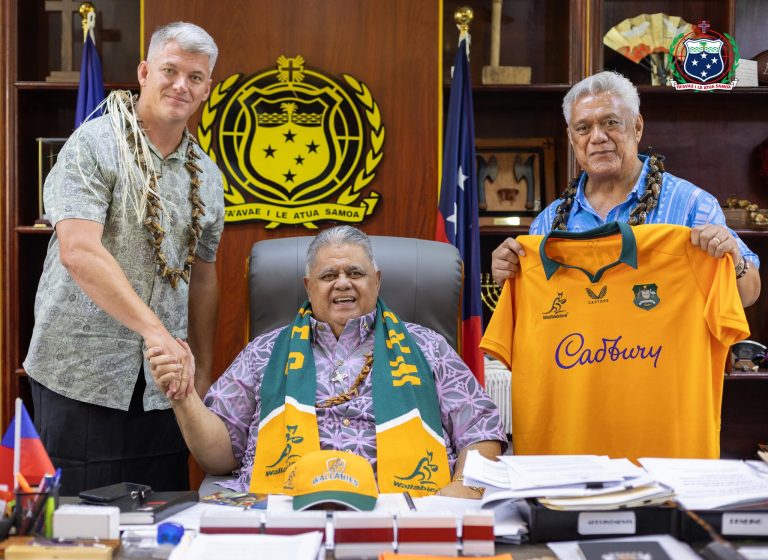
This was the topic of discussion between the Prime Minister of Samoa Laaulialemalietoa Leuatea Polataivao Fosi Schmidt with the General Manager of Government Relations and Pacific Partnerships Daniel Millis, and Cultural Liaison Officer Fa’alafi Pa Enari of Rugby Australia.

In an exclusive interview with the Savali Newspaper on Monday, General Manager Millis revealed they were looking ahead to what the next phase of the partnership should be.

They are also working very closely with the governments and rugby bodies of Fiji, Samoa and Tonga, so as to create a Pacific lead, Pacific driven, and a Pacific designed partnership, called the Veimoana Rugby Partnership.

“What this new partnership model does is, it will take that rugby exchange between our countries to the next level, it will also be funded by the Australian government,” he said.

“So, we’re looking at establishing a new competition that will run towards the end of the year at the current Super Rugby Australia window and would give Samoa an opportunity to play against the Australian Super Rugby teams from Australia as well as the Fijian Drua by establishing a new club rugby side in Samoa and Tonga to take part in that competition.

That’s for men’s end with the rugby.”

As for what’s next, they have just had a positive meeting with Samoa’s Prime Minister, and from here it is on to the Veimoana Rugby Partnership proposal.

It will be submitted to the Australian government from a regional approach from the three prime ministers of Fiji, Samoa and Tonga, and then expected negotiations to take place between the Australian government and the three governments.

Rugby Australia’s role will be to partner with our pacific rugby partners, Oceania Rugby and the World Rugby and take a deeper level of design on the Veimoana Partnership as we begin mapping out, what, 2027 and beyond looks like should the Veimoana Partnership be funded.

According to Fa’alafi the exciting thing is that it is not only Australia that is present but the World Rugby, and this reflects having an understanding right across the region.

In terms of the benefits if Samoa were to sign is quite big he said.

The cost of the Veimoana Partnership currently stands at $150 million(US$105.72 million) worth which will be spread across five years.

This funding will be used to benefit rugby across the region with main activities being increased in competition between Samoa, Tonga, Fiji and Australian teams, both men’s and women’s rugby.

There is direct investment into pathways, high performance academies, and also some of those off the field positions, including rugby administration, match officials, coaching, and so on.

Daniel had used Fiji as a success story, with the creation of the Fiji Drua those benefits are felt right across the nation as the core group of Fijian players playing together weekend, week out, and then those results are then transfer to the national team.

Fiji’s economic benefit was also pointed out after Fiji last year, earned $120 million with Fiji Drua playing home matches in Fiji, so the partnership also opens pathways for rugby tourism, benefiting hotels and resorts.
The hope is for Samoa to have their own team in Super Rugby with partnerships, it is about building the foundations for Samoa.

Daniel added that rugby unites the Pacific and Australia, as we have shared heroes, shared achievements, and to bring people together. The partnership will bring Samoa and Australia and the region together through a shared love of rugby.

Cook Islands declared ‘world leader’ in seabed sector

0

Seabed mining is no longer a distant ambition for the Cook Islands as at last week’s Pacific Agenda: Investment, Security and Shared Prosperity summit in Hawaii, it was pushed into the geopolitical spotlight with Cook Islands leaders declaring global leadership, clearing diplomatic roadblocks and indicating that movement, not moratorium, is the direction ahead.

The two-day summit was held behind closed doors with Pacific media including Cook Islands News present at the event.

Prime Minister Mark Brown left Hawaii for another ministerial commitment in Australia before the summit completed while three government officials stayed behind.

Former prime minister Henry Puna, now interim director of the Pacific Islands Development Program at the East West Centre in Hawaii, said the Cook Islands at the summit is already ahead of the pack.

“The Cook Islands is leading in this space,” Puna said. “Not just in the Pacific I believe in the world.”

According to Puna, deals have been made although he did not specify what the deals are, between Cook Islands and the U.S.

Puna said the country’s seabed minerals sector has already moved beyond theory. Exploration licences are in place, companies are operating “under strict rules” and environmental sustainability is built into the system from the start.

“The rules are very clear,” he said. “Companies operating now are in the exploration phase and they are doing a fantastic job.”

But the summit was also about removing barriers particularly those sitting in Washington.
Puna confirmed that Cook Islands exploration companies have faced unresolved issues with United States bureaucracy, describing them as sensitive but significant.

He said the Prime Minister’s presence at the summit, alongside senior US officials, had opened doors that had previously been closed.

He pointed to a positive bilateral meeting with senior figures from the United States Department of State, including Deputy Secretary Landau, as a turning point.

“The bottlenecks these companies have experienced with Washington will now be resolved,” Puna said. “The way is clear for things to move forward.”

The three companies granted five-year licenses for seabed mineral exploration in the Cook Islands, as of 2022 are Cook Islands Cobalt (CIC) Limited, Moana Minerals Limited and CIIC Seabed Resources Limited (sometimes referred to as Cobalt Seabed Resources or CSR).

Puna clarified that the issue lay between explorers and US bureaucracy, not Cook Islands policy.

Central to the Cook Islands’ argument, he said, is its ocean governance law, Marae Moana.

“We are the only country with a legal framework for the management of our entire ocean,” Puna said. “That framework addresses all environmental concerns.”

As regional and international scrutiny around seabed mining intensifies, Cook Islands officials used the summit to emphasise a science-led, precautionary approach.

That message was reinforced by Beverly Stacey-Ataera, Commissioner of the Cook Islands Seabed Minerals Authority.

“Seabed minerals for us are an opportunity that we’re exploring,” Stacey-Ataera said. “But we are grounded in scientific research. We must complete our environmental impact studies first.”

Stacey-Ataera said one of the key outcomes of the summit was gaining support, particularly from American investors to fund the research still required to fully understand environmental impacts.

“There’s an awful lot yet to be done.”

She also said discussions with Pacific neighbours were critical, with many seeking to better understand how the Cook Islands has built its regulatory framework.

“Our precautionary, science-led approach is world-leading,” Stacey-Ataera said, adding that several Pacific nations had expressed interest in learning from the Cook Islands’ experience.

Cook Islands Investment Corporation chief executive Allan Jensen said the closed-door sessions went beyond speeches and into practical collaboration.

“I think one of the key themes is the various nations sharing their various projects that have initiated priorities and how we can, in terms of collaborating more regionally, better,” Jensen said.

Speaking about the summit, Jensen added overall, “it’s been really good in terms of the degree of sharing from the speakers and various participants”.

“Good cross-section representation between the public sector and the private sector and throughout the region.”

Chief of Staff at the Office of the Prime Minister, Karopaerangi Ngatoko, described the summit as a shift from talk to action.

“I think this is a very unique approach that the U.S have taken to this dialogue, to this convening,” Ngatoko said.

“I think moving from dialogue to action is really important and having private sector here really, I think, signals an intention to move to action and something that I think is quite unique. And possibly something that others should think about too,” Ngatoko said.

‘We’re not interested in being guinea pigs out here;” Guam bucks U.S plans to accelerate deep-sea mining

0

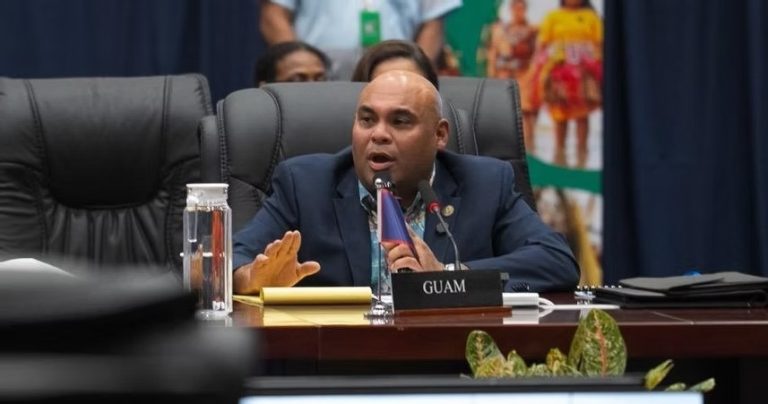
Guam Lieutenant Governor Josh Tenorio did not mince words in his meeting this week with visiting Department of the Interior officials, telling them that Guam opposes any proposal to shortcut the permitting process for seabed mining in the region.

Tenorio reiterated that Guam’s top concerns are environmental impact and removing local leaders from the decision-making process is not acceptable.

Tenorio, flanked by Cabinet leaders and nearly two dozen regulatory experts, conveyed Guam’s position on seabed mining during the nearly two-hour meeting Thursday with DOI officials and representatives of the Bureau of Ocean Energy Management at the Office of the Governor.

“I told them we’re opposed to and we’re very concerned with these proposals to streamline the permitting process,” Tenorio said. “And that we’re not interested in being guinea pigs out here. And that matters of technology and environmental consequence are very high and very top of concern.”

A small group of protesters staged a demonstration outside the Office of the Governor in Adelup, holding up placards opposing seabed mining in the region and chanting “Shame on You” as federal officials left the building.

John Ryan, spokesman for the Office of the Governor of Guam, said they were informed that similar meetings will be taking place in the CNMI.

Ryan said that Thursday’s meeting was organized by BOEM and the Office of the Governor of Guam simply provided the venue, articulated Guam’s concerns and called for more public engagement and outreach.

A news release from the Office of the Governor of Guam quoted Tenorio as saying that taking the meeting was necessary because Guam “must use every opportunity to make its case” and that Guam’s voice “must be unmistakable.”

Tenorio made clear that GovGuam opposes both the shortened review timeline and the removal of formal notification requirements to Guam’s elected leadership.

“We were very direct,” Tenorio said. “We do not support compressing review timelines or weakening notification safeguards to territorial leaders. Decisions of this magnitude—with generational consequences—cannot move forward without full transparency and meaningful engagement with the people most affected.”

Tenorio emphasised that GovGuam has consistently called for clear periods of public engagement, including town halls and community consultation, before any exploration or mining activity is authorised.

“This is not simply a regulatory matter,” he stated. “It is a question of environmental stewardship, cultural preservation, economic security, and national defence interests in the Western Pacific.”

While federal officials discussed potential economic benefits to Guam, Tenorio raised a critical legal concern: there is no mechanism right now that would allow Guam to share in any revenue the federal government earns from undersea mining in federal waters.

“We asked directly what statutory authority exists to provide revenue sharing for Guam,” Tenorio said. “At this time, there is no identified federal revenue-sharing framework that guarantees economic benefit to our island.”

BOEM representatives at the meeting made a presentation on the status of current efforts on seabed mining in the region, but Tenorio said no new environmental data was presented to ease previous concerns about sediment plumes, ecosystem disruption, fisheries impact, and long-term marine habitat degradation.

“We did not receive new scientific analysis that resolves the environmental risks we’ve already articulated,” Tenorio said.

Although federal representatives suggested that actual mining activity may still be years away, GovGuam expressed concern that no binding safeguard currently ensures that exploration does not transition into accelerated extraction without adequate local consultation.

“‘Years away’ is not a guarantee,” Tenorio said. “We have seen how quickly federal policy priorities can shift.”

Tenorio further questioned whether federal planners had coordinated with the Department of Defence regarding operational impacts in a region of increasing strategic military activity, or with the Port Authority of Guam to ensure shipping lanes and maritime commerce would be unaffected.

“No clear coordination plan was presented addressing national defence operations or commercial shipping protections,” Tenorio said.

Tenorio reiterated that GovGuam supports innovation and responsible economic opportunity, but not at the expense of environmental security or territorial sovereignty.

“We are not opposed to progress,” Tenorio said. “But progress must include us, protect us, and benefit us. And until that is clear, we will continue to say: ‘Guam will not be anyone’s experiment.’”

When asked to describe the BOEM officials’ responses to Tenorio’s concerns, Ryan said they “listened attentively.”

“While the conversation was direct, each party was cordial and professional,” he added.

As to how Tenorio’s comments will impact the BOEM’s decision-making process on the proposed deep-sea mining in Marianas waters, Ryan said that only time will tell, but the administration’s reaction to the proposal is well known and has not changed.

He said the Guam team came into the meeting with the same questions and others that have since been raised since the news of plans to dig rare earth minerals from the bottom of the oceans first came to light.

Ryan said there be more talks down the line, whether at the agency and regulatory level or via direct public engagement.

Representing the DOI and BOEM at the meeting were Douglas Boren, Pacific regional director, BOEM; Jeremy Potter, Pacific Studies chief (biologist); Natalie Dayal, project coordinator; and Justin Rhee, special advisor, Office of Insular Affairs.

Fiji Embassy confirms Fijians in Israel safe amid regional tensions

0

The Embassy of the Republic of Fiji in Jerusalem has issued a security advisory to all Fijian nationals in Israel following significant military developments involving the United States, Israel and Iran.

In an advisory, Fiji’s Ambassador to Israel, Jesoni Vitusagavulu, confirmed that nationwide air defence systems and sirens have been activated across central and southern Israel. Despite multiple missile and drone launches, Israel’s multi-layered defence systems remain operational.

The Embassy has confirmed that all Fijian nationals are safe, with no reported impacts near Fijian students in Ramat Negev or Embassy staff, families and other nationals in Jerusalem.

The Embassy has upgraded its precautionary guidance, urging all Fijians to continue shelter-in-place protocols and to immediately enter reinforced safe rooms upon hearing sirens or receiving alerts.

Nationals have also been advised to prepare emergency “go-bags” with essential documents, medications, water and supplies.

The Embassy reiterated its advice to avoid military installations, government buildings and large gatherings, and to rely on official updates from Israel’s Home Front Command.

The Mission said it remains in constant contact with the Ministry of Foreign Affairs and External Trade in Suva and local security agencies, urging Fijians to remain calm and look out for one another.

Pacific security in 2026: key challenges shaping the Blue Pacific

0

Authors: By Joel Nilon, Henry Ivarature, Akka Rimon

With global tensions sharpening, climate impacts intensifying, and new security pressures emerging across the region, Pacific leaders and communities are navigating an increasingly complex environment.

As we consider the year ahead, several areas emerge as central to the Pacific’s security landscape in 2026.

A shifting global dynamic

When we look at the global dynamics shaping 2026, it becomes clear how deeply these affect the Pacific’s own security landscape.

‘Tau a’e ika ta’ane’, a Tongan proverb that refers to the undercurrents of the actions of the big fish on our Blue Ocean continent, now and in the future has reverberating effects we must carefully navigate.

Decisions by major powers – such as the United States withdrawing from the Paris Agreement or moving to pressure Vanuatu about its draft resolution to the United Nations (UN) – aren’t just geopolitical shifts; they impact our way of life.

For the Pacific, they roll back decades of hard‑won progress and force countries to work even harder to keep climate action on the global agenda.

These moments bring home how vulnerable the region is to choices made far away, and how quickly partners’ actions can either set us back or help us advance the work we do for our people.

At the same time, these disruptions highlight how heavily the region depends on a stable, functioning international rules‑based order. That system is what allows small island states to take issues like climate change to the International Court of Justice, to the UN, and to push for clear global obligations.

As the systems and institutions that have existed in the past are dismantled, Pacific leaders are turning to collective responses, including the Blue Pacific Ocean of Peace Declaration. Progressing that into action or implementation would give the region a chance to articulate its principles, strengthen solidarity and prepare for the rebalancing that lies ahead.

Securing our future in a changing climate

The region is facing a rapidly evolving climate landscape, and many of the challenges ahead are already becoming clear. One is how Pacific countries can prepare for climate‑driven movement while holding firm to the principle that staying in place remains the first priority.

The Pacific Regional Framework on Climate Mobility speaks directly to this, recognising the growing scientific evidence that climate impacts will increasingly affect where and how people live. The framework is culturally tailored to the needs and rights of Pacific islanders.

Implementation is now under way, and that brings its own pressures. Countries are working through priority actions, from establishing a climate mobility hub to strengthening national systems that can respond to displacement, relocation and other movement. Peer‑to‑peer exchanges – like those recently between Palau and Fiji, and soon Vanuatu and Fiji – show the region leaning on its own ways of learning, but they also highlight how much coordination and resourcing is required.

Another enduring challenge is financing. Communities at the epicentre of the climate crisis need access to funds now more than ever, and the region’s focus is on building these systems and infrastructure through home-grown institutions such as the Pacific Resilience Facility, to ensure these are ready.

And even though the Australia-Pacific joint bid to host COP31 wasn’t successful, there’s still a win for the Pacific. Australia leading the negotiations is an opportunity to ensure Pacific priorities remain on the table in Türkiye later this year.

Uniting to fight transnational organised crime

Transnational organised crime has become one of the most urgent security challenges facing the Pacific.

The surge in drug trafficking across the region shows the problem is no longer confined to one or two countries. There have been major drug seizures in Fiji, Samoa, Tonga and French Polynesia. ‘Narco-subs’ have been spotted in Solomon Islands and the Marshall Islands.

With vast ocean borders, limited enforcement capacity, and growing pressures from global criminal networks, no state can manage this alone.

Pacific leaders have already called for collective regional action, building on the Boe Declaration and its action plan.

While many countries address transnational crime as part of their national security strategies, the challenge is turning words into action – developing step‑by‑step implementation, strengthening monitoring and surveillance, and ensuring policies don’t remain ‘on the shelf’. This will require serious investment in enforcement systems, maritime capability, and border security, especially for smaller states with limited capacity.

But government and law enforcement alone will not solve the problem. Churches, women’s groups, youth networks and customary institutions are increasingly stepping in to address community‑level impacts, offering prevention, awareness and social support where state systems struggle to reach. A whole‑of‑community effort, supported by regional cooperation and international partners, is essential if the Pacific is to stem the growing tide of drugs and transnational crime.

Negotiating partnerships on Pacific terms

Over the past few years, the Pacific has seen a rapid rise in bilateral security agreements, which have the potential to shape the region’s security landscape.

These arrangements reflect the broader geopolitical contest playing out between major powers, with Pacific states navigating how to protect their national and regional interests while maintaining long‑standing principles such as ‘friends to all, enemies to none’. Countries seek to secure these arrangements to best achieve their national development objectives priorities, while not compromising other potential partnerships.

In this crowded and contested landscape, Pacific Island governments must remain vigilant to ensure that any security agreements or deals, whether bilateral or multilateral, continue to align with their national and regional interests.

Alongside traditional security agreements, newer deals and opportunities such as the Falepili Union and the Pacific Engagement Visa sit at the intersection of mobility and climate security. While ostensibly, benefits will flow to Pacific people through such arrangements, Pacific Island governments and people must engage in these processes with both their immediate and longer-term interests, and agency, in mind.

With a likely proliferation of such agreements, Pacific states should continue to ensure that regional stability, national priorities, and community wellbeing remain at the heart of any and all security partnerships.

Working together to meet shared challenges

As these issues show, 2026 will demand a renewed commitment to working together across the Blue Pacific. Whether the challenge is geopolitical uncertainty, the realities of climate mobility, the spread of transnational crime, or navigating a crowded and contested field of security partners, no country can respond effectively in isolation.

Regional frameworks, national strategies and community‑level initiatives all have a role, but their impact depends on how well they connect and support each other.

The resilience, agency and collective strength of the Pacific will not only shape how the region confronts these security pressures, but also how it charts a path forward that reflects its shared vision, values, and enduring solidarity.

About the authors
Joel Nilon is Senior Pacific Fellow at the Pacific Security College at the Australian National University.

Henry Ivarature is the Deputy Director of Stakeholder Engagement at the Pacific Security College at the Australian National University.

Akka Rimon is Research and Engagement Fellow at the Pacific Security College at the Australian National University.
Global funding leaves vulnerable Small Island Developing States stranded, says new report

0

Small Island Developing States (SIDS) are being systematically locked out of climate finance – not because they don’t need it, but because the global financing system deems them too small, too fragmented and too risky to fund.

A new report, Financing SIDS’ blue development: An assessment of regional delivery frameworks, launched Monday by Back to Blue – a global ocean research initiative from Economist Impact and The Nippon Foundation – reveals that many financiers see SIDS as unattractive funding propositions and sets out practical pathways to change this.

Despite contributing less than 1 percent of global greenhouse gas emissions, SIDS across the Caribbean, Pacific and Indian Oceans face the most severe and immediate impacts of climate change, receiving just a fraction of the climate finance they need, estimated to be approximately US$12 billion annually.

The report — drawing on interviews with SIDS representatives and global funders and examining two regionally led initiatives, the Organisation of Eastern Caribbean States (OECS) 30×30 Transformation Programme and Unlocking Blue Pacific Prosperity (UBPP) — finds that fragmented governance, small project sizes, and limited institutional capacity make returns appear low and risks high, leaving SIDS underfunded and vulnerable.

Safiya Sawney, Grenada’s Ambassador, said: “SIDS and funders can’t keep operating in silos. Only through joint action from both can these nations build truly resilient blue economies. If we align better, and develop solutions tailored to small islands’ needs, we can create a much more effective system for financing and implementation, breaking the cycle that keeps SIDS incredibly vulnerable to the onslaught of climate change.”

Tourism contributes an average of 30 percent to the GDP of SIDS, making it the largest economic sector in many of the SIDS countries. When climate shocks hit, the damage goes far beyond roads, ports and ecosystems – it drives debt, inflation and prolonged periods of recovery. Between 2000 and 2022, the average economic losses attributable to climate-related disasters in SIDS totalled at US$1.7 billion per year, or US$41.3 billion in total.

Lemalu Karena Lyons, Director of Partnerships at Pacific Islands Development Programme, said: “We need to fundamentally rethink how we finance SIDS. Each funding shortfall compounds the next climate shock, leaving SIDS ever more exposed, indebted and unable to break free from a cycle of escalating vulnerability. New, regional approaches that centre local priorities could provide a new solution”

The report analyses two regional initiatives to assess whether these approaches offer a solution. The OECS 30×30 is a data-driven marine conservation plan that could attract up to US$300 million in funding for Caribbean islands. UBPP is a regenerative financing framework in the Pacific, enabling its islands to sustainably manage 100 percent of their blue economies, potentially raising SIDS US$500 million. They both spotlight that current funding systems are failing SIDS, preventing them from building lasting resilience.

Experts from Back to Blue argue that the cycle can be broken if funders coordinate investment, share data and build on existing progress and if SIDS governments provide enabling policies. Climate shocks are becoming increasingly frequent and unpredictable, making it critical not only to scale up funding but also to ensure it is deployed effectively.

The findings echo growing political momentum among SIDS. In September 2025, the Alliance of Small Island States (AOSIS) issued a Leaders’ Declaration calling for the recognition of SIDS’ “special circumstances” to be established as a core principle of international law. This could unlock simplified, customised financing pathways for SIDS, allowing them to meaningfully participate in and consent to international legal decisions that affect them.

Peter Thompson, UN Special Ocean Envoy, said: “I believe that Small Island Developing States should be first in line for climate finance. They’re on the frontlines of a global crisis they have not caused, but their size and vulnerability militate against them receiving adaptation finance at the speed and scale required for their security. Until the system radically improves, SIDS will remain dangerously exposed.”

The report calls on funders and SIDS governments to work collaboratively, acting decisively – ahead of pre-COP31 which is due to be held in numerous Pacific Islands – to begin reforming financing systems, embracing regional approaches to secure SIDS the investment to build long-term, climate-resilient blue economies.

“If we replicate structures from the past, we won’t be successful. We have to innovate.” said Illana Seid, Palau Ambassador to the United Nations and chair of the Pacific Small Island Developing States.

Stay connected

529FansLike
172FollowersFollow
156SubscribersSubscribe
- Advertisement -