HSBC SVNS fever arrives in Vancouver for the opening round of back-to-back North American legs, with anticipation high for both the men’s and women’s tournaments leading into the end-of-season Championship series.
BC Place is is set to host decisive matches as the race for vital league points goes to the wire in both tournaments, with last year’s winners Argentina and New Zealand defending their titles.
Singapore champions Fiji, who have finished in the top three of every event on the HSBC SVNS Series so far this season, head the table in the men’s competition heading to BC Place, chased hard by Cape Town and Perth winners South Africa and Dubai champions New Zealand.
Paris Olympic gold-medallists France sit just outside the top three, level on points with Australia, while two-time league winners Argentina are recovering from a slow start this season, and will be keen to make their mark on the last two legs of the campaign.
In the men’s competition, Fiji are in a tough Pool B in Vancouver, and will face Australia, Argentina and France. South Africa, meanwhile, will play New Zealand, Spain and Great Britain in Pool A.
“We’re trying to get used to this weather,” Argentina’s Santiago Alvarez joked when players gathered at the Pier next to the Convention Centre for the pre-tournament captains’ photograph event.
“We’ve come from Argentina, it’s hot there now, so we’re trying to get comfortable here. But we’re looking forward to the weekend. Vancouver has been a good place for us. We’ve won some championships here, but we’re a new team, we’re trying to be better each day.”
In the women’s competition, New Zealand have opened up a four-point gap over great rivals Australia heading into Vancouver, and will renew a fierce battle that has seen them contest each of the four finals to date on the tour. USA, France, Canada and Japan, meanwhile, are vying for third in the table as the Series enters its closing stages.
After their heroics in Perth, three-time 2026 Series champions New Zealand have been drawn against France, Japan and Great Britain in Pool A in Canada. Cape Town winners Australia, meanwhile, face a stiff first-day challenge against USA, Canada and Fiji in Pool B.
Canada’s Carissa Norsten said: “We’re feeling really good. We’ve a couple of older girls who are back into the squad for this tournament who weren’t here for the last one, so we’re really excited to see them on the field again.”
There was, she added no place like home for the Canada team “It’s a feeling like no other. You can just feel the support coming from all around you in the stadium. It’s so exciting and so fun.”
But, despite the excitement of playing in front of a home crowd at BC Place, she said the squad were serious about their goals. “We’re definitely looking for a podium finish. We want to be in those top three spots. We’re just doing what we always do: sticking to our processes and our systems and preparing how we normally do.”
Fans can look forward to a vibrant festival atmosphere, complete with family-friendly activities, and fan zones across both days of the event, while they can also see Canada’s men’s side, HSBC SVNS 3 Champions in Dubai, in action against Japan and Chile in the Teck Tri-Nations Challenge.
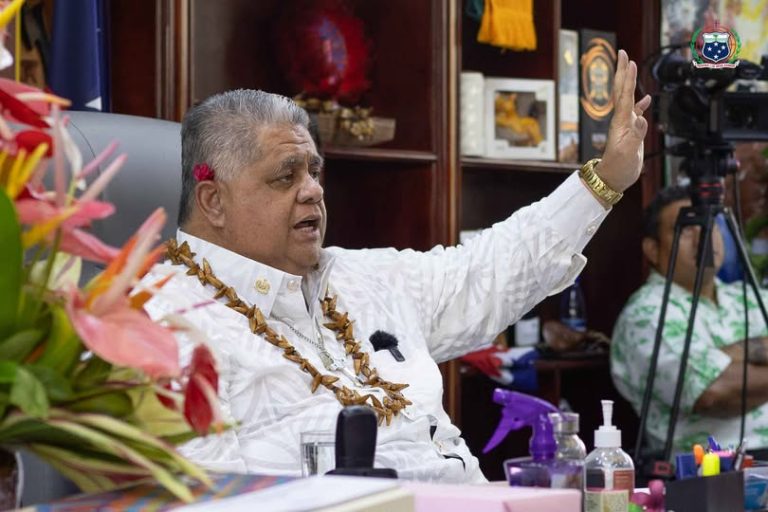
Samoa’s Prime Minister La’aulialemalietoa Leuatea Polataivao Fosi Schmidt will continue to hold off on signing over the Australian Government’s funding to assist Samoa rugby.
This is until the matter of governance is resolved.
He has called out to the Lakapi Samoa management to step down and clear out, otherwise he will never sign for the funding assistance for the development of the sport internally.
The Prime Minister has blamed the management and coaches of the Lakapi Samoa for the appalling rugby results reflected from our national teams.
Citing that if they fail to clear out, the government together with former rugby players and supporters of Samoa rugby will establish a new rugby union.
He also alluded that smaller unions across the country have already approached with concerns over the Lakapi Samoa operations and management.
In a meeting with Rugby Australia and a representative from the World Rugby, and later with the Chair of World Rugby, the Prime Minister raised the process for signing over the stalled funds.
Asking them, if the government signs, then what is next, what will it do with the funds, where will it go – to the rugby union, yet it sees major governance issues existing there he said.
He said that it has been two months since he has officially written to the management of SRU. and still there has been no response, indicating they do not want to step down.
Regarding talks with representatives of the Rugby Australia and the World Rugby the La’aulialemalietoa said they already have been informed about the situation, and they have resolved to leave this to Samoa to solve.
But the meeting between the PM and these rugby bodies was for the Veimoana Partnership, a $150 million(US$105 million) funding for rugby in Samoa, Tonga, and Fiji for the next five years.
The Veimoana Partnership is funding for rugby in the pacific from the Australian Government where $50 million(US$35 million) will be given to Samoa, Fiji, and Tonga for five years to develop rugby in the region, boosting rugby and economic development in island nations.
The Australian Government said the Prime Minister has also already been informed that Samoa does not want to miss out on the assistance for the development of national rugby.
He has also been advised to speak with the Prime Ministers of Fiji and Tonga to dialogue regarding the funding.
The Convention on Cluster Munitions (CCM) Presidency has welcomed Vanuatu as the 112th State Party to the Convention, effective 1 March 2026.
In a statement, the Lao People’s Democratic Republic, in its capacity as Presidency of the Third Review Conference of States Parties, said:
“The Lao People’s Democratic Republic, in its capacity as Presidency of the Third Review Conference of States Parties to the Convention on Cluster Munitions, warmly welcomes the Republic of Vanuatu as the 112th State Party to the Convention, effective 1 March 2026.”
The Presidency said Vanuatu’s accession strengthens global efforts against cluster munitions.
“Vanuatu’s accession to the Convention reaffirms the growing global commitment to ending the suffering caused by cluster munitions and to strengthening international humanitarian norms. By joining this vital instrument, Vanuatu has demonstrated its dedication to advancing the objectives of the Convention.”
It added that it looks forward to working with Vanuatu on implementation and encouraging wider membership.
“The Presidency looks forward to working closely with the Government of Vanuatu in enhancing the full and effective implementation of the Convention in the years ahead and encouraging other States that have not yet done so to follow Vanuatu, to join the Convention and contribute to a world free of cluster munitions.”
“We congratulate Vanuatu on this important step and welcome it as a valued partner within the Convention community,” the statement said.
Climate change’s rising seas may threaten tens of millions more people than scientists and government planners originally thought because of mistaken research assumptions on how high coastal waters already are, a new study said.
Researchers studied hundreds of scientific studies and hazard assessments, calculating that about 90 percent of them underestimated baseline coastal water heights by an average of 1 foot (30 centimetres), according to Wednesday’s study in the journal Nature. It’s a far more frequent problem in the Global South, the Pacific and Southeast Asia, and less so in Europe and along Atlantic coasts.
The cause is a mismatch between the way sea and land altitudes are measured, said study co-author Philip Minderhoud, a hydrogeology professor at Wageningen University & Research in the Netherlands. And he attributed that to a “methodological blind spot” between the different ways those two things are measured.
Each way measures their own areas properly, he said. But where sea meets land, there’s a lot of factors that often don’t get accounted for when satellites and land-based models are used. Studies that calculate sea level rise impact usually “do not look at the actual measured sea level so they used this zero-meter” figure as a starting point, said lead author Katharina Seeger of the University of Padua in Italy. In some places in the Indo-Pacific, it’s close to 3 feet (1metre), Minderhoud said.
One simple way to understand that is that many studies assume sea levels without waves or currents, when the reality at the water’s edge is of oceans constantly roiled by wind, tides, currents, changing temperatures and things like El Niño, said Minderhoud and Seeger.
Adjusting to a more accurate coastal height baseline means that if seas rise by a little more than 3 feet (1 meter) — as some studies suggest will happen by the end of the century — waters could inundate up to 37% more land and threaten 77 million to 132 million more people, the study said.
That would trigger problems in planning and paying for the impacts of a warming world.
“You have a lot of people here for whom the risk of extreme flooding is much higher than people thought,” said Anders Levermann, a climate scientist at the Potsdam Institute for Climate Impacts Research in Germany, who wasn’t part of the study. And Southeast Asia, where the study finds the biggest discrepancy, has the most people already threatened by sea level rise, he said.
Minderhoud pointed to island nations in that region as an area where the reality of discrepancy hits home.
For 17-year-old climate activist Vepaiamele Trief, the projections aren’t abstract.
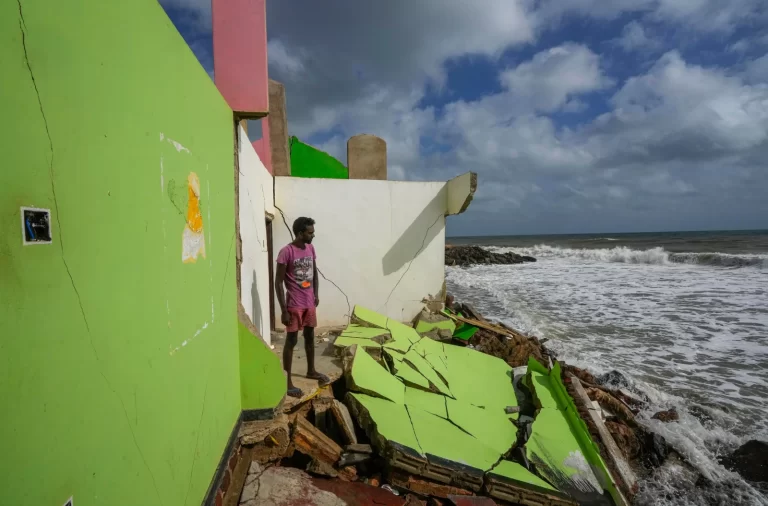
On her island home in the South Pacific archipelago of Vanuatu, the shoreline has visibly retreated within her short lifetime, with beaches eroded, coastal trees uprooted and some homes now barely 3 feet (about 1 metre) from the sea at high tide.
On her grandmother’s island of Ambae, a coastal road from the airport to her village has been rerouted inland because of encroaching water. Graves have been submerged and entire ways of life feel under threat.
“These studies, they aren’t just words on a paper. They aren’t just numbers. They’re people’s actual livelihoods,” she said.
“Put yourself in the shoes of our coastal communities — their lives are going to be completely overturned because of sea level rise and climate change.”
This new study is pretty much about what is the truth on the ground.
Calculations that may be correct for the seas overall or for the land aren’t quite right at that key intersection point of water and land, Seeger and Minderhoud said. It’s especially true in the Pacific.
“To understand how much higher a piece of land is than the water, you need to know the land elevation and the water elevation. And what this paper says the vast majority of studies have done is to just assume that zero in your land elevation dataset is the level of the water. When in fact, it’s not,” said sea level rise expert Ben Strauss, CEO of Climate Central. His 2019 study was one of the few the new paper said got it right.
“It’s just the baseline that you start from that people are getting wrong,” said Strauss, who wasn’t part of the research.
Other outside scientists said that Minderhoud and Seeger may be making too much of the problem.
“I think they’re exaggerating the implications for impact studies a bit — the problem is actually well understood, albeit addressed in a way that could probably be improved,” said Gonéri Le Cozannet, a scientist at the French geological survey. Most local planners know their coastal issues and plan accordingly, Rutgers University sea level expert Robert Kopp said.
That’s true in Vietnam in the high-impact area, Minderhoud said. They have an accurate sense of elevation, he said.
The findings come as a new UNESCO report warns of major gaps in understanding how much carbon the ocean absorbs. That report said that models differ by 10% to 20% in estimating the size of that carbon sink, raising questions about the accuracy of global climate projections that rely on them.
Together, the studies suggest governments may be planning for coastal and climate risks with an incomplete picture of how the ocean is changing.
“When the ocean comes closer, it takes away more than just the land we used to enjoy,” said Thompson Natuoivi, a climate advocate for Save the Children Vanuatu.
“Sea level rise is not just changing our coastline, it’s changing our lives. We are not talking about the future — we’re talking about the right now,” he said.
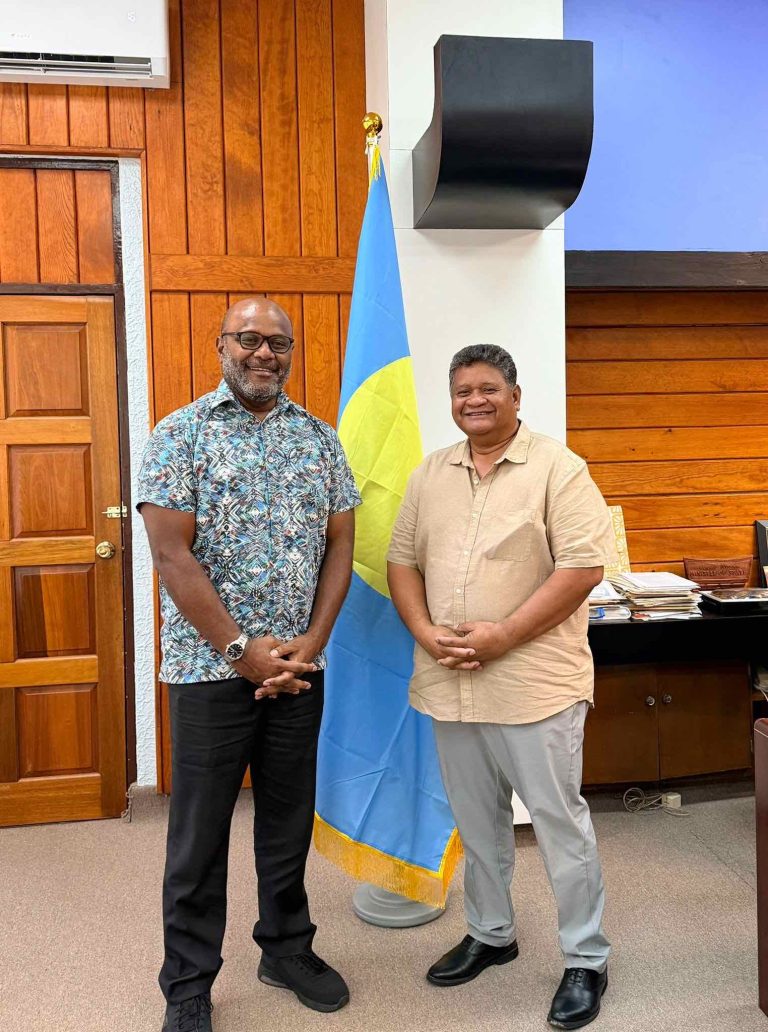
The Pacific Islands Forum (PIF) Deputy Secretary General Esala Nayasi met Wednesday with Palau Minister of State Gustav Aitaro and members of Palau’s National Planning Committee to discuss preparations for the 55th Pacific Islands Forum Leaders Meeting (55PIFLM).
The meeting will be hosted in Koror from 30 August – 04 September 2026.
Discussions focused on advancing planning for the Leaders Meeting, Palau’s priorities under the theme “BELAU – Building Economies: Life. Action. Unity.”, and strengthening coordination between the Government of Palau and the PIF Secretariat.
The Secretariat reaffirmed its commitment to work closely with Palau to ensure a successful Leaders Meeting that reflects the unity and shared aspirations of the Blue Pacific.
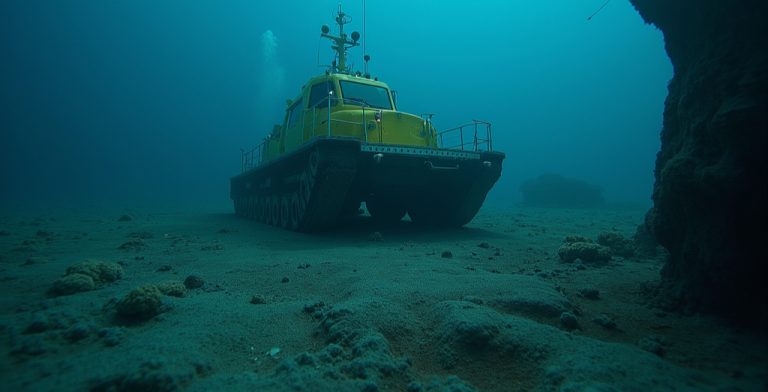
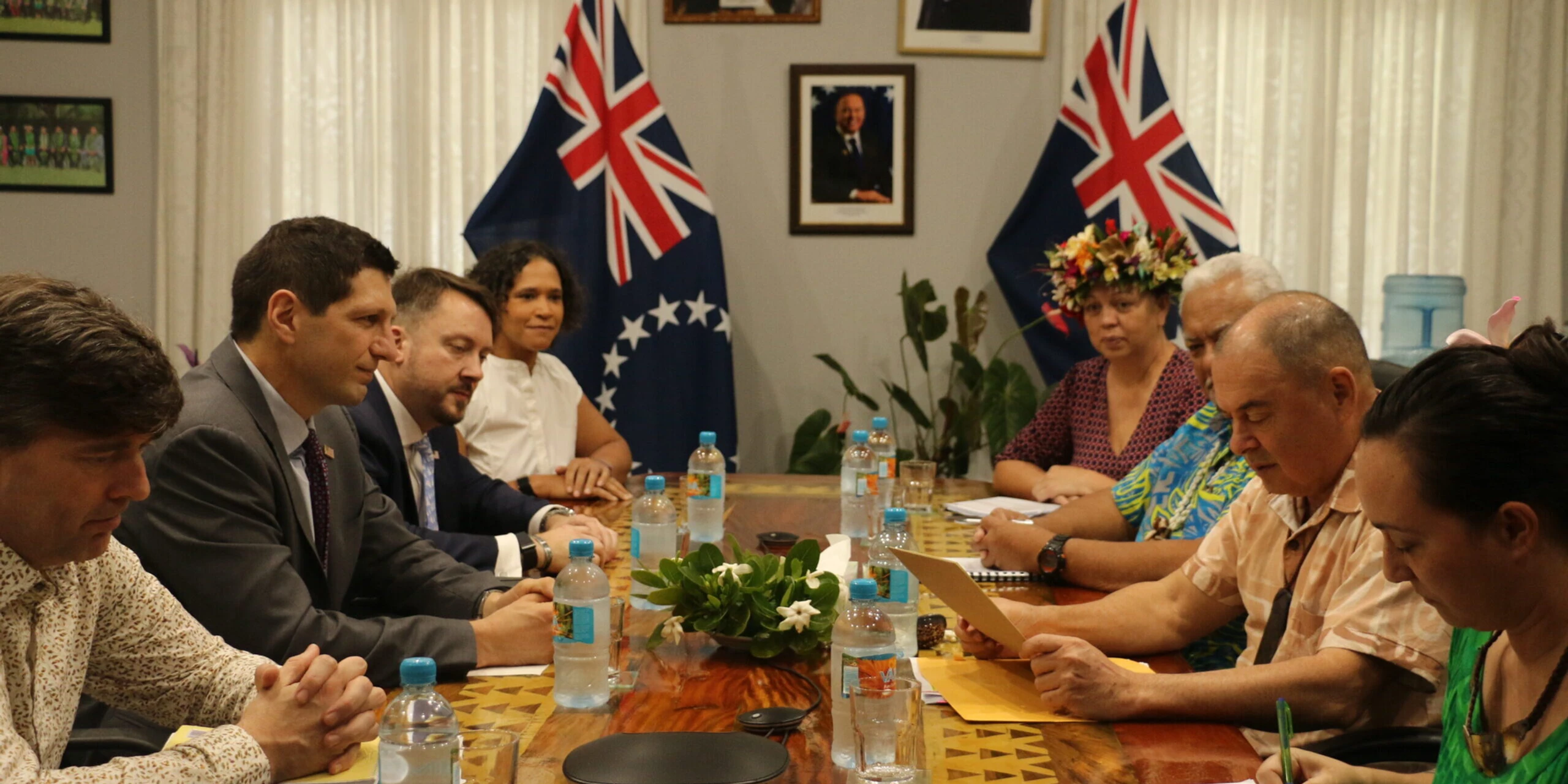
A new framework agreement between the United States and the Cook Islands heightens concerns about the accelerating plans to exploit the Pacific oceanfloor, with critics warning the arrangement could tilt power toward Washington while shaping the future of deep-sea mining in the region.
Although the agreement is described as nonbinding, analysts say its structure could still influence how seabed resources are developed in the Cook Islands and across the Pacific.
Central to the agreement is the creation of a U.S-Cook Islands Working Group focused on cooperation around critical minerals found on the ocean floor.
The Cook Islands government has highlighted regulatory safeguards for potential mining activity. Critics say the partnership raises questions about how decisions may be influenced when a global superpower works alongside a small island nation.
Adam Wolfenden, deputy coordinator at the Pacific Network on Globalisation (PANNG), said the working group could become a mechanism for advancing U.S interests in securing minerals needed for military and industrial supply chains.
“The establishment of the U.S-Cook Islands Working Group will be a vehicle for the U.S to press for decisions in support of extracting the critical minerals they seek for military purposes, raising major questions about how the Working Group will work and what accountability and transparency it will have for Cook Islanders,” Wolfenden said.
He also pointed to the imbalance between the two partners.
“It means that if there is a disagreement regarding the implementation of the agreement, the U.S. has greater leverage to push its approach,” Wolfenden said. “This could see the U.S, through the Working Group, advocating for an approach to DSM that may not be what is wanted by Cook Islands communities.”
He said the Cook Islands government’s regulatory process could face pressure if geopolitical or economic interests intensify.
“While the Cook Islands government is boasting of its stringent regulatory process, this may become compromised on account of pressure from the U.S, undermining concerns or measures meant to address environmental or impact assessments,” he said.
The agreement comes as competition intensifies globally for critical minerals such as cobalt, nickel and manganese, used in batteries, renewable energy technologies and defence systems.
In parts of the Pacific, seabed resources are increasingly viewed as a potential revenue source for economies that rely heavily on tourism, fisheries and foreign aid.
Supporters say seabed mining could create economic opportunities while helping diversify global supply chains.
The United States and the Cook Islands signed an agreement to advance deep-sea mining on 04 August 2025. Photo courtesy of the Office of the Prime Minister
Critics argue the industry remains largely untested and could cause environmental damage that scientists do not yet fully understand.
Wolfenden said the framework, even though it is nonbinding, creates incentives that could accelerate development of the industry.
“This framework, while being non-binding, creates the incentives and pressure points for moving ahead with deep-sea mining,” he said.
“As Te Ipukarea Society stated, this is about establishing the ‘how’ not the ‘if’ of DSM by creating an infrastructure for financing and investment into an industry that is untested and dangerous.”
Scientists have described deep ocean ecosystems as among the least studied environments on Earth.
“What worries me the most is not just one specific impact, it’s that we are operating in one of the least understood ecosystems on the planet,” Wolfenden said.
“Our knowledge is still limited, and when the potential damage will be permanent, that creates a significant risk. Beyond ecology, there are social and economic stakes, fisheries and local communities will be affected.”
Potential impacts may extend beyond national boundaries.
“While there is a need for national decisions to be determined nationally, there is a need for a regional response to the regional dangers posed by any activation of deep-sea mining,” Wolfenden said. “There have been numerous reports about the concerns for impacts on fish stocks, tourism and the climate regulatory functions of the ocean.”
Wolfenden also cautioned that language in investment agreements about stable or predictable regulatory environments can carry consequences that are often overlooked.
“Stability is important for investors. However, the body of evidence regarding international arbitration on terms like ‘predictable’ regulatory environments has led to private corporations suing governments over changes in policy, even when those changes were made to address environmental or social impacts,” he said. “These terms are not benign, and this is something that people should be aware of.”
He argued efficiency should not drive mining approvals.
“For a new, untested and dangerous industry like DSM, the goal of granting permits should not be efficiency. It should be about ensuring that any potential issues are mitigated,” Wolfenden said.
The debate is unfolding amid geopolitical competition over mineral supply chains.
The United States and China are both seeking to secure reliable access to materials considered essential to economic growth and national security.
Pacific island countries, which control vast ocean territories believed to contain mineral resources, are increasingly finding themselves at the centre of that competition.
Wolfenden said the region has historically tried to balance relationships with larger powers.
“The Pacific Island countries have been very strategic in leveraging competition between major and middle powers to gain development financing and political capital,” he said. “This has been helped by many adopting a ‘friends to all, enemies to none’ approach.”
But exclusive arrangements could alter that dynamic.
“Agreeing to align resources with U.S military and geostrategic interests in exclusive agreements that are widely acknowledged as targeting China indicates a willingness to pick sides, so to speak,” Wolfenden said.
Civil society groups have called for broader consultation with Cook Islands communities before any mining activity moves forward.
“This is something that must be driven and decided by Cook Islanders themselves,” Wolfenden said.
He also pointed to the region’s past experiences with resource extraction.
“The experience of the Pacific being the testing ground for nuclear weapons and waste is probably the most relevant lesson when it comes to deep-sea mining,” Wolfenden said.
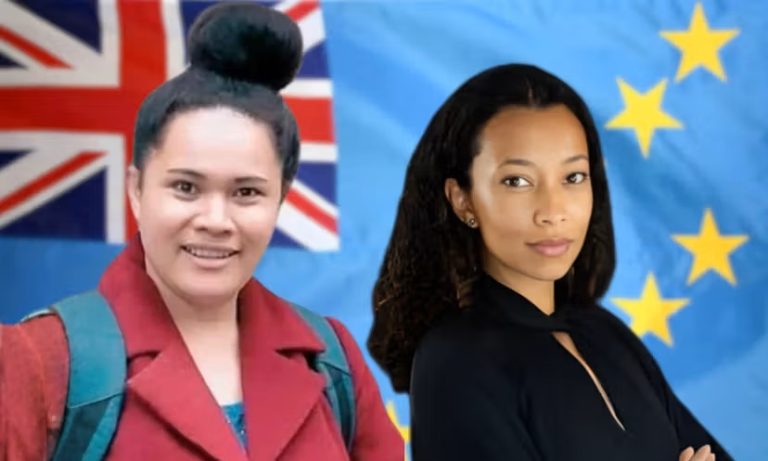
Emerging Tuvaluan legal scholars are challenging aspects of their country’s constitutional process, calling for an independent review and urging a shift away from what they describe as “neo-colonial” consultancy in shaping the nation’s future.
Speaking on PMN Tuvalu, PhD candidate Lisepa Paeniu and LLM student Naima Taafaki-Fifita discuss their recent presentations at a Pacific Legal Order conference.
The pair spoke at an Auckland University event that was part of Pacific Law Week and voiced perspectives they say are often silenced or overlooked by government-led processes back home.
Lisepa Paeniu, who is currently pursuing her PhD at the University of Otago, presented a critical look at the Tuvalu Constitution.
While she acknowledges Tuvalu’s global leadership in securing permanent maritime boundaries and statehood in the face of sea-level rise, she warns that human rights protections are lagging behind international legal wins.
“When it comes to other issues, we’re like a century behind” Paeniu tells PMN Tuvalu.
She specifically highlighted the controversial omission of protections for sexual orientation and gender identity in the latest discrimination clauses.
Paeniu says the current constitutional review process is flawed because it is controlled by the the politicians it is meant to govern.
She advocates for a radical change, calling for an independent body to lead constitutional reforms.
“It shouldn’t have been MPs, otherwise, it’s just going to be in the hands of a few men,” says Paeniu.
Naima Taafaki-Fifita, who is completing her master’s in law with a focus on the Falepili Union (the Tuvalu-Australia Migration agreement), discussed what many have labelled a “climate visa”.
Taafaki-Fifita says there is widespread criticism that the agreement is “not a climate justice treaty” because it fails to regulate emissions or address historical inequalities.
However, she says that for Tuvaluans on the ground, the agreement represents a “deliberate legal strategy” in an unjust world.
Taafaki-Fifita says that the treaty formalises mobility as a binding obligation rather than a “one-sided grace” from Australia, providing Tuvaluans with permanent, predictable pathways for education and healthcare.
She says the arrangement must evolve from Falepili (good neighbourliness, care and mutual respect) to Tuakoi (a deeper, reciprocal ethical partnership) to ensure that movement does not sever the bond to family and land.
The central message from both scholars was a call for Tuvaluans, especially the younger generation, to reclaim their own stories.
Taafaki-Fifita says there is frustration with the “consultants crawling around Tuvalu,” describing the reliance on outside experts as a form of “continued colonialism”.
“Write your own story. Stop letting other people tell your story,” says Taafaki-Fifita.
Both women believe Tuvaluans have the skills to do their own research and speak up for themselves, without the need for foreign experts or outside groups to do it for them.
Former Pacific Islands Forum Secretary General Dame Meg Taylor delivered the Olive Malienafau Nelson public lecture during Pacific Law Week on the Blue Pacific continent, exploring how Pacific nations have historically used legal tools to protect their sovereignty and ocean resources.
Dame Meg Taylor says while colonial exploitation and nuclear testing left lasting “scars” across the Pacific, the region has never been passive.
She points to Pacific-led legal and diplomatic initiatives as evidence that small island states can shape international law when they act collectively.
Fiji Airports has been recognised at the Pacific Area Travel Writers Association (PATWA) International Travel Awards 2026 in Berlin, Germany, with Nadi International Airport named Best Airport – South Pacific Islands.
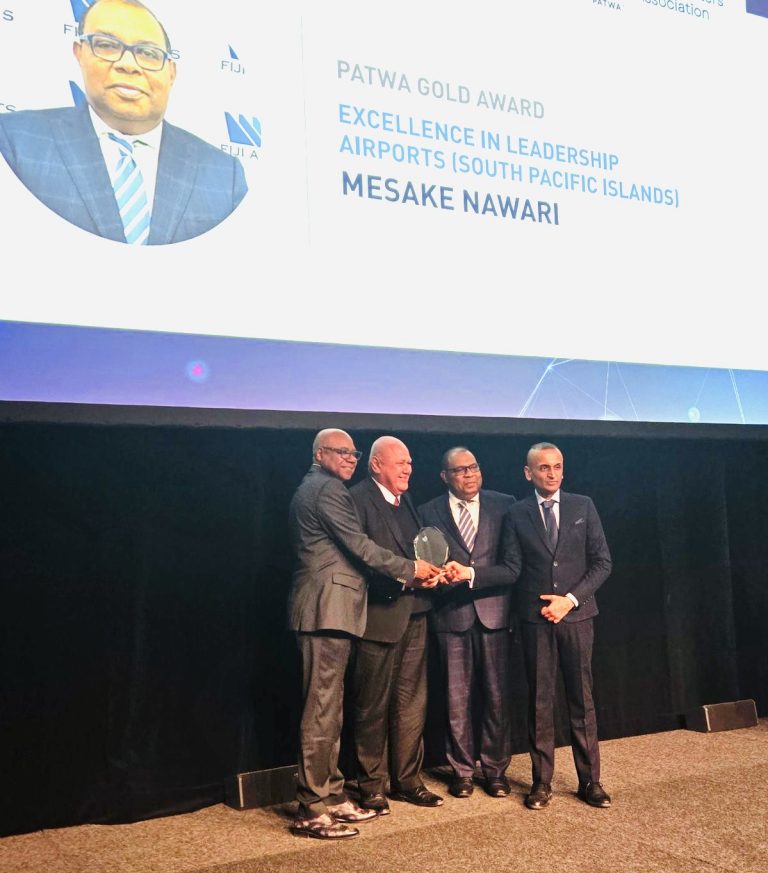
Fiji Airports Chief Executive Officer Mesake Nawari also received the prestigious PATWA Gold Award – Excellence in Leadership – Airports (South Pacific Islands).
The PATWA International Travel Awards recognise governments, organisations, brands and individuals for outstanding contributions to tourism promotion and leadership across the global travel and aviation industry.
Award recipients span airlines, airports, hotels, travel agencies, tour operators, destinations, government bodies, tourism ministries, and service providers across the global travel ecosystem.
The award was conferred at the PATWA World Tourism Leaders’ Summit and the PATWA International Travel Awards at ITB, Berlin, on 04 March 2026, and presented by the Secretary General of PATWA, Yatan Ahluwalia.
Speaking on the achievement, Nawari said the awards reflect a collective effort across the aviation and tourism ecosystem.
“This is a proud and humbling moment for Fiji Airports and for Fiji, of course, as a popular tourism destination,” Nawari said.
“These awards reflect the dedication, professionalism and passion of our staff and airport stakeholders, who work tirelessly to ensure our airports operate safely, efficiently, and with the warmth that Fiji is known for.
“I am honoured to accept this recognition on behalf of all our board, our staff and stakeholders.”
The recognition of Nadi International Airport as the Best Airport in the South Pacific Islands highlights Fiji Airports’ continued investment in infrastructure, service excellence, safety, and enhanced passenger experience, bringing Fiji’s unique Bula spirit to life for every traveller arriving through the nation’s main aviation gateway.
As Fiji’s main gateway to the world, Nadi International Airport plays a vital role in supporting tourism, trade and national economic growth.
Nawari said the future of aviation and travel will be shaped by sustainability, innovation and evolving traveller expectations.
“Over the next decade, sustainability, technology and customer experience will define the future of travel,” he said.
“At Fiji Airports, we are focused on balancing these priorities, reducing our environmental footprint, embracing smart technologies, and delivering seamless, inclusive and authentic travel experiences.”
“Fiji Airports extended its sincere appreciation to its board members, staff, airline partners, government agencies, tourism stakeholders, and the travelling public for their continued support.”
Nawari adds these recognitions reaffirm Fiji Airports’ position as a regional leader in aviation excellence and its ongoing commitment to connecting Fiji to the world with pride while working towards delivering its vision, To Be the World-Class Aviation Hub for the Blue Pacific.
A group of former military strategists have warned the Government that Papua New Guinea ‘is not insulated’ from the conflict in the Middle East between the USA, Israel and Iran, and remains utterly exposed because of the Lombrum Naval Base in Manus.
Papua New Guinea Flag Officers League president retired Major General Jerry Singirok and Pacific Island Regiment Veterans League president Peter Ilau have urged the Government to take a neutral stand in the current conflict.
The leagues warned that the United States’ ongoing investment in Lombrum, with a broader U.S security commitment to PNG valued at over US$864 million (about K3.7b) over ten years, ensured PNG was a strategic military transit and operational base for threats in the South West Pacific and South East Asia.
The joint PNG-Australia-United States naval facility in Manus was recently refurbished for over US$135 million (about K589m).
The United States and Israel’s coordinated military campaign against Iran, designated Operation Epic Fury, has already killed Iran’s supreme leader and triggered widespread missile and drone strikes across the Middle East.
Iranian forces have retaliated with nearly 400 ballistic missiles and 800 drones targeting US military installations in Qatar, Kuwait, Bahrain, and the UAE, Israel, as well as civilian infrastructure including hotels in Dubai and the US Embassy in Riyadh.
“Iran has already demonstrated the will and capability to strike any nation hosting US military assets,” the leagues said.
“Gulf Cooperation Council countries despite their geographic proximity to Washington’s allies — have suffered strikes on their bases and civilian infrastructure.
“While Papua New Guinea is geographically distant, the principle of escalation to a global ‘war of bases’ cannot be dismissed if this conflict broadens further.
“The Government of Papua New Guinea must ensure clearly and publicly that Lombrum, Komo, Jacksons and Nadzab airfields or any other facility on our sovereign soil is not being used, directly or indirectly, as a staging ground for active combat operations in this or any related theatre”.
Lombrum is one of six facilities in Papua New Guinea to which US personnel have unimpeded access under the Defence Cooperation Agreement signed in 2023.
Under the agreement, the US is allowed to use three airports, two ports and one naval base for training, transit and pre-position equipment, supplies and materials.
The leagues called on the government to be neutral, consistent with the country’s constitution and the ‘Friends to All, Enemies to None’ doctrine.
“Oil prices have risen and the Strait of Hormuz remains closed, disrupting shipping and global travel,” the leagues said.
“Thousands of travellers are stranded and the crisis could last weeks or longer with potential economic consequences for Papua New Guinea.”
The leagues said the operation was launched without United Nations Security Council authorisation and may breach international law.
“Papua New Guinea’s constitution commits the country to peaceful relations and sovereignty. For that reason, we are calling on the government to issue a formal neutrality statement and avoid involvement in the conflict.”
The leagues recommended engaging the Pacific Islands Forum for a collective Pacific voice to call for immediate ceasefire, reopening international shipping lanes, and a return to diplomatic negotiation.
Papua New Guinea nationals living and working in the Middle East are yet to be identified before assistance is sought from the Australian government and the United Arab Emirates (UAE).
Foreign Affairs Secretary Elias Wohengu said given the dire situation, it was important for relatives and friends of PNG citizens stranded in the Middle East to contact the department through its state protocol and consular division.
“Many governments are unable to carry out any eviction exercise at this point as all land borders and air space are closed, restricting the movement of people in and out of the Middle East,” he said.
“Evacuation itself would be a security risk under the present war scenario.”
Many PNG nationals travelling to the Middle East make their own arrangements and do not usually inform the embassy.
Wohengu said both the Australian government and the UAE were offering assistance to Papua New Guineans.
On Saturday, Israel and the United States launched air strikes on selected targets across Iran, killing Iran’s Supreme Leader Ayatollah Ali Khamenei and his immediate family.
Iran and its allies struck back targeting areas in the Middle East which are critical to the production of oil and natural gas, thus cutting off air and sea travel.
Foreign Affairs also said that the PNG embassy in Jerusalem would remain closed until the situation improved and it was safe to reopen.
Wohengu said given the situation, governments of the region had told service providers to accommodate stranded third-country nationals, including PNG citizens.