
Home Blog Page 87

Commonwealth Secretary General warns global order is failing people

Commonwealth Secretary General Shirley Botchwey used her remarks at the 26th Commonwealth Foreign Affairs Ministers Meeting (CFAMM) in London to highlight global challenges and call for stronger cooperation across the Commonwealth of nations.

Marking International Women’s Day, Botchwey told ministers gender equality remained a global challenge.

“I wish to begin by recognising the significance of International Women’s Day. It is a moment to reflect on progress made and distance still to travel.

Even in 2026, gender equality remains far from achieved, and in every society, women and girls continue to face barriers that limit opportunity, participation and security.”

She said progress remained uneven around the world.

“No indicator under Sustainable Development Goal Five has yet been fully achieved, and projections suggest that closing gender gaps in economic participation, political leadership, health and education could take generations.”

Botchwey said women’s leadership across the Commonwealth continued to be visible.

“And yet, across the Commonwealth, we see every day the extraordinary leadership, innovation and resilience of women and girls. Indeed, I see that quality of leadership reflected around this table and I pay tribute to our women leaders here.”

She said the voices and ideas of women and girls were essential to the future of the Commonwealth.

“The voices, ideas and example of women and girls are indispensable to the future we seek to build – and it remains our duty to dismantle the legal, institutional and social barriers that continue to constrain them.”

Botchwey said the Commonwealth must ensure women and girls can fully participate in society.

“Only when every woman and girl can participate fully and fairly, will we be able to say that true equality sits at the heart of our shared Commonwealth endeavour.”

She also reflected on the role of the Commonwealth in global cooperation.

“It will be a powerful reminder that even in unsettled times, there remains a deep reservoir of belief in the idea that a group of countries bound by a painful history can leverage the lessons of history and shared values to reinvent cooperation and end exploitative relationships to ensure resilience and shared prosperity.”

Botchwey said current global systems were failing people.

“They are right because the trajectory we are on, with the post- Second World War arrangements and its traditional development cooperation, is failing our people, whether in industrialised countries or developing countries.”

She said the Commonwealth remained an important platform for cooperation among its members.

“An association that embodies all the possibilities for re-imagining multilateral cooperation, bringing together democracies, in all regions, with a market of over 2.7 billion people, a third of humanity and its youngest population.”

Botchwey said the Commonwealth could help drive economic opportunity.

“I see this as an important opportunity for our Ministers, our leaders, to lead a mindset change that affirms that, through the Commonwealth, we can make create a common market that enhances the potential of Commonwealth businesses and investors to create shared prosperity.”

She also stressed the need for stronger cooperation among member states.

“The Commonwealth works not as a bloc but as a bridge.

“A bridge between regions. A bridge between large states and small.

“A bridge between advanced and developing economies. A bridge between principles and practical cooperation,” she said.

Botchwey said the Commonwealth must act with ambition.

“For us, we must believe that the time for modest ambition is over.”

She said cooperation among Commonwealth nations could help address global instability.

“And we must prove – through action, through partnership, through vision – that when we stand together, and work together, we can defend our values, advance our interests, and change the world,” said Botchwey.
France-New Caledonia governance deal no sure thing

0

New Caledonia’s fraught path to a new governance deal with France is no certainty, with significant political challenges ahead.

Paris and Noumea have engaged in intense negotiations since deadly and costly riots in May 2024.

The Melanesian nation is split on the thorny issue of independence, with many indigenous Kanaks hoping for self-determination, and others wanting stronger ties to its colonial power France.

Months of diplomacy, which have drawn in President Emmanuel Macron, have yielded two agreements: the Bougival Accord last July, and the Elysee-Oudinot Accord in January.

The deals fall short of independence, keeping New Caledonia within the French realm. Instead, more autonomy is promised for New Caledonia, along with recognition of Kanak identity and a dual nationality, and more funding from Paris for healthcare and social security, and to prop up a budget hit hard during the pandemic.

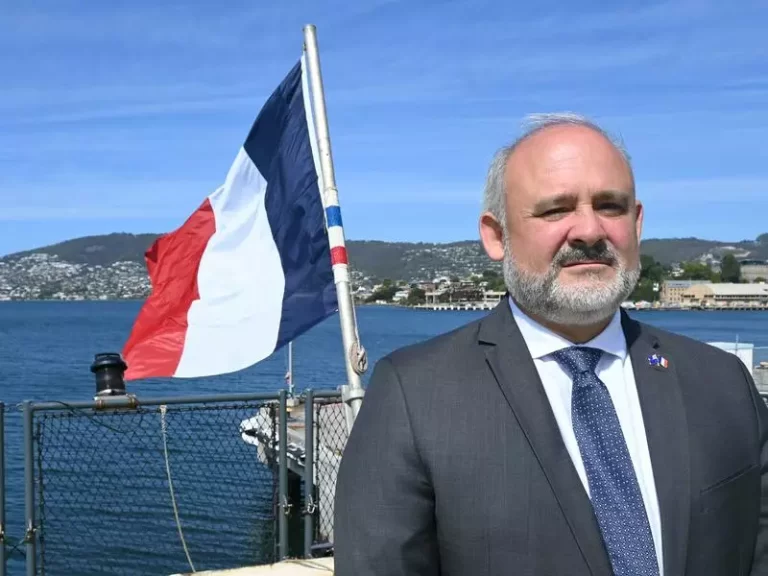
France’s Ambassador to Australia, Pierre-Andre Imbert, told AAP talks were centred on “trying to find a way that respects the willingness of the New Caledonian people and to address the different issues this territory has”.

The issue looms large over the region, with Australian and New Zealand diplomats engaged behind the scenes, and a Pacific Islands Forum task force also commissioned in 2024.

Now, after a compromise by political leaders on both sides, the pact needs assent from both MPs and the people.

As a complicated legal instrument, it needs several ticks from France’s parliament, and also to succeed at a referendum in New Caledonia.

The first French hurdle was cleared in February, when the Senate approved the new accords.

A lower house vote is due in April, and then – if New Caledonia’s citizens pass the referendum due in winter – a combined French parliamentary vote will take place around October.

“That’s democracy,” Imbert said, who declined to say whether he was confident of passage.

“It’s the responsibility of each party to determine what they want … I have no crystal ball as to where we are.”

Overseas France Minister Naïma Moutchou’s argument to French MPs is to honour the lengthy negotiations.

“If it’s not the Bougival process, negotiated by five out of six (New Caledonian political parties) then what is the alternative? Today, there isn’t one,” she said in February, as reported by Les Nouvelles Caledoniennes newspaper.

Reports from New Caledonia suggest support for a ‘oui’ vote in the referendum – originally slated for March but now likely to occur in winter – is waning as time drags on.

What is clear is that should either French lawmakers or New Caledonians scuttle the deal, another resolution could be a long time coming.

Imbert said French negotiators had done “a tremendous job trying to find a way to address the different points raised by the different parties in New Caledonia”.

“From the beginning there is a clear willingness of being able to give more competencies to the local elected people in New Caledonia,” he said.

“You have almost 300,000 citizens, and so they and we find a way to have a shared future,” he said.

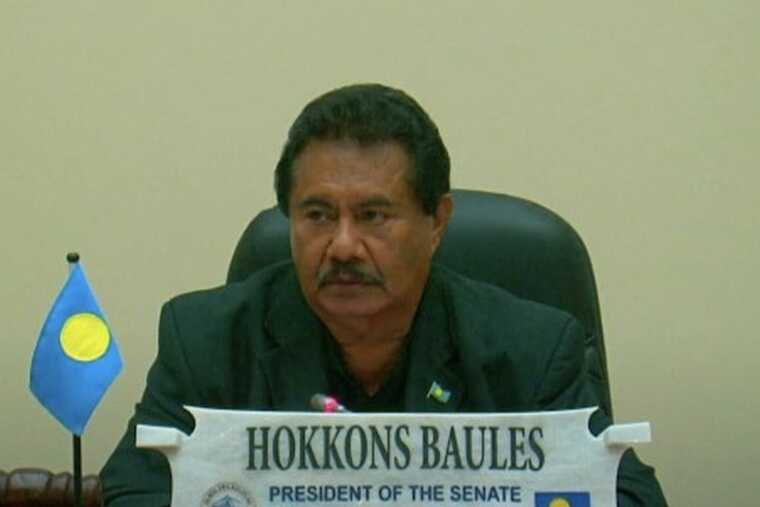
Palau Senate pushes back against U.S accusations of corruption against Baules

0

“We should not allow any nation to carelessly make unsubstantiated accusations against a Palauan leader,” Senator Eldebechel said during a recent Senate session, as lawmakers rallied to defend Senate President Hokkons Baules against corruption allegations raised by the U.S State Department.

Palauan senators last week sharply criticised the U.S government after it accused Baules of “significant corruption on behalf of China-based actors,” calling the allegations an intrusion into Palau’s domestic affairs and a challenge to the country’s sovereignty.

While Baules responded publicly to the allegations last week, several of his colleagues used the Senate floor to condemn the accusations, describing them as “foreign meddling,” “a blatant disregard for Palau’s sovereignty,” and a “slanderous accusation without evidence.”

Senator Eldebechel opened the criticism, saying senators were troubled that the allegations were made by a long-standing partner such as the United States.

“We are very concerned about such news because they are sourced from supposed respectful nations like the United States,” Eldebechel said. “They publish information about an alleged one-year investigation about a Palauan leader accusing him of serious allegations with no clear evidence and without proof.”

Eldebechel said Palau must defend the integrity of its institutions and its sovereignty.

“As a country we should not allow any institution, organisation or even any nation to carelessly come up with unsubstantiated allegations or accusations with no basis and no factual information to support such allegations,” he said.

Senate Vice President Stevenson Kuartei echoed those concerns, saying the accusations undermined the office of the Senate president and risked interfering with Palau’s internal affairs.

“The United States should not intrude or meddle with Palau’s domestic affairs,” Kuartei said. “When they go out of their way to bully whoever is sitting in the Senate President’s seat, we should all rise to protect the integrity of that seat.”

Kuartei also referenced Palau’s political history and its relationship with the United States under the Compact of Free Association, emphasizing that the agreement did not diminish the country’s independence.

“The compact of free association did not erase our sovereignty,” he said. “This is not about news; this is about our survivability because there are people who died for this political system that we currently have with the United States.”

He added that the issue should not be viewed as a political dispute but as a matter of national self-determination.

“This is not a political game. Any foreign entities have no right to make such allegations without any proof,” Kuartei said. “We are not subservient to the United States. We fought tooth and nail to be a sovereign country. We should not give up our self-determination for some type of political interest.”

Senate Floor Leader Kerai Mariur broadened the discussion to Palau’s strategic relationship with Washington, questioning whether the partnership under the Compact sufficiently protects Palau’s interests.

“Palau is a shield of the United States,” Mariur said.

“While the Compact agreement with the United States will take care of Palau’s security, it is obvious that they are only interested in the United States’ security and not ours.”

Mariur said Palau must continue working toward self-reliance as envisioned during the transition from the former U.S.-administered Trust Territory of the Pacific Islands.

“We should not lose sight of our sovereignty,” he said. “By the end of this Compact Agreement, we should be able to stand on our own, as that was the mandate of the trust territories.”

He added that the allegations against Baules raised broader questions about respect for Palau’s independence.

“These recent allegations against Baules prove that the United States does not respect Palau’s sovereignty,” Mariur said.

Senator Basilius also weighed in, emphasising that Palau’s international partners typically respect the country’s legal processes.

“Palau’s diplomatic allies respect the due process of a sovereign nation,” Basilius said.

Some senators suggested the allegations may be connected to tensions between the Senate and the United States over Washington’s proposal to send deportees to Palau — a plan that Baules and several senators have publicly opposed.

Those concerns come as the Senate continues to seek clarification from the U.S government regarding the corruption accusations.

The U.S government has not publicly provided detailed evidence related to the allegations, and it has yet to respond to a letter sent by Kuartei requesting clarification.

Pacific-led initiatives set to eliminate cervical cancer across the Pacific

0

Rollout of safe initiatives across Pacific to prevent cervical cancer and save lives receives $5.1 million (US$3 million) boost.

Te Poutoko Ora a Kiwa – Centre for Pacific and Global Health at Waipapa Taumata Rau, University of Auckland, and its Pacific partners, are supporting the rollout of safe initiatives across the Pacific that are proven to prevent cervical cancer and save lives.

Cervical cancer is a largely preventable disease but remains a leading cause of cancer death among Pacific women. In parts of the Pacific, incidence rates are up to nine times higher than in Australasia.

The Matariki Fund, administered by Dame Jacinda Ardern, is supporting the programme by expanding access to new and existing locally led cancer prevention initiatives for more people across the Pacific.

This new partnership enables a new Pacific-led and coordinated programme of work that:
• Increases HPV vaccination coverage to reach at least 90 percent of girls.
• Expands access to cervical self-testing to achieve at least 70 percent of eligible women
• Facilitates timely diagnostics to enable treatment for pre-cancerous lesions and invasive cancer
• Establishes a coalition of Pacific women leaders to lead workforce and capability development, including digital and health system infrastructure.

The programme made possible through a NZ$5.1 million (US$3 million) grant by the Matariki Fund, and active work of other partners in the region, will begin with a focus on the Cook Islands and Niue before being scaled up across the region.

Cervical cancer can be prevented through HPV vaccination, regular screening and timely diagnosis and treatment. Yet access to these services remains uneven across the Pacific. This new investment provides a critical opportunity to align national programmes, regional partners, and women leaders around a common goal towards elimination.

The initiative will work alongside successful existing regional programmes, including the EPICC programme (funded by the Australian Government and the Minderoo Foundation) and the Polynesian Health Corridors (PHC) (managed by the New Zealand Ministry of Health and funded by the Ministry of Foreign Affairs and Trade).

Together, these partnerships will help scale effective interventions, reduce duplication, and strengthen regional health systems.

Aligning with the WHO Global Strategy to Eliminate Cervical Cancer the initiative aims to support countries to achieve the “90–70–90” targets by 2030, a threshold at which elimination becomes possible. In practice, this means aiming to achieving 90 percent of girls aged 15 years receiving the HPV vaccine,70 percent of women screened by age 35 years, and again at 45 years; and 90 percent of women with pre-cancer and invasive cancers treated.

This grant allows us to move beyond isolated interventions to a truly collaborative, Pacific-led approach. By strengthening leadership, governance, and regional partnerships, we are building the foundations for long-term health equity.

Professor Sir Collin Tukuitonga, Co-Director of Te Poutoko Ora a Kiwa, says the funding is a gamechanger for regional collaboration.

“Cervical cancer is preventable, yet too many Pacific women continue to die from it. This investment allows Pacific countries to work together, sharing expertise, strengthening systems, and supporting women leaders, to achieve elimination.”

Pacific women will be at the forefront of the initiative, working in partnership with Te Marae Ora (Cook Islands), the Niue Department of Health, and regional organisations.

Professor Judith McCool, Head of the School of Population Health and Co-Director of Te Poutoko Ora a Kiwa, says the funding enables sustainable, system-level change.

“This grant allows us to move beyond isolated interventions to a truly collaborative, Pacific-led approach. By strengthening leadership, governance, and regional partnerships, we are building the foundations for long-term health equity.”

Dame Jacinda Ardern says: “Pacific women are disproportionately affected by a disease that can be eliminated. There is such excellent leadership within the region – this funding is simply about supporting them to save lives with solutions that should be available to everyone.”

Acid rain falls on Vanuatu islands as volcano continues to belch ash

0

The Vanuatu Government has decided not to order a mass evacuation of communities on Ambae island affected by acid rain from the Manaro Voui volcano.

On Friday, the Council of Ministers (cabinet) endorsed the recommendations of the National Disaster Committee for a plan of action.

This included approving a budget of 20 million vatu (US$170,000) for a team from the National Disaster Management Office to go to Ambae on Saturday.

Once there, they will assess the most affected parts of the island and have them declared disaster zones.

Climate change minister Ralph Regenvanu said there is no mandatory evacuation at this stage, but people in the worst-affected areas are encouraged to move to less-affected parts of the island if they do not feel safe.

“Even though on Ambae we are hearing the activity of the volcano is changing, sometimes it is increasing and sometimes it is going down, it is still only at alert level three,” Regenvanu said speaking in Bislama.

Regenvanu said plans are in place should the volcanic activity increase even further.

“The council has also approved that if we go to alert level four, which is the worst-case scenario, and will require the whole island to be declared a disaster zone and for us to start evacuations, an emergency plan is already in place.”

Acid rain from the volcano on Ambae – 310km north west of the capital of Port Vila – is reportedly affecting water and food supplies.

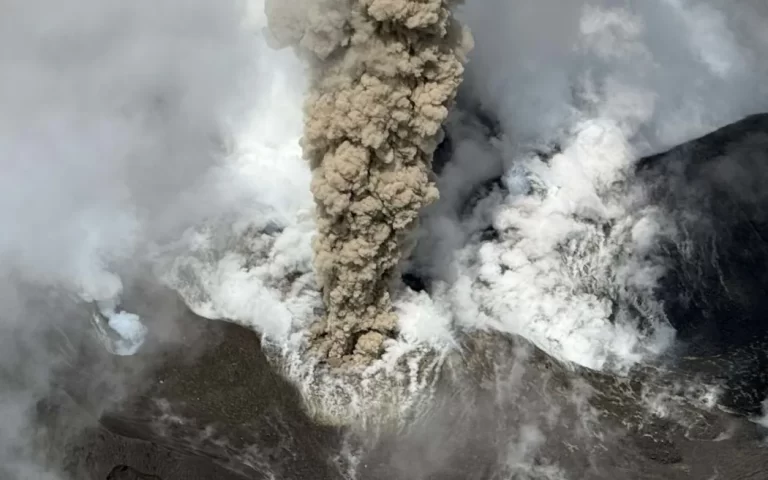
Authorities say the volcano is spewing toxic burning ash which is now covering the entire island due to wind changes.

The Vanuatu Meteorology and Geohazard Department (VMGD) say acid rain has now reached Santo, Malakula, Pentecost and Ambrym islands.

Its director, Levu Antfalo described its effects.

“It burns, right because it contains sulphuric oxide, it rains down and becomes acid rain. It burns their crops, pretty much anything that it gets in contact with, water as well. Usually those who use wells, drums, tanks that are not covered could be affected, but bore hold water seems to be okay,” he said.

Antfalo said the heavy ash fall also alters the PH levels in water, making it more acidic.

“I mean it burns their protein source, like vegetables… We were told it as well increases the PH of water as well as prawns and fish that are there (in rivers).”

Edwin Tarai and his family were evacuated after Ambae erupted in 2018 and have never returned.

The 74-year-old, who lives in Santo, said people on Ambae were complaining about government inaction.

“There is no plan of moving out at the moment but there is a concern. People are complaining and wondering what the government’s next move is,” Tarai said.

The former nurse practitioner said that the noise is increasing and can be heard in east Santo, Pentecost and Ambrym islands.

Nixon Garae, a tug boat captain in Luganville, Santo has relatives in East Ambae, who described the noise.

“They said the noise is very loud because when people are talking you can’t hear the other person talking. It is causing ear pain because it’s very loud and heavy,” he said.

“Last Saturday when they were in church, when the preacher stood up at the front, they could hardly hear him because the noise was too loud.”

A volcano duty officer with New Zealand’s GNS Science, Yannick Behr said Ambae is a typical shield volcano and a very active one at that.

“It’s part of a chain of volcanoes in Vanuatu, they’re sitting on a rifting zone that is caused by the eastward subduction of the Australian plate. That tectonic process keeps that volcanism alive so all volcanoes on this rifting zone, they erupt quite regularly,” Beer said.

The latest plumes are about four kilometres above sea level, he said.

“It can twice as high, but again these are explosive eruptions but because of the consistency of the magma they tend to be not quite as catastrophic as you can see them (sic) from other types of volcanoes, “Beer said.

The geohazards department has issued a reminder to Ambae residents to stay out of the danger zone. This comes after an aviation warning was issued on Thursday for volcanic ash cover over the island.

In a public address director Levu Antfalo warned residents to take precautions.

“Just a reminder that the danger zone is a three kilometres radius around the crater. So do not go close to it,” Antfalo said.

“Things to take care of include water, protect your water supply. It will also affect food gardens. And also, those with respiratory illnesses…this can affect the health of families that live close to or in the surrounding areas of Ambae,” he said.

Middle East conflict could push up cost of living in Fiji

0

Rising tensions in the Middle East are not just a distant crisis, they could soon hit Fijian households at the checkout counter.

Experts warn that surging global oil prices may drive up the cost of living, affecting everything from transport to groceries.

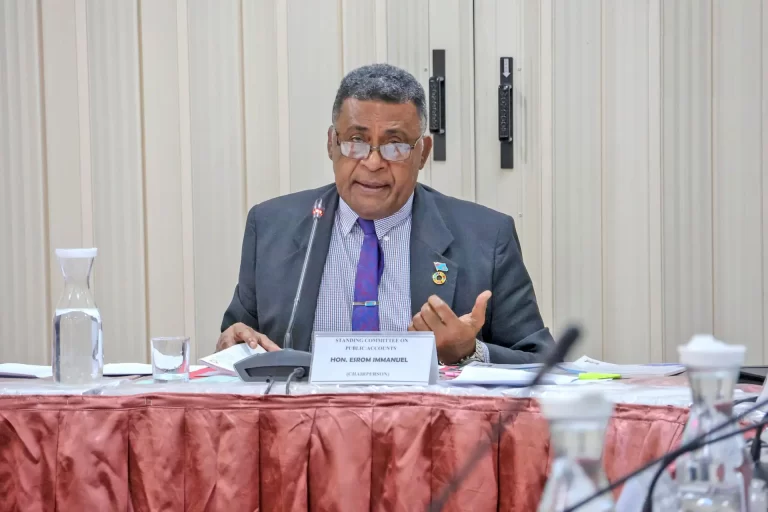
In an interview, Minister for Finance Esrom Immanuel said the Government is closely monitoring the situation as the conflict continues to push fuel prices higher.

Oil has already jumped from around FJD$132.64 (US$66.32) per barrel last year to about FJD$185.76 (US$92.88) today, with fears of further increases if global supply is disrupted.

“As a small island economy and a price taker in global markets, such increases would pose significant challenges for Fijian businesses, consumers and the broader economy,” Immanuel said.

He explained that higher fuel prices would increase transportation and production costs, eventually pushing up the price of goods and services nationwide.

Immanuel acknowledged that Fiji relies heavily on imports, including fuel, making the country vulnerable to global price shocks.

“It will surely affect us because we import a lot of products, including fuel, which is a major component of what we need. But it’s not time to panic currently.

He also stressed that Fiji has sufficient oil reserves for now, even as the Government continues major trade to secure fuel supplies.

“We have oil stocks with us, and the effect of any marginal cost increase will be manageable,” he said.

Consumer Council of Fiji chief executive officer, Seema Shandil, warned that the impact extends beyond Fiji.

“Of course, there will be an impact, not only in Fiji, but to consumers across the world.”

“That’s the impact of that business crisis. We will continue to monitor the situation and work with policymakers to see what policies can be brought in,” Shandil.

Immanuel also warned that global instability could affect Fiji’s tourism sector, particularly the national airline Fiji Airways, as rising fuel costs and weaker global demand may slow travel activity.

Despite the warnings, the government urged calm, noting that Fiji currently has adequate foreign exchange reserves to cushion the country against economic shocks.

“Government will continue to explore ways to support consumers and businesses if the situation worsens,” Immanuel said.

Spain beat Fiji 7s in semifinal

0

The Fijian 7s side is out of the Vancouver 7s after going down 24-17 to Spain in the semifinal.

Spain did their homework and executed three restarts, getting 19 points from three tries out of it.

The national side played almost five minutes without possession in the first half as Spain put pressure on the Fijians.

Fiji finally got their hands on the ball with a minute to play, and they finally managed to score two successive tries to Nacani Boginisoko and captain Jerry Matana.

Trailing 17-10 at halftime, Fiji regrouped and scored the first try in the second spell to Joseva Talacolo following some great defensive work inside the opposition half.

The comeback suffered a major blow with two minutes remaining when Matana was sent off for taking out a player without the ball, and the Spanish awarded a penalty try.

It will be a Spain-South Africa final in Vancouver.

Fiji 7s will play Australia in the third-place playoff.

Meanwhile, the Fijiana takes on Canada in the fifth-place playoff.

Fiji PM sacks Sports Minister Jese Saukuru

0

Fiji Prime Minister Sitiveni Rabuka has dismissed Youth and Sports Minister Jese Saukuru and directed the Fiji Sports Council to immediately suspend its chief executive officer Ratu Gilbert Vakalalabure as investigations begin into allegations of abuse of office and misuse of funds.

In a statement, Rabuka said the decision was taken to allow authorities to conduct an independent investigation.

“In light of the seriousness of the allegations raised, and to ensure that due process is respected and that the relevant authorities are able to carry out their work without interference, I have dismissed Honourable Jese Saukuru from his position as Minister for Youth and Sports, effective immediately,” Mr Rabuka said.

“This decision allows the Fiji Police Force to conduct a thorough investigation into allegations of abuse of office relating to the Fiji Sports Council.”

He said the Government took allegations involving public office seriously.

“The Government takes any allegations concerning the misuse of public office or public resources very seriously.

“I have also directed the Board of the Fiji Sports Council to immediately suspend its chief executive officer, Ratu Gilbert Vakalalabure, to allow the independent investigation into allegations of misuse of funds to proceed without hindrance.”

Rabuka said Government expected all public office holders to maintain high standards of conduct.

“The integrity of public office and the proper management of public resources are fundamental principles that this Government expects all public office holders to uphold at all times.”

Rabuka has since assumed the Youth and Sports portfolio to ensure the ministry’s operations continue without disruption.

NZ Middle East evacuation flights will also assist stranded Pacific Island nationals

0

Foreign Minister Winston Peters says New Zealand’s plans to evacuate citizens from the Middle East will also extend to Pacific Island nationals stranded by the conflict.

Speaking to reporters during his visit to Uruguay, Peters confirmed two New Zealand Defence Force C-130J aircraft are being pre-deployed to the region.

“We have members of the Pacific Islands Forum, you can expect them to ask us as they did during the New Caledonian crisis,” Peters says.

New Zealand rescued a total of 370 people including 145 foreign nationals during the 2024 unrest in New Caledonia.

No Pacific nations have asked New Zealand for assistance on helping to get stranded citizens out yet.

Peters signalled that assistance may not be limited to New Zealand passport holders.

The crisis comes after escalating conflict in the Middle East forced the closure of regional airspace and the suspension of most commercial flights.

The number of New Zealanders registered with SafeTravel has surged in the last 24 hours from 2400 to 3000 with Peters saying he expects numbers to continue to rise.

The two aircraft are being deployed in advance so they can respond quickly if the security situation allows evacuations.

The Ministry of Foreign Affairs and Trade is running a 24/7 response operation to events in the Middle East, including via teams in the region.

For now, the government is advising New Zealanders in the region to shelter in place as airspace closures and suspended commercial flights limit evacuation options.

Under the current plan, the NZDF aircraft would move people out of high-risk areas to safer locations rather than fly them directly back to New Zealand.

“Our team is working on defence and foreign affairs around the club, using all their experience to ensure that they can intervene to help them in the most safe way possible.

“So, hang on, help is on its way,” Peters says.

Relocation must be Decolonised

0

The Pacific region faces urgent climate threats requiring coordinated, culturally grounded solutions.

And the identity of Pacific communities is threatened by severe climate impacts, including rising seas and storms which potentially could destroy.

Despite the fact that the region contributes among the lowest greenhouse gas emissions globally, it suffers disproportionate damage, and collective and coordinated regional action is critical to address these challenges effectively.

To its advantage, however, Pacific mobility is long-standing and adaptive to change, as communities have historically moved due to environmental and social shifts.

Solomon Kantha, IOM Chief of Mission for Fiji said the 2023 endorsement of the Pacific Regional Framework on Climate Mobility committed leaders to collaborative planned relocation guidelines,”

“The framework was developed with input from member countries, civil society, and customary land groups, and this launch marks a major milestone in regional climate mobility governance; the framework ensures actions are locally led and culturally sensitive.”

Planned relocation is a last resort; the priority remains to help communities stay safely on ancestral lands; retention of land ties is central to identity and well-being and is prioritised over relocation whenever possible.

Kantha said loss of land resulted in loss of culture, knowledge, and community foundations.

“Supporting safe residency aligns with the Pacific’s human rights and security commitments; policies reflect the preference for staying in place unless relocation is unavoidable.”

The Pacific Regional Framework emphasises inclusivity and cultural grounding in all mobility decisions, and it highlights respect for diverse experiences of climate change across populations.

“Rights-based approaches ensure vulnerable groups like women, youth, elders, and disabled persons are included; solutions must be adaptive and respect Pacific heritage and self-determination.”

Reiterating the words of Cultural Consultant, Simione Sevudredre, he said: “Relocation must be decolonised, relational, and led by Pacific Knowledge.

“Our people are active stewards of their futures, not passive recipients of externally imposed solutions.

“Decisions must respect community protocols, the voices of women, youth, elders, children, persons with disabilities, and all vulnerable groups, and ensure that life and livelihoods continue to flourish, wherever people may go.”

The Pacific Guidance on Internal Planned Relocation offers adaptable tools for government and communities to manage climate mobility with dignity and respect.

The guidance is a collaborative product between IOM and Platform for Disaster Displacement, designed for practical use, and it supports national policies, standard procedures, and community actions, incorporating lessons from regional experiences and ongoing work.

Stay connected

529FansLike
172FollowersFollow
156SubscribersSubscribe
- Advertisement -