Home Blog Page 83

COP31 still offers Australia and the Pacific a chance to reset global climate ambition

0

Three steps could turn the hosting compromise with Türkiye into real gains for the region and the world.

By Melanie Pill Georgia Hammersley Alexandre Dayant

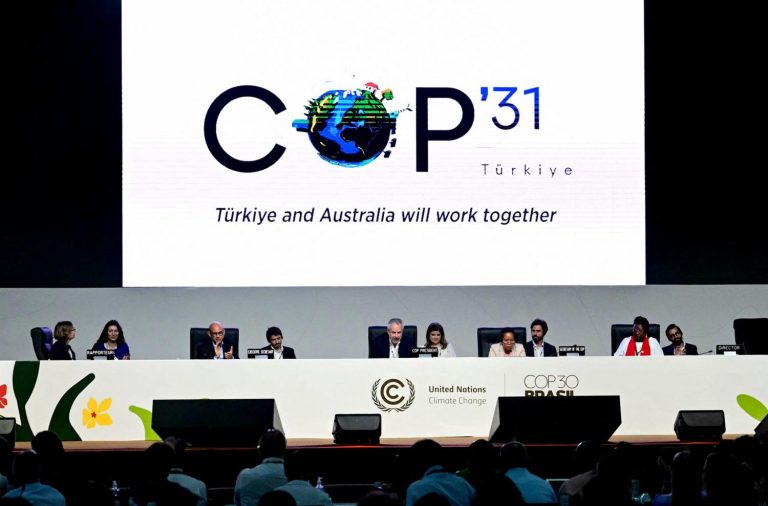
Last month, the Pacific Islands Forum announced that Fiji will host this year’s pre-COP, the ministerial gathering ahead of the annual United Nations climate summit (COP31). Alongside the October talks in Suva, Tuvalu will convene a leaders’ segment to foreground what climate impacts already mean for small, shock-exposed nations on the frontline.

The Pacific pre-COP emerged from an unusual compromise between Australia and Türkiye over hosting rights for this year’s negotiations. Canberra had campaigned for years to stage the summit alongside Pacific partners, seeking to elevate the region’s climate concerns on the global stage at a moment when the world is running out of time to curb emissions.

When consensus on the host proved unattainable, Australia eventually made way for Türkiye to convene the summit and lead the Action Agenda, the arm of COP outside formal negotiations that centres on voluntary pledges and initiatives from governments, businesses and civil society. Many of the summit’s practical outcomes now take shape there. In return, Australia will assume the newly created role of “President of Negotiations”, with authority to steer consultations and shape draft texts. The Pacific, while not hosting the main summit, secured the right to host the pre-COP.

Many viewed the outcome as a diplomatic setback that would weaken the region’s influence over the summit. But that need not be the case. As we argue in a new Lowy Institute Policy Brief, COP31 can still deliver meaningful outcomes for the region if the Australian government uses the moment strategically. Three policy steps stand out.

First, use the Pacific pre-COP to generate political momentum early. Pre-COP meetings are usually technical exercises where delegates test draft text and align positions. But this one will take place in a region confronting rising seas, eroding coastlines and intensifying storms. Meeting in Suva and Funafuti will allow delegates to see these pressures first-hand, injecting a sense of urgency before the main negotiations.

Building a coalition behind a shared agenda will strengthen negotiating power when consequential talks begin in Antalya.

But the setting alone will not drive ambition and guarantee attendance. The agenda must therefore be framed around the shared interests of climate-vulnerable developing countries, not only the Pacific.

Adaptation finance at scale, reforms that make climate finance faster and easier to access, and stronger fossil fuel commitments are all issues that resonate far beyond the region. Ocean governance beyond conservation remains largely absent from COP discussions, despite becoming a growing concern for many developing countries as rising seas test maritime boundaries and even continuity of statehood. Here, Pacific states and Australia are well placed to lead a discussion. Initiatives such as the Australia–Tuvalu Falepili Union treaty – a world-first agreement recognising continuity of statehood alongside pathways for climate migration – offer a starting point.

Building a coalition behind a shared agenda will strengthen negotiating power when consequential talks begin in Antalya.

Ensuring the pre-COP attracts serious engagement will also require visible political leadership. Australian Prime Minister Anthony Albanese should take a prominent role and extend targeted invitations to selected countries so the gathering becomes one that leaders cannot afford to miss.

Second, use Australia’s authority as President of Negotiations with intent. In this role, represented by Climate Change and Energy Minister Chris Bowen, Canberra will oversee consultations and guide draft texts at moments when ambition is most vulnerable to dilution. Close coordination with Türkiye on the Action Agenda will help ensure priorities appear in headline initiatives, not just negotiating rooms.

Holding the line on fossil fuels will be important. Australia should push to reinforce the COP28 commitment to transition away from fossil fuels, engaging constructively with countries that continue to block progress. Where consensus proves difficult, ambition will need to be balanced with pragmatism. Encouraging credible voluntary commitments to initiatives such as the Belém Declaration could help protect gains and prevent backsliding.

Third, back diplomacy with delivery. Australia’s bid to host COP31 signalled a willingness to mobilise substantial financial resources. Rather than letting this ambition dissipate with the hosting compromise, part of it should be redirected towards tangible climate action. That includes properly resourcing a high-impact pre-COP in the Pacific and ensuring Pacific diplomats have the means to represent their interests effectively in Türkiye.

Redirected funding could also scale up climate-resilient infrastructure through the Australian Infrastructure Financing Facility for the Pacific or support Pacific-led initiatives such as the Pacific Resilience Facility. Looking beyond the region, Australia should bolster its global climate credentials with greater support for multilateral funds, such as the Green Climate Fund. Canberra’s current pledge – just AU$50 million over four years – is modest for a fund that is now delivering strong results in the Pacific.

The hosting deal might have shifted the balance of influence, but the region still retains meaningful levers: a pre-COP in the region to set expectations early, stewardship of the negotiating text, and the ability to redirect resources into delivery.

That leverage matters in a fraught global context. Climate diplomacy today unfolds against a backdrop of geopolitical tensions, fiscal pressures and competing global crises. In these conditions, progress will not happen by default. Strong leadership from Australia and the Pacific will be needed to ensure COP31 is remembered not as a missed opportunity, but as a moment that helped sustain global climate ambition.

Ultimately, COP31 will not be judged by where it is held, but by what it delivers.
‘They don’t want us here’ – Moana coach Tana Umaga lashes out at rivals Blues

0

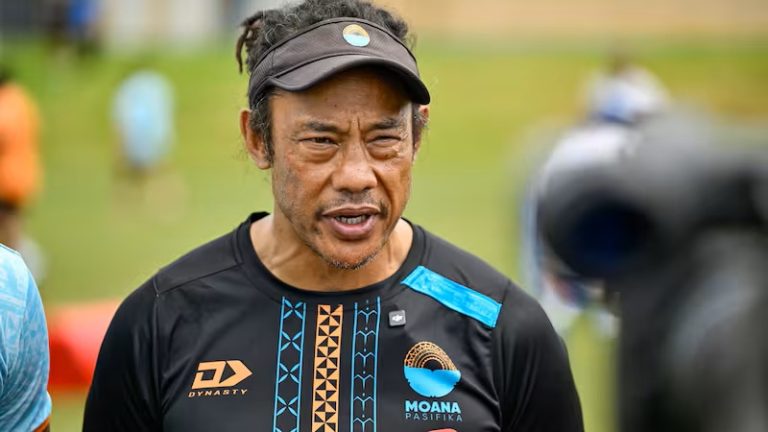
Moana Pasifika head coach Tana Umaga has distanced himself from a story linking him with a job in Dave Rennie’s new All Blacks regime and in the next breath has accused cross-town rivals the Blues of intentionally making it difficult for Moana Pasifika to survive and “thrive”.

Umaga’s comments today will add another layer of interest to the Auckland derby which kicks off at Eden Park on Sunday afternoon.

And while the Umaga, a former All Blacks captain, may take attention away from his association with the national team and new head coach Rennie with his comments, there was nothing contrived about his depth of feeling about the Blues who, he said, “don’t want us here”.

In response, the Blues said Umaga was entitled to his opinions and suggested the Moana Pasifika coach may be “trying to create a bit of extra spice” to this weekend’s match.

Making Umaga’s comments even more significant is that he is a former head coach of the Blues, who are, of course, under the jurisdiction of New Zealand Rugby, potentially his next employer.

After he was asked to address the “elephant in the room” of being linked to Rennie, written by 1News reporter and presenter Scotty Stevenson – which Umaga brushed off as “speculation” – the 52-year-old was lobbed a question about the Blues.

Asked whether they were Moana Pasifika’s “greatest rivals”, Umaga responded in a manner that suggested his thoughts and feelings on the matter had been building for a while.

“I don’t know if they realise there’s two professional rugby teams in this city but we do know they don’t want us here,” Umaga said. “We’ve got nothing against the playing group and nothing against the other staff because I’ve worked there.

“But the people who make the decisions have made it very hard for us to survive over here. Yes, they probably are our greatest rivals because they want to see us not do well, not thrive.

“I struggle with that. When rugby is at a place … I struggle with the narrative they came out with last year when they said they believe they represent the Pacific.

“Well, the Pacific team is here. You’re not willing to assist us or embrace us for the betterment of rugby… I struggle with that and that’s why this game means a lot to us.”

Part of Umaga’s frustration will come from Moana Pasifika’s struggles to find a home.

They were effectively forced out of Mount Smart Stadium after their establishment in 2020 and have since found a home venue and training base at North Harbour Stadium. They won four of their five games there last year, including a thrilling victory over the Blues that prompted wild celebrations among players and fans alike.

However, they are limited to five games per season at the venue and a recent attempt to play a home game in Tonga fell through due to a lack of sponsorship. Rotorua will instead host the round nine match against the Chiefs.

“We’re only allowed five games here,” Umaga said at his team’s base today. “When our game against Tonga didn’t go through, straight away we had the Northland union say ‘hey we’d love to have you up here’ – which they have numerous times and the Blues said ‘no, that’s in our region. No, you can’t go up there’.

“This year, because we play our other games at Pukekohe – which is obviously in the Chiefs region – the Blues have tried to say to us ‘actually, that’s in our super city so you’re still in our boundary’.

“That’s what we’re up against, but that’s fine. We just have to look back at our past as Pacific Islanders around how tough it is for us here; how tough for our families and parents. How they’ve fought to provide for us here in this great country. So, it’s nothing new for us, as a small entity, to try to grow and build for the betterment of our people.”

The press conference, held on the sideline of Moana’s training pitch, was then quietly brought to a close by a franchise representative.

Offered an opportunity by 1News to reply, Blues chief executive Karl Budge said: “Tana was one of my idols growing up and I have a huge amount of respect for him as a player and a coach, and he is entitled to his opinions.

“I think this is Tana trying to create a bit of extra spice against their cross-town rivals ahead of our game on Sunday. We have really enjoyed the rivalry we’ve created on the field and this weekend will be no different.

“It has been great to see our two proud clubs work closely together to promote the game and ensure rugby fans, be they in Blues or Moana Pasifika jerseys, get out and support their team.

“We look forward to what will be another tough game against them at Eden Park on Sunday afternoon.”

Earlier, Umaga, who was coached by Rennie at Wellington, was reluctant to engage with what he described as rumours and speculation about the All Blacks’ job, adding: “I’m really honoured to be mentioned in the conversation that Sumo [Stevenson] has put me in, from what I’ve heard.

“I suppose it’s my turn this week. I see there were a lot of names that Rens was looking [at].

“It’s not something I’m really thinking about… it’s a bit untimely, my family is letting me know what’s happening and I’m getting a lot of texts. I had to turn my phone off… as I said, I’m honoured to be part of that conversation.”

Asked whether joining Rennie was within the “reams of possibility”, he said: “I don’t know, what are the realms of possibility? That something you need to ask.

“I’m a coach, I do what I do and whatever happens from there – I’ve been fortunate to do what I do.

“Something I talk to our players about is that you can only control what you can control and it’s a waste of time thinking about anything else.

“Until it’s a done deal and everything is down on paper, it’s exactly what we’ve been talking about, it’s speculation.

“That’s what I know of Dave. He doesn’t let too much fluster him. He’s very precise and specific about what he wants and what he believes in. As you stated, that looks like a calmness and steadiness to what he does.

“His addition to the All Blacks is positive and, as an All Blacks fan, I’m happy that we’ve got someone there and, knowing Dave, I’m happy that he’s got the job.

“I’ve played for that team and it means a lot to me.”

Umaga said watching the All Blacks struggle over the past couple of years was not easy.

“Whenever that has taken a dent or is tarnished, you do feel it, or I do as a fan. You just want to see it get back to where it once was but I’m sure that’s an exciting challenge for Dave and the group that’s coming in. You’re chasing teams now, whereas usually you’re the one being chased – that’s a different perspective to what the All Blacks have had before.”

Fastest in Polynesia: Sāmoan sprinter wins 100m crown but the record still stands

0

Sāmoa’s Johnny Malua has claimed the title of the fastest man in Polynesia, winning the men’s 100 metres at the Polynesian Games in Auckland last weekend.

But the 23-year-old sprinter says his job is not finished yet after falling short of the time he had been chasing.

Malua crossed the line in 10.88 seconds, clinching the gold medal in a tight field of Pacific athletes. The result places him at the top of Polynesian sprinting for now, although he narrowly missed the long-standing games record of 10.83s.

Malua was among about 100 Pacific athletes competing at The Trusts Arena from 5 to 8 March, representing Sāmoa, Tonga, the Cook Islands, Tuvalu, Niue, American Sāmoa, and French Polynesia.

Speaking on Pacific Huddle, Malua says he was happy with his performance and grateful to his team and his supporters.

“The crowd was great that night. It was a great atmosphere,” he says.

Sāmoa’s Johnny Malua crosses the finish line after winning the men’s 100 metres final at the Polynesian Games in Auckland, clocking 10.88 seconds. Photo/Oceania Athletics.

He says the race started tightly, with strong competition from the field. “From the start I executed well, but the Fijian athlete was ahead of me by about half a metre,” Malua says.

As the race entered the final stretch, Malua says he knew his moment was coming.

“When we came to the 80 metres, that’s when I knew I had the win. I just gave it everything and finished strong.”

Watch Johnny Malua win the 100 metres at the Polynesian Games

Despite the victory, Malua says he had hoped to run even faster and challenge the Games record.

“I was trying to chase the record for the Polynesian Games, which is 10.83 seconds,” he says.
Still, the win is special for Malua, who proudly represents his Sāmoan heritage and family roots in the villages of Vaitoloa and Lepea.

“They supported me from day one when I started track and field when I was young,” he says.

Like many Pacific athletes, Malua did not grow up focusing on one sport. He attended St Joseph’s College Sāmoa, where rugby sevens and fifteens were his main passions.

“I liked rugby when I was a kid and that was my dream sport,” he says.

His focus shifted when he began training under coach Sam Achong. “That’s when I realised athletics was my passion, so I kept training and improving,” Malua says.

The Sāmoan sprinter’s rise also highlights the reality many Pacific athletes face when preparing for international competition.

Training opportunities and facilities in the islands are often limited compared with those available in bigger countries.

“We don’t have many facilities back home like athletes in New Zealand or Australia,” Malua says. “But I’m grateful for the work we’re doing and I trust God wherever I go.”

Malua also shares a message for young Pacific athletes hoping to follow a similar path.

“Don’t give up on your dreams. If you can dream it, you can achieve it,” he says. “Always put God first in whatever you do.”

His motivation comes from his family, particularly his mother, a former football player in Sāmoa.

“She always tells me to put God first and never give up on my dreams.”

With the Polynesian title now in his hands, Malua’s focus turns to bigger stages.

He is preparing for the upcoming Oceania Athletics Championships in Darwin with long-term ambitions of competing at the Commonwealth Games and eventually qualifying for the Olympic Games.

For now, the 100m champion carries more than just a medal. He carries the pride of Sāmoa and the wider Pacific as the region’s fastest man with his sights already set on the record he came so close to breaking.

HIV cases could reach 9,000 – Fiji Assistant Health Minister tells Parliament

0

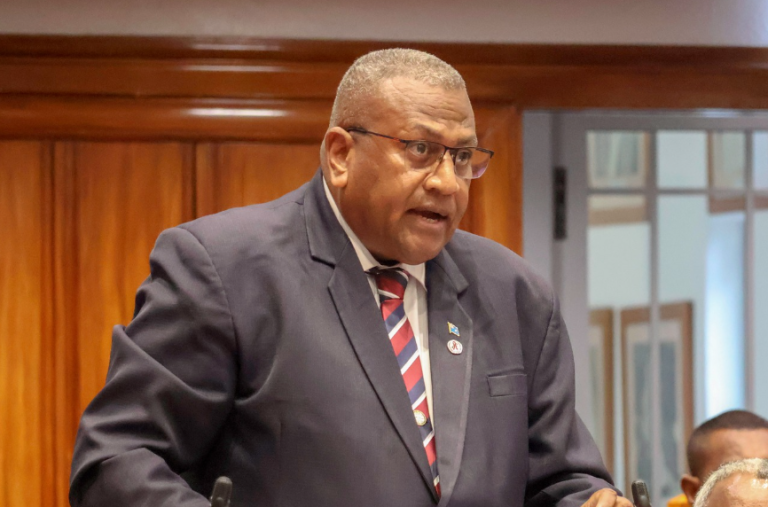
Fiji could soon have close to 9,000 people living with HIV, a figure that will place growing pressure on the country’s public health system, Assistant Minister for Health Penioni Ravunawa warned in Parliament Wednesday.

Speaking during the debate on the President’s Address, Ravunawa said HIV is a chronic illness that requires lifelong treatment and medical monitoring.

“Furthermore, HIV is a chronic disease that requires lifelong treatment. Individuals diagnosed with HIV will now have to take antiretroviral medication every single day for the rest of their lives to keep the viral load low,” he said.

He explained that maintaining a low viral load helps prevent the transmission of the virus to others but requires consistent medication and medical care.

Ravunawa said projections show the number of people living with HIV in Fiji could soon approach 9,000.

“Every one of these individuals will require continuous treatment, monitoring, and clinical support. This will induce further burden to our already stretched public health system,” he said.

He also highlighted the long-term financial implications of the growing number of cases, noting that treatment costs could run into millions of dollars in the coming decades.

“The cost of this treatment will run into millions of dollars over the coming decades, which is why prevention today is not only a health investment, but also a financial investment in our nation’s future,” Ravunawa said.

The Assistant minister stressed that addressing the HIV crisis requires a united national effort.

“HIV is not a political issue. HIV does not ask which political party you support, which province you come from, or which religion you belong to — it affects everyone,” he said.

“Therefore, the response must come from everyone — the Government, the Opposition, civil society, faith-based organisations, traditional leaders and communities must stand together.”

Ravunawa added that when the nation faces a health crisis, unity is essential.

“When our nation faces a health crisis, unity is not optional; unity is necessary,” he said.

NZ PM Christopher Luxon to visit Samoa, Tonga to meet new PMs

0

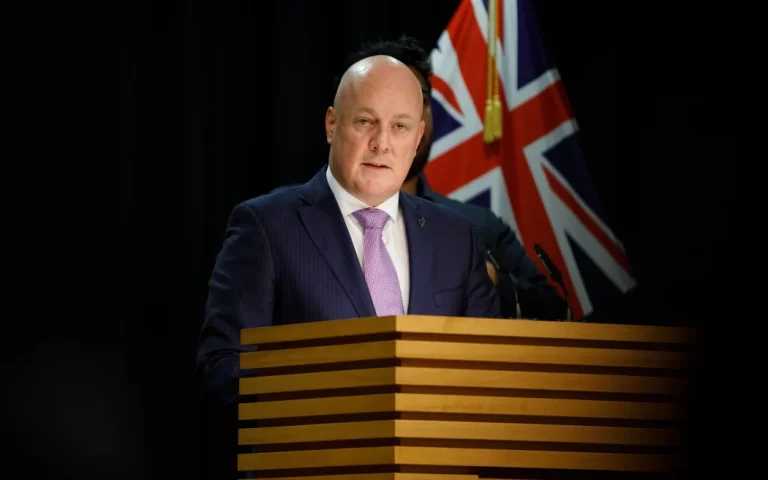
New Zealand Prime Minister has announced he will visit Samoa and Tonga later this week, for what will be the government’s first comprehensive engagements with two new leaders.

Christopher Luxon will be accompanied by a delegation of business leaders and community members, as well as the police minister, the minister for Pacific peoples, and opposition MPs.

The New Zealand delegation will be led by Savae Sir Michael Jones and Rachel Afeaki.

Luxon said the visit would reinforce New Zealand’s commitment to two of the closest members of the Pacific family, and he was looking forward to meeting with the two new leaders in Samoa and Tonga, and their cabinets.

“With more than 300,000 Samoan and Tongan New Zealanders, the family connection is woven into the fabric of our society,” Luxon said.

“Through our longstanding ties, we have built enormous trust between our nations. I’m looking forward to hearing my new colleagues’ points of view and then agreeing how we can work together to build communities that are more prosperous and safer from threats like drugs.”

Samoa held an election last August, with La’aulialemalietoa (La’auli) Leuatea Polataivao Fosi Schmidt emerging victorious.

La’auli assumed control of the FAST party after former prime minister Fiamē Naomi Mataʻafa was expelled. Fiamē continued to lead a minority government before calling the snap election.

Luxon and La’auli met previously, for a courtesy call, in November.

Lord Fatafehi Fakafānua has been prime minister of Tonga since December. He previously served as Tonga’s Speaker of the Legislative Assembly.

The confirmation of the visit comes shortly after an announcement the government would temporarily reduce the fees Pacific travellers pay for visitor visas, from $216 (US$127) to $161(US$95).

The delegation will leave Auckland on Sunday and return on Wednesday.

Technology must be affordable, reliable for small islands,’ Palau President urges at World Ocean Summit

0

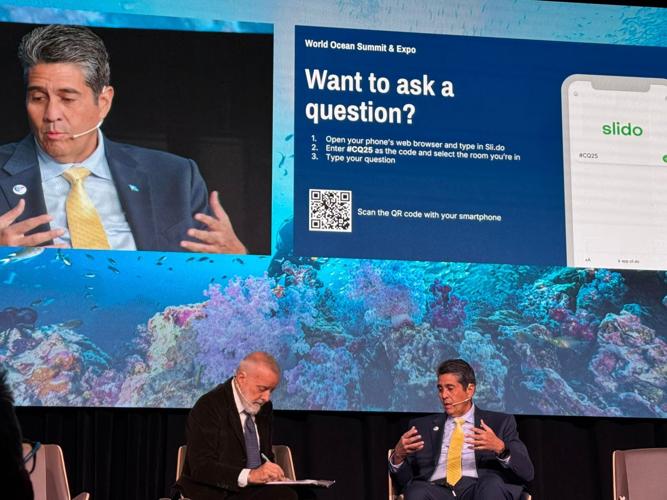
Palau President Surange lWhipps Jr called for “sustained collaboration and equitable access to technology” as cornerstones of ocean governance, delivering the keynote at the 13th World Ocean Summit hosted by The Economist last week.

Speaking for Small Island Developing States battered by climate change, Whipps insisted tech solutions — like digital surveillance systems and drones — must be affordable, reliable, interoperable and paired with local capacity building.

“These tools offer cost-effective, safer ways to monitor vast ocean spaces, freeing resources for critical climate adaptation,” he said, noting they reduce risks for fishers and enforcement teams patrolling exclusive economic zones.

Palau exemplifies stewardship: It ratified the Biodiversity Beyond National Jurisdiction (BBNJ) Agreement early, cementing its push for science-based protections in international waters.

Whipps renewed calls for regional cooperation and a precautionary stance on deep-sea mining, warning of irreversible harm to marine ecosystems.

The address spotlights Palau’s rising profile ahead of hosting the Pacific Islands Forum Leaders Meeting in early September 2026. There, leaders will tackle ocean governance, climate resilience and Blue Pacific security amid rising seas and geopolitical tensions.

Whipps’ message resonates as nations negotiate High Seas Treaty implementation and grapple with overfishing, plastic pollution and warming oceans.

For vulnerable islands, he said, tech equity isn’t optional — it’s survival.

Pacific Ministers for Women Meet UN Secretary General

0

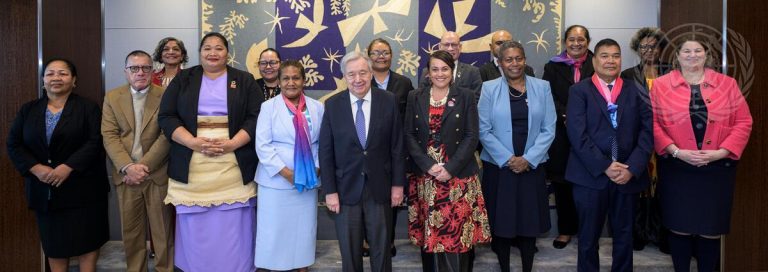
On the margins of the 70th Session of the Commission on the Status of Women (CSW70), Pacific Islands Forum Ministers and Senior Officials held a high‑level dialogue with the Secretary‑General of the United Nations, António Guterres, to advance Pacific priorities on gender equality and social inclusion in line with Forum Leaders’ vision under the 2050 Strategy for the Blue Pacific Continent.

The dialogue was an important opportunity for Pacific Ministers and senior officials responsible for women’s affairs and gender equality to engage directly with the United Nations Secretary‑General on key regional priorities including Peace and Security, UN80, Pacific Pre-COP31 and Gender-Based Violence (GBV).

Through open and constructive Talanoa, Ministers highlighted Pacific-led and centred solutions and called for sustained global partnership and support to address the interconnected impacts of climate change, economic vulnerability, and social inequality on women and girls across the region, consistent with the 2050 Strategy’s emphasis on resilience, inclusion and collective action.

As chair of the meeting, Cathy Nori, Solomon Islands Minister for Women, Youth, Children and Family Affairs, expressed the Forum’s support for the UN80 initiative, while underscoring the importance of ensuring that reforms take into consideration the needs of small island developing states.

“A more efficient and streamlined UN is necessary, but this must not compromise the UN’s reach, effectiveness or presence in the Pacific. We must ensure that programs and activities focused on the most vulnerable, particularly those countries in special situations – such as Small Island Developing States (SIDS) and Least Developed Countries (LDCs), are prioritised and preserved.”

Fane Fotu Fituafe, Tonga’s Minister of Internal Affairs, emphasised the importance of ensuring Pacific women’s experiences and leadership are meaningfully reflected across the United Nations system.

“As you advance the peace operations review and the UN80 reform agenda, we urge for our Pacific’s experience and women’s leadership, to be meaningfully reflected, reiterating the need for our women’s representation in UN decision-making on peace and security be consistent with Forum Leaders’ call for Pacific representation across the UN system.”

Ruth Kwansing, Kiribati’s Minister of Youth, Sports and Social Affairs, highlighted key challenges to addressing Gender-based violence and access to justice in the Pacific.

“We request that UN’s support is tailored and best fit the Pacific’s vulnerabilities and structural barriers, including geographical isolation and cultural and linguistic diversity.”

She further emphasised the need for a coordinated approach by UN Agencies operating in the Pacific to strengthen efforts to prevent and respond to gender‑based violence.

“Underscore the need for UN agencies in the region to strengthen their own coordination and collaboration in order to support ending GBV and prevention initiatives and improved survivor services.”

The Pacific Ministers and their delegations reaffirmed their commitment to advancing gender equality and social inclusion as a core pillar of the 2050 Strategy for the Blue Pacific Continent and look forward to the continued leadership and engagement of the United Nations Secretary-General in championing gender equality and amplifying Pacific priorities on the global stage.

Further NZ improvements to Pacific visitor visa settings

0

New Zealand Foreign Minister Winston Peters and Immigration Minister Erica Stanford have announced further changes to visitor visa settings for Pacific people, making it more affordable for Pacific visitors to travel to New Zealand.

“From 01 June this year, the total cost of applying for a visitor visa for Pacific nationals will drop from $216 (US$127) to $161 (US$95), for a 12-month period, as part of New Zealand’s ongoing work to deepen Pacific connections,” Peters says.

“This is a practical update to visitor visa settings that reduces cost, supports easier travel and helps strengthen the relationships that matter most.”

“These updates build on earlier improvements, such as longer visa durations – from one year to two years with multiple entries – along with reduced processing times, new escalation processes to support urgent travel, and the current visa‑free trial for Pacific travellers coming from Australia,” Stanford says.

“Together, these changes make it easier and cheaper for Pacific visitors to come to New Zealand, while ensuring the system remains clear, predictable and secure. The Government will review the impacts in a year’s time, before deciding what happens next.”

Further details on eligibility and timing will be confirmed in the coming weeks.

Trump-aligned think tank proposes ‘Pacific Charter’, greater U.S involvement in the region

0

An American right-wing think tank is proposing a “Pacific Charter” that advocates for a greater United States presence in the region.

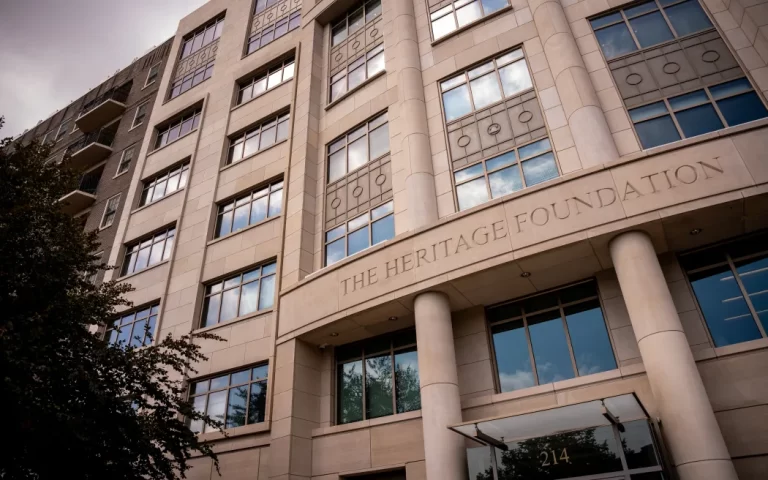
The Heritage Foundation, closely associated with the ruling Republican Party, wrote that China is “covetously” looking to the Pacific nations while they are vulnerable to major security threats, such as the transnational drug trade.

The think tank holds significant influence with U.S President Donald Trump, best encapsulated in its ‘Project 2025” platform that guided conservative policy leading up to the 2024 presidential election.

Its latest report, A charter of Pacific values for a prosperous Pacific future, points out that Pacific nations are uniquely vulnerable at a difficult time, emboldening “outside forces” to take advantage.

Pacific countries are asked to “align” their policy agendas, while the U.S establishes a “Pacific Partners Commission” and installs a “Pacific Advisor” on their National Security Council.

“Broader intra-Pacific affiliations are being superseded by the interests of external actors, and the Pacific agenda is at risk of being shaped by powerful outside forces,” the report states.

Without Western involvement, it postulated that China, with its “willingness to use political leverage and intrigue to advance its narrow interest” would monopolise their hold.

Rather than letting that happen, co-authors Allen Zhang and Brent Sadler proposed a non-binding Charter, not to “impose values and dictate outcomes” but rather to “reaffirm fundamental ideals and strengthen regional solidarity”.

It was noted this would pressure nations to resist the influence of Chinese cash, for example infrastructure deals. Further, the mood would be set for island nations and US defence forces to come closer together.

“The foregoing principles are frequently bypassed in favour of lucrative bilateral proposals … compromised when it is personally or locally expedient.

“When regional nations accede to a charter, they accept a standard of conduct beyond the mere expression of aspiration … overtime, states begin to rationalise strategic decisions against a set of baseline principles.”

The White House has only recently turned its attention to Pacific countries in any public sense, hosting a business summit in Honolulu in early February.

Trump has also asserted his interest in critical minerals at the bottom of the Pacific Ocean, leading to deep-sea mining talks with the Cook Islands and Tonga.

Jared Novelly, incoming U.S Ambassador to New Zealand, said there was an “extreme opportunity” in the Cook Islands exclusive economic zone (EEZ).

Pacific Finance Ministers to convene in Marshall Islands for key 2026 Forum Economic Ministers Meeting

0

The Forum Economic Ministers Meeting (FEMM) will be held in the Republic of the Marshall Islands (RMI) from 22-24 June this year, and preparations are underway for this regional Ministerial meeting.

FEMM is an important meeting where finance and economic ministers from Forum member countries come together to discuss key economic priorities of the Blue Pacific region.

Stay connected

529FansLike
172FollowersFollow
156SubscribersSubscribe
- Advertisement -