Home Blog Page 81

Proposed FijiansFirst Party files registration application

A new political party has filed nomination with the nation’s Elections Office in Suva.

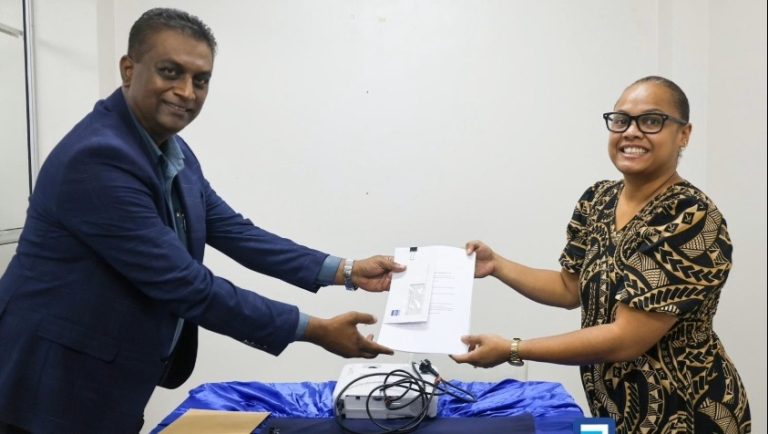
The proposed FijiansFirst Party submitted its registration application at the Fiji Elections Office today.

Registrar of Political Parties, Ana Mataiciwa confirmed the application was lodged on Monday, 16 March 2026.

The application was submitted by founding member and General Secretary Ravindran Kumaran and party member and Member of Parliament Ketan Lal.

Mataiciwa said the application will now be published in a newspaper and in the Fiji Government Gazette, as required under the Political Parties (Registration, Conduct, Funding and Disclosures) Act 2013.

Once the notice is published, the statutory objections period will begin.

“During the objections period, any person may submit a written objection to the Registrar regarding the party’s application for registration. The Registrar will assess and determine all objections within seven (7) days of receipt after giving the proposed party an opportunity to respond,” Mataiciwa said in a statement.

She said both the objectors and the applicant party will be informed once the assessment process is completed.

After the objections process, the Registrar will determine whether the proposed FijiansFirst Party meets the legal requirements under the Act and whether it will be formally registered.

Mataiciwa said the process is designed to ensure transparency and allow public participation in the registration of political parties.

Legal analysis raises questions over Pro-investor approaches to Deep-Sea Mining

0

A legal analysis released by the Pacific Network on Globalisation (PANG) raises regional concerns for Pacific Island Countries exploring deep-sea mining through contentious contracts with private companies.

The legal analysis examines the sponsorship agreement between the Kingdom of Tonga and Tonga Offshore Mining Limited (TOML), which raises serious concerns about the overly generous rights granted to TOML and the extensive liabilities imposed on Tonga. This raises regional concerns about the progress of deep-sea mining, especially as countries meet in Kingston, Jamaica, to discuss deep-sea mining rules at the 31st Session of the International Seabed Authority (ISA).

“This sponsorship deal is a callback to investor agreements that give all the advantages to the corporation, including the right to sue the Tongan government for changes in policy and law in pro-investor, foreign jurisdictions. This is a wake-up call for the region about the exposure they may face from sponsoring such mining, especially with the international legal basis for it being unclear,” commented Adam Wolfenden, PANG Deputy Coordinator.

The legal analysis, conducted by University of Auckland Emeritus Professor of Law, Dr Jane Kelsey, examined the TOML contract with Tonga and found numerous clauses that would grant extensive rights to TOML and allow it to sue the Kingdom of Tonga in an offshore jurisdiction if any government policies or regulations were to impede TOML profits or expectations.

These investor rights and arbitration processes belong to the “old generation” of bilateral investment treaties. Those are blunt instruments that guarantee extensive investor rights with few, or in this case, no exceptions. Those rights are enforceable extraterritorially through ad hoc private arbitration that lacks fundamental elements of a public legal system,” stated Dr Kelsey.

The rules and regulations for deep-sea mining are far from settled as the ISA Council debates the Mining Code this week. Tonga, as a sponsoring state, is already moving ahead with deep-sea mining without ISA approval, underscoring the urgent need for robust regulations to ensure that national governments are not exposed to excessive legal liabilities while protecting fragile marine ecosystems.

“Tonga must not be rushed into deep-sea mining at the expense of our sovereignty, environment, and future generations. Racing ahead without clear international safeguards exposes our nation to dangerous liabilities and undermines the very principles of sustainable development we stand for,” stated Latai Halafihi, Civil Society Forum of Tonga.

Reverend Ikani Tolu, General Secretary of the Tonga National Council of Churches, stated, “Given deep knowledge gaps, slow recovery rates, transboundary effects, and high value of deep-sea biodiversity and services, a precautionary approach including moratorium until robust science and governance are in place is strongly advised. No doubt deep-sea mining poses significant, largely irreversible ecological risk and socio-economic uncertainties for Tonga.”

“Deep-sea mining is an untested and dangerous new industry that is made even riskier by entering into agreements that give priority to the expectations, financial well-being, and protection of the mining corporation, especially over national laws and policies. Under this agreement, TOML could challenge Tongan laws in Singapore, and there is no requirement to be notified or to provide a financial settlement. This does not support development or environmental protection,” concluded Wolfenden.

British and Lithuanian arrested in major cocaine haul in Vanuatu

0

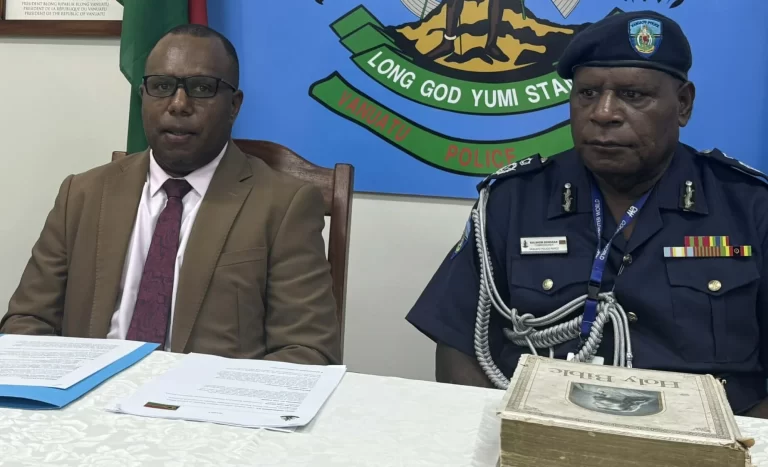
A British national and a Lithuanian were arrested after the Vanuatu Police Force (VPF) seized 1.6 tons of cocaine on board a yacht at Havannah Harbour in north Efate.

This was confirmed by the Minister of Internal Affairs, Andrew Napuat, during a press conference last Friday.

Minister Napuat said this was the first significant drug haul within Vanuatu, involving a large quantity.

He applauded the VPF for the investigation and works done to locate the boat, to seize the drug and to arrest the British and the Lithuanian nationals who were on board.

He said the two foreigners are now detained by the police to face the court on serious drug charges.

Minister Napuat said the drug was seized by the VPF for forensic testing to establish its purity.

He said the yacht, Inner Smile, entered the Vanuatu waters illegally with Customs and Immigration unaware of its arrival at Havannah.

The yacht already arrived at Havannah on 01 March 2026 during the recent bad weather faced in the country and it was then washed on to a reef by strong waves.

Police now believed that it is the same drug consignment that they were informed about that was believed to have been dropped in the ocean between Fiji and Vanuatu a few weeks ago.

A reliable source said police suspected that it is the same drug because it was not hidden inside the hull but was on the deck of the yacht.

Authorities are still investing the route of Inner Smile and its destination.

The destination of the drug is yet to be confirmed.

Police Commissioner Kalshem Bongran said while the market value of the 1.6 tons of cocaine is unknown, it could worth billions of vatu if confirmed as pure.

The 780 kg of cocaine seized some years ago in Port Vila harbour aboard a selling boat is estimated to have a market value of VT37 billion (US$306,874,385).

Winston Peters signals wider Pacific visa changes after fee cut

0

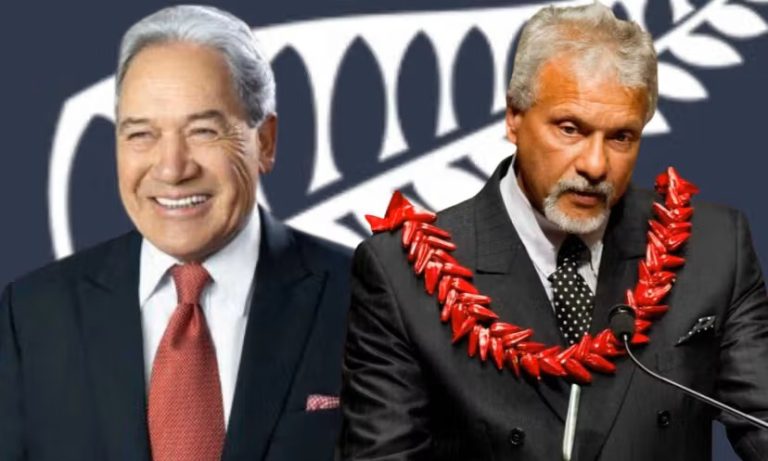
Foreign Affairs Minister Winston Peters says cutting visitor visa fees for Pacific travellers is only the first step in making it easier for people from the region to visit New Zealand.

In an interview on Pacific Mornings, Peters signalled more changes could follow, including longer visas and faster processing for urgent family situations.

From 01 June, the cost of applying for a visitor visa for Pacific nationals will fall from $216 (US$161) to $161(US$95).

Peters says the move is a start, but more improvements are being considered. “It doesn’t [go far enough] but it’s the beginning and it’s in the right direction,” he says.

The Government is now looking at extending some visitor visas from one year to two years to allow Pacific travellers to move easily between their home countries and Aotearoa.

Peters also says officials are working on a faster visa process for emergencies such as funerals or family crises.

“There also is going to be an emergency group of civil servants whose job it is to ensure that when people are applying for a visa in emergency situations like a death, then it is acted with the greatest of speed.

“Because if you want to go to a funeral and it takes two weeks to get the visa, it’s all over. It’s a tragedy and very, very sad for families so that’s another aspect.”

While the fee reduction may help some travellers, Pacific community advocate Arthur Anae says it does not address broader concerns about visa barriers.

“From the positive side, I can say yes it has some benefits for those who want to plan ahead,” Anae told PMN.

“But these are my problems… Why can’t the Pacific people get the same privileges that the other people of the world get?”

Anae says concerns about visa overstayers are mostly overstated. “Only 4000 Pacific people have overstayed, that represents 0.078 per cent of New Zealand’s population. Now, is that worth crying about?”

Anae recently led a petition calling for visa-on-arrival access for Pacific visitors.

The petition gathered nearly 50,000 signatures and has now been referred to Parliament’s petitions committee, which will review submissions before making recommendations to the government.

Anae says the latest visa fee reduction should be seen as a small step but argues more meaningful changes are still needed.

For many Pacific families with strong ties to Aotearoa, he says easier travel would strengthen family, cultural, and community connections across the region.

From the Deep Sea to ancient reefs, expedition supports Marshall Islands’ Reimaanlok vision for community-led Ocean conservation

0

National Geographic Pristine Seas begins an expedition this week in the Republic of the Marshall Islands (RMI) to provide critical marine biodiversity data for advancing the country’s commitment to ocean management.

The expedition — Pristine Seas’ 50th since its founding — will explore a range of ocean ecosystems known for their resilience and biodiversity.

Conducted at the invitation of the RMI government and in partnership with the Marshall Islands Marine Resources Authority (MIMRA), Pristine Seas will work alongside local leaders and scientists to survey seven atolls in the Ralik and Ratik chains: Erikup, Ailuk, Taka, Ujelang, Ailinganea, Jemo and Enewetak.

The data gathered will help inform RMI’s Reimaanlok, a national framework for planning and establishing community-based conservation areas. Meaning “look towards the future,” the Reimaanlok process relies on cultural insights and traditional knowledge to drive conservation.

Over the course of three months, the team of scientists, filmmakers, and educators will explore places for which little scientific data has been gathered. They will document the beaches of Erikub Atoll, a critical nesting ground for green turtles in the Marshall Islands, before venturing into the remote waters of Ailinginae Atoll to assess populations of reef sharks and other apex predators. Across Taka and Ujelang, scientists will track thriving colonies of sooty terns, red-footed boobies, and frigatebirds to better understand their vital role on both the land and the surrounding sea.

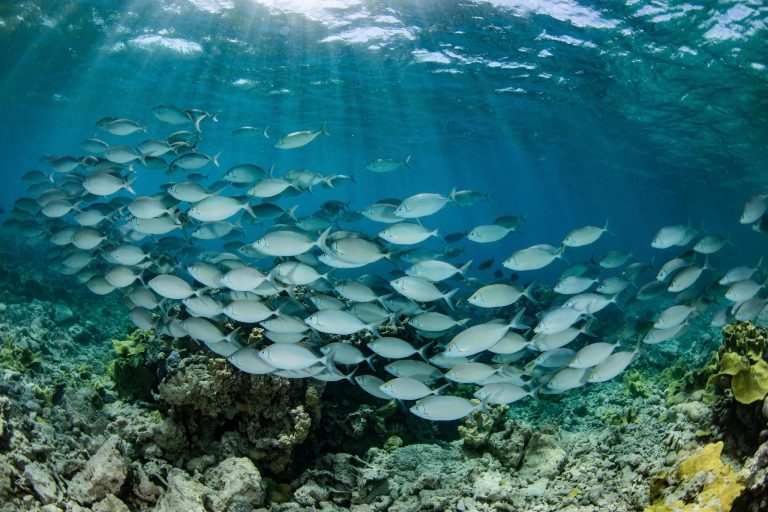
Beneath the waves, researchers will explore reefs teeming with hundreds of coral species, seeking to document how these vital ecosystems remain resilient in the face of challenges like global bleaching events and other human pressures.

Researchers plan to study uninhabited sites like Enije Island—a green turtle nesting ground—and the shark-rich Enije Channel, where scientists can establish vital ecological baselines. These pristine environments help scientists to define what a healthy ocean looks like, offering rare insights into coral resilience and natural marine behaviours.

By establishing new ecological baselines, the team will evaluate how different reef systems — from pristine, uninhabited atolls to those protected by traditional community management — are affected by global reef bleaching events and other human pressures.

“This expedition is an incredible opportunity to study some of the last wild places in the Pacific Ocean, surveying reefs across a full spectrum,” said lead scientist for the expedition Juan Mayorga.

“We’ll survey reefs and explore depths rarely or never seen, and revisit sites first studied seventy years ago. These places still hold what most of the world has lost.”

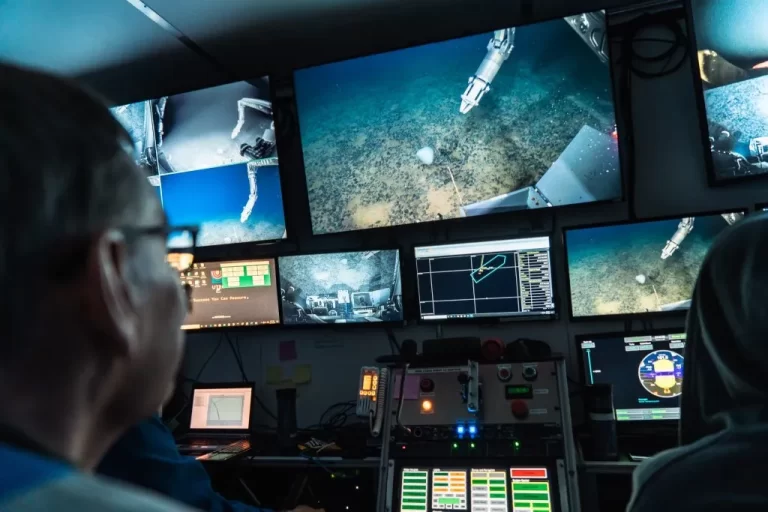
Living and working aboard Pristine Seas’ research vessel the Argo, the team will use scientific techniques to capture footage of marine life from just below the ocean’s surface to the mysterious sea floor. Scientists will take surveys while SCUBA diving, drop cameras to the bottom of the sea to collect overnight footage, and float video systems 10 meters below the surface to document the marine life swimming by. Using environmental DNA (eDNA) sampling, expedition members will collect small bits of matter that can later be sequenced to identify organisms not always seen with cameras or the naked eye.

“Studying the uninhabited atolls of the Marshall Islands provides a window into how vibrant and resilient coral reef ecosystems can be in the absence of damaging activities,” said Tye Kindinger, Pristine Seas scientist.

“These remote waters serve as a vital baseline for biodiversity.”

Scientists and partners from RMI will plunge into the unknown in Pristine Seas’ state-of-the-art submersible, the Argonauta, to observe first-hand the “twilight zone,” a frontier of deep-sea biodiversity teeming with marine life. The Argonauta is outfitted with mud and water samplers, a nearly 360 underwater view, imaging sonar and more — allowing the team to gather valuable data from one of the least understood parts of the planet.

Throughout the expedition, Pristine Seas filmmakers will capture footage for a documentary film about RMI’s stunning marine biodiversity. Filming in both communities and on the Argo, the team hopes to highlight people’s special relationship to the ocean and illustrate the power of blending traditional knowledge with cutting-edge science.

“Ultimately, the most impactful outcome of our expeditions lies in the melding of traditional knowledge and modern science to help paint a full picture of the marine resources and biodiversity in a region, which in turn can inspire future generations of ocean stewards,” said expedition leader Ryan Jenkinson.

In collaboration with RMI’s Public School System, Pristine Seas will host local educators aboard the Argo to learn more about marine science and co-create educational materials that extend ocean literacy resources into classrooms and communities. The interdisciplinary team of educators from RMI will create videos, lessons, books, posters and interactive activities that will strengthen students’ knowledge of the ocean. Pristine Seas will also host a Ship Day, inviting students to tour the Argo and learn from scientists and filmmakers.

The expedition comes on the heels of RMI’s designation of the National Marine Sanctuaries of Bikar and Bokak in January 2025. The country’s first national marine sanctuary — which covers 48,000 square kilometers of water — provides an exceedingly rare glimpse into a thriving part of the Pacific Ocean. Data from Pristine Seas’ 2023 expedition to RMI helped inform the creation of the marine protected area (MPAs) in Bikar and Bokak. At MIMRA’s request, scientists from the 2023 expedition studied Bikini Atoll, a post-WWII nuclear test site. Surveys identified rare and endangered species, ranking Bikini’s reefs among the most shark-abundant on Earth.

“The Republic of the Marshall Islands has demonstrated incredible leadership in marine management and conservation,” said Kevin Chand, Pristine Seas’ senior director of Pacific policy. “The marine sanctuaries of Bikar and Bokak represent a major leap forward in RMI’s national goal of safeguarding critical biodiversity hotspots and ensuring the sustainable management of its vast marine resources.”

MPAs are a proven solution for countries looking to conserve their ocean. Reserves where fishing and other damaging activities are banned restore marine life within their boundaries. That, in turn, replenishes nearby fish populations and improves local fishing, provides jobs and economic benefits, and builds resilience against a warming ocean.

Pristine Seas started its Global Expedition in 2023 with a mission to spend five years exploring the tropical Pacific and supporting communities and governments in their efforts to protect the ocean. Since 2023, the team has explored and studied the Southern Line Islands, Tongareva, Niue, The Republic of the Marshall Islands, the Federated States of Micronesia, Palau, Papua New Guinea, Solomon Islands, Fiji, Tuvalu and Vanuatu.

Chris Hines, Director of Education for National Geographic Pristine Seas. “We are thankful to collaborate and co-create with the RMI Public School System to extend the Pristine Seas expedition into classrooms and communities. By engaging educators on ocean literacy and inspiring students with media and experiential learning opportunities rooted in Traditional Knowledge, we aim to help activate the next generation of ocean stewards.”

Juan Mayorga, lead scientist for the expedition. “Traditional ocean knowledge in the Marshall Islands runs deep. Navigators from this region crossed open ocean reading how swells bounce off distant islands, weaving stick charts that mapped wave patterns, not coastlines. That intimacy with the sea shaped how they managed their world, keeping uninhabited atolls as reserves, used only with permission and for special occasions. Reimaanlok, RMI’s resource management framework, builds on what communities have always understood: the ocean provides, but only if we care for it. That’s what we hope to pass on, bringing this expedition into RMI classrooms to show how traditional knowledge and modern science work together to protect the ocean.
Iran war on Pacific agenda as Christopher Luxon jets to Samoa, Tonga for meetings

0

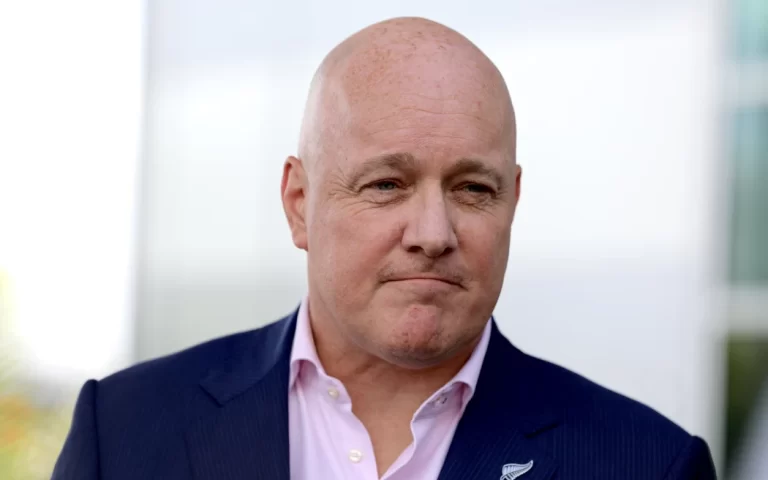
New Zealand Prime Minister Christopher Luxon is off to Samoa, then Tonga as their new governments grapple with a scourge of drug trafficking.

Criminal groups are increasingly using the Pacific as a ‘drug highway,’ its vast expanse of ocean an appealing route for smuggling cocaine and methamphetamine from Latin America or Asia to lucrative markets like Australia and New Zealand.

The guts of Luxon’s trip will focus on transnational crime and how to better collaborate with – and build capability in – the Pacific nations.

The seriousness in which the Government is taking drug trafficking is evidenced by who was on the prime minister’s plane: Police Minister Mark Mitchell, Police Commissioner Richard Chambers and Customs chief executive Christine Stevenson.

“The attractiveness of the Pacific, Australia and New Zealand, particularly to the South American cartels, has been quite something,” Luxon told The Post in a pre-trip interview.

“It’s just a level we haven’t seen before, it’s an intensity we haven’t seen before.”

Coordinated efforts to stop drug trafficking through the Pacific have ramped up recently; French authorities – with assistance from New Zealand and U.S agencies – intercepted more than four tonnes of cocaine in French Polynesia in early February.

Collaborating with others was key to curbing the flow of illegal drugs, Luxon said.

“All of that’s just stepped up a gear and obviously we work very, very closely with their counterparts.”

With the spotlight on transnational crime, one notable omission from the prime minister’s programme is a visit to the Manawanui wreck.
It’s been more than a year since the Royal New Zealand Navy ship sank off the south coast of Upolu in Samoa after hitting a reef, spilling hundreds of thousands of litres of diesel and oil into the ocean.

The Government has paid $6 million (US$3.47 million) in compensation, and three naval officers are now facing a court martial, but the effects of the disaster are far from over in Samoa.

Its government has been forced to increase surveillance of the wreck following reports of illegal diving and it’s also considering how to stabilise the wreck to mitigate pollution risks.

As the ongoing impacts of the Manawanui will likely be discussed in closed-door meetings between leaders, The Post asked Luxon if New Zealand would offer more support to Samoa if it was requested.

“The $6 million (US$3.47 million) that we paid last year, we did that in good faith, and obviously it was full and final payment and settlement between the two governments,” he said.

New Zealand enjoys close, familial relationships with Samoa and Tonga by virtue of the Pacific diaspora living onshore and mutual memberships in the key regional group, the Pacific Islands Forum.

Luxon made a point of emphasising the special relationship between New Zealand and Samoa, and New Zealand and Tonga, ahead of his trip.

“We have a very unique relationship. It is one genuinely of family.”

Though it’s unlikely this intimacy will extend to further changes to New Zealand’s visa system right now.

Last month, New Zealand First leader Winston Peters accepted a petition from Arthur Anae, elected as National’s first Pasifika MP in 1996, calling for visitors from six Pacific nations (Fiji, Samoa, Solomon Islands, Tonga, Tuvalu, and Vanuatu) to be treated the same as travellers from 60 other countries.

At the moment they have to apply for a visitor visa as opposed to being eligible for the cheaper, more straightforward electronic authority to enter the country.

Asked how receptive National was to this idea, Luxon pointed out the coalition recently set up a year-long trial of lower visa fees for Pasifika people.

“We keep moving in that space. I think we’re done more in that space in the two years of our government and been open to making those concessions.

“The other thing that we have to deal with though on our side is that Samoa and Tonga have the highest overstayer rates in any of the countries that we deal with.

“So, there’s high risk there and if we don’t screen through some form of visas that problem would be much bigger.

“Like all of our immigration settings, they’re risk based. It’s where we see risk and applications and visas need to be considered very much in that regard.”

Luxon’s trip comes as the coalition considers what fuel rationing may look like as the Iran war drags on, and it becomes harder to get fuel into the country.

Pacific nations were exposed to oil shocks, but they were also no stranger to dealing with them, he said.

“I know they’re taking those risks very seriously, as we are, and it’ll be very good to get a sense of how they are [and] what actions they’ve taken to secure supply.”

The prime minister laughed off a question about any potential concerns his leadership might be challenged while he was abroad, off the back of a dire poll last week.

Luxon in in Samoa today, heading on to Tonga on Tuesday afternoon and returning to Auckland late Wednesday evening.

CROP Heads meet amidst evolving Regional and Global Environment

0

Heads of Agencies of the Council of Regional Organisations in the Pacific (CROP) met in Nadi, Fiji, last week to consider the ongoing evolutions to the regional and global environment and its impact on the regional architecture and how it responds to Members’ needs and priorities.

Reflecting on the 2050 Strategy, its implementation and the ongoing work of the Review of Regional Architecture, the meeting provided an opportune moment to consider, consolidate and agree on how best to position the CROP to address the Leaders views that had emerged from the 54th Pacific Islands Forum in Honiara in Solomon Islands.

“This was the first gathering of CROP Heads in Retreat format. It was a constructive opportunity for open and frank discussions on a range of systems proposals including, coordination, harmonisation and resource mobilisation. I am encouraged by the discussions had today and look forward to working together with my CROP colleagues to deliver for our region and our Pacific people,” said Secretary General Baron Waqa, the Chair of the CROP.

CROP Heads also had the opportunity to discuss the recent escalation in the Middle East and its potential implications for the Pacific region, particularly in relation to fuel prices, supply chains, and economic pressures facing Members.

CROP Heads reaffirmed the importance of stronger coordination across regional agencies, including ongoing efforts to advance CROP harmonisation and a more integrated “One-CROP” approach to supporting Members at national and regional levels.

The meeting concluded with a shared commitment to ensure that the regional system remains responsive, coordinated, and fit-for-purpose to support Members in implementing the 2050 Strategy for the Blue Pacific Continent in an increasingly complex global environment.

Former Pacific Islands Forum Secretary-General Sir Noel Levi dies

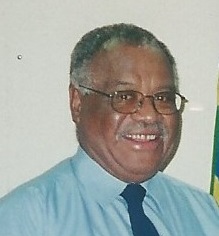
Former Secretary-General of the Pacific Islands Forum, Sir Noel Levi, has died at the age of 84.

A family notice confirmed the passing of the former regional leader and senior Papua New Guinea statesman.

“It is with heavy hearts that we announce the passing of Sir Noel W. Levi, who was called to be with the Lord on 11th March 2026, in Kavieng, New Ireland Province.”

Sir Noel served as the sixth Secretary-General of the Pacific Islands Forum from February 1998 to May 2004, leading the region’s premier political organisation during a period of major regional cooperation and reform.

Born on 06 February 1942, Sir Noel had a long career in public service in Papua New Guinea. He served as Member of Parliament for New Ireland Province from 1977 to 1987 and later held key national and diplomatic positions.

His roles included Minister for Foreign Affairs, Secretary of Defence, and Secretary of the Department of the Prime Minister and National Executive Council.

Sir Noel also represented Papua New Guinea overseas as High Commissioner to the United Kingdom and Northern Ireland, South Africa and Zimbabwe, and Ambassador to Israel, the Arab Republic of Egypt and the People’s Republic of China.

After his regional and national leadership roles, he continued public service in New Ireland Province, serving as Advisor to Governor Julius Chan, Executive Head of the New Ireland Autonomy Authority, and a Board Member of Air Niugini.

He also served as Chairman of the Council of Elders (Chiefs) in his home province.

A tribute message described his lasting impact on family and community.

“Life may have taken you from our sight, but it will never erase you from our hearts. Thank you for the love, the laughter, and the precious memories you gave. You will be remembered always, with love and honour.”

Sir Noel spent his later years in his village in New Ireland Province, where he remained a respected elder and leader.

He is remembered for his decades of service to Papua New Guinea and the Pacific region.

$1m set aside for Fiji constitutional review commission to carry out its work

0

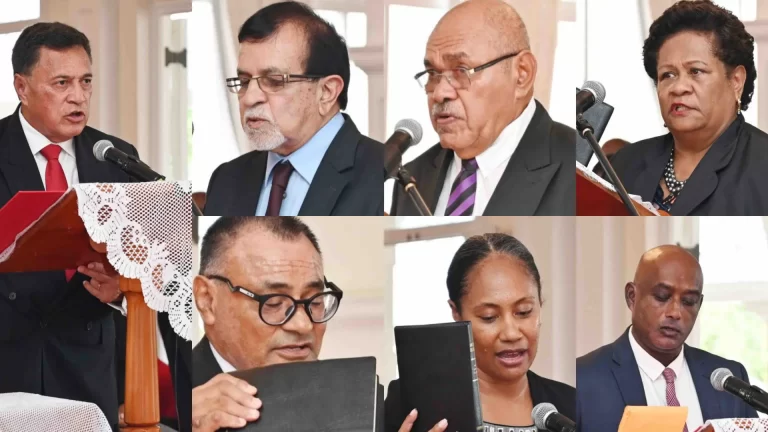
Seven members appointed to Fiji’s Constitutional Review Commission were sworn in last Friday as Government confirmed $1 million (US$500,000) has been allocated to support the body’s work.

President Ratu Naiqama Lalabalavu commissioned the members during a ceremony at State House, marking the start of a constitutional review process expected to run through to 31 August 2026.

The commission will be chaired by senior lawyer Sevuloni Valenitabua. Other members are Labasa lawyer Ami Kohli, Fiji National University Vice-Chancellor Professor Unaisi Nabobo-Baba, University of the South Pacific economist Dr Neelesh Gounder, public policy specialist Merewalesi Nailatikau, medical practitioner Dr John Fatiaki and architect Conway Beg.

The commission has been tasked with reviewing Fiji’s Constitution and making recommendations to strengthen the country’s democracy and governance.

It will consult the public, receive submissions and analyse concerns before presenting its findings and recommendations.

Cabinet has allocated $1 million to support the commission’s work, including the establishment of a secretariat and engagement of constitutional law experts.

Prime Minister Sitiveni Rabuka, Speaker of Parliament Filimone Jitoko, Chief Justice Salesi Temo, Cabinet ministers and family members of the commissioners attended the ceremony.

Valenitabua is a senior barrister and solicitor admitted to practise in Fiji, Solomon Islands, Nauru and the Australian state of New South Wales, with nearly three decades of experience in criminal and civil litigation.

Kohli is principal of Kohli & Singh in Labasa and has more than 40 years’ experience in legal practice and governance. He previously served on Fiji’s Electoral Commission.

Professor Nabobo-Baba is an education and development specialist with more than 35 years’ academic experience and currently serves as Vice-Chancellor of Fiji National University.

Dr Gounder is a senior lecturer in economics at the University of the South Pacific and previously served as Chief Policy Adviser to the Fiji Government.

Nailatikau has more than 15 years’ experience in public policy, stakeholder engagement and strategic communications across the Pacific.

Dr Fatiaki is a Suva-based medical practitioner and Managing Director of Epworth Clinic. He has also served as a senator and as Special Adviser for Rotuman Affairs.

Beg is principal of Conway Architects and a former chairman of the Fiji Rugby Union.

The commission’s final report will be submitted to the President before it is presented to Cabinet and later tabled in Parliament.

Fiji 7s falls in New York, World Series drought continues

0

The Fiji Airways Fijian 7s team’s World Series and USA 7s title drought continues after going down 10-7 in the final in New York.

Fiji last won the Series title seven years ago under Gareth Baber.

South Africa’s win meant they claimed the World Series title with 106 points, while Fiji finished second on 104.

Fiji had the possession but failed to break the solid South African defence. The South Africans started strongly and outmuscled the Fijians in the contact area and scored first to lead 5-nil at halftime.

They returned after the break and shocked Fiji with another try in the corner, which was unconverted.

The national side threw everything at the Blitzboks 7s before Terio Tamani struck with a team try with three minutes left.

Trailing 10-7, the Osea Kolinisau coached team had the ball and was building on something special, but unfortunately, Kavekini Tanivanuakula, lost the ball forward five meters out from the tryline with only 28 seconds to play.

Fiji earlier beat Australia 28-7 in the semifinal this morning.

Australia scored first in the match, but Fiji came back to score four converted tries.

Joseva Talacolo and George Bose managed to cross for Fiji in the first half.

Second-half tries were scored by Viwa Naduvalo and Kavekini Tanivanuakula.

Stay connected

529FansLike
172FollowersFollow
156SubscribersSubscribe
- Advertisement -